Rotary proximity sensors, often referred to as rotary encoders or angular position sensors, are fundamental components in modern industrial automation and motion control systems. Unlike their linear counterparts, these devices are specifically engineered to detect the angular position, speed, and direction of a rotating shaft. Their operation hinges on non-contact sensing principles, which eliminate mechanical wear and ensure high reliability and long service life, making them indispensable in demanding environments.
The core working principle involves detecting changes in a physical field as a target, typically a metallic or coded disc attached to the shaft, rotates past the sensor's face. The most prevalent technologies include inductive, capacitive, and magnetic sensing. Inductive sensors are the workhorses for detecting ferrous metal targets. They generate an oscillating electromagnetic field; when a metal target enters this field, it induces eddy currents that dampen the oscillation, triggering a switch in the output state. Capacitive sensors can detect both metallic and non-metallic materials by sensing changes in capacitance caused by the target's proximity. Magnetic rotary sensors utilize Hall-effect or magnetoresistive elements to detect the position of a permanent magnet mounted on the rotating shaft, offering excellent resistance to contaminants like oil, dust, and moisture.
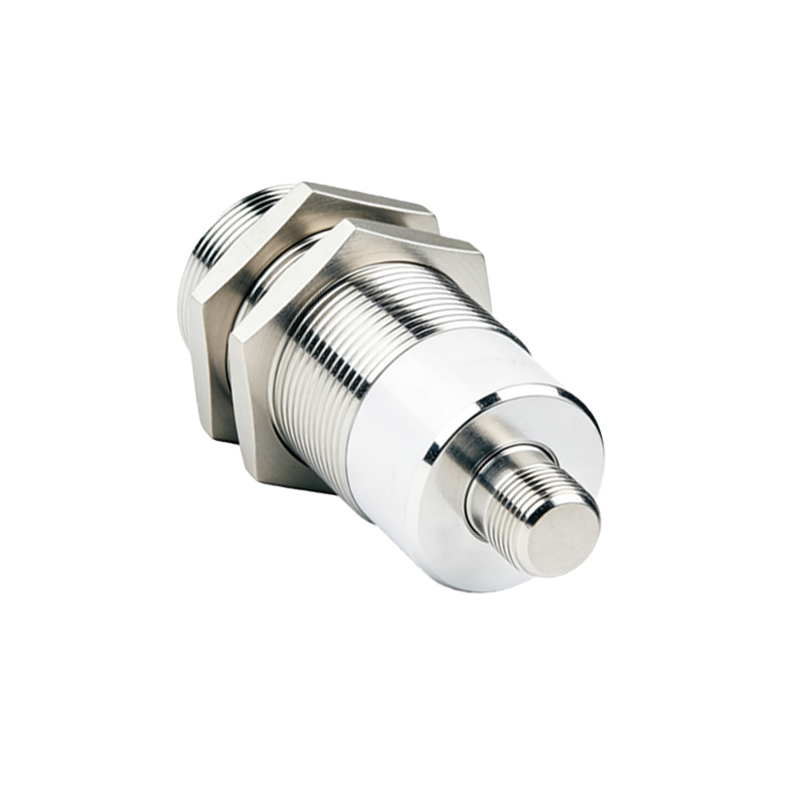
The applications for rotary proximity sensors are vast and varied. In robotics, they provide precise feedback for joint positioning, enabling accurate and repeatable movements. Within conveyor systems, they monitor the speed and position of rollers or wheels, facilitating synchronization and process control. They are critical in CNC machinery for spindle orientation and tool positioning. In the automotive sector, they find use in throttle position sensing, pedal position detection, and transmission systems. Furthermore, they are employed in packaging machinery, textile equipment, and even in renewable energy systems like wind turbines for pitch control.
Selecting the appropriate rotary proximity sensor requires careful consideration of several key parameters. First, the required resolution and accuracy dictate the choice between incremental and absolute encoders. Incremental types output pulses relative to a starting point, ideal for speed measurement, while absolute types provide a unique digital code for each shaft position, crucial for applications requiring knowledge of position after a power loss. The environmental rating, denoted by IP (Ingress Protection) or NEMA standards, is paramount. Sensors in washdown areas or outdoor installations need high IP ratings (e.g., IP67, IP69K) to withstand water and dust ingress. The output signal type must match the controller's input; common options include NPN/PNG transistor, push-pull, analog voltage/current (0-10V, 4-20mA), and various digital protocols like SSI, Profibus, or Ethernet-based fieldbuses. Mechanical considerations include shaft size, mounting style (shafted or hollow-shaft), and bearing load capacity. Finally, the switching frequency must be sufficient to handle the maximum operational speed of the application.
Installation and maintenance are straightforward but critical for optimal performance. Proper alignment between the sensor and the target is essential to ensure consistent detection. The mounting must be secure to resist vibration. For inductive sensors, maintaining the specified sensing distance is crucial, as performance degrades if the target is too close or too far. Electrical connections should be made following the manufacturer's wiring diagram, with attention to proper shielding for signals in electrically noisy environments. Routine maintenance primarily involves keeping the sensing face clean from debris and verifying the mechanical integrity of the mounting.
In conclusion, rotary proximity sensors are sophisticated yet robust devices that translate physical rotation into actionable electronic signals. Their non-contact nature, coupled with advancements in digital communication and ruggedized designs, continues to expand their role in Industry 4.0 and smart manufacturing. A thorough understanding of their operating principles, application needs, and selection criteria is key to implementing a reliable, efficient, and precise motion control solution. As automation evolves, these sensors will remain at the forefront, providing the essential feedback needed for intelligent and interconnected mechanical systems.