In the intricate world of industrial automation, the reliability of a system hinges on the accuracy of its most fundamental components. Among these, proximity sensors stand as silent sentinels, providing the critical data on position, presence, and absence that drives automated processes. However, even the highest-quality sensor is only as good as its calibration and integration. This is where specialized proximity sensor calibration and commissioning companies become indispensable partners for engineers and plant managers.
These specialized firms offer far more than simple installation. Their core service is a comprehensive debugging and optimization process that begins with a thorough system audit. Experienced technicians analyze the specific application—be it in automotive assembly, packaging machinery, pharmaceutical production, or metal fabrication. They assess environmental challenges such as temperature extremes, electromagnetic interference (EMI), vibration, and the presence of contaminants like dust, oil, or coolant mist. This initial assessment is crucial for selecting the appropriate sensor type—inductive, capacitive, ultrasonic, or photoelectric—and ensuring its housing and sensing characteristics match the operational demands.
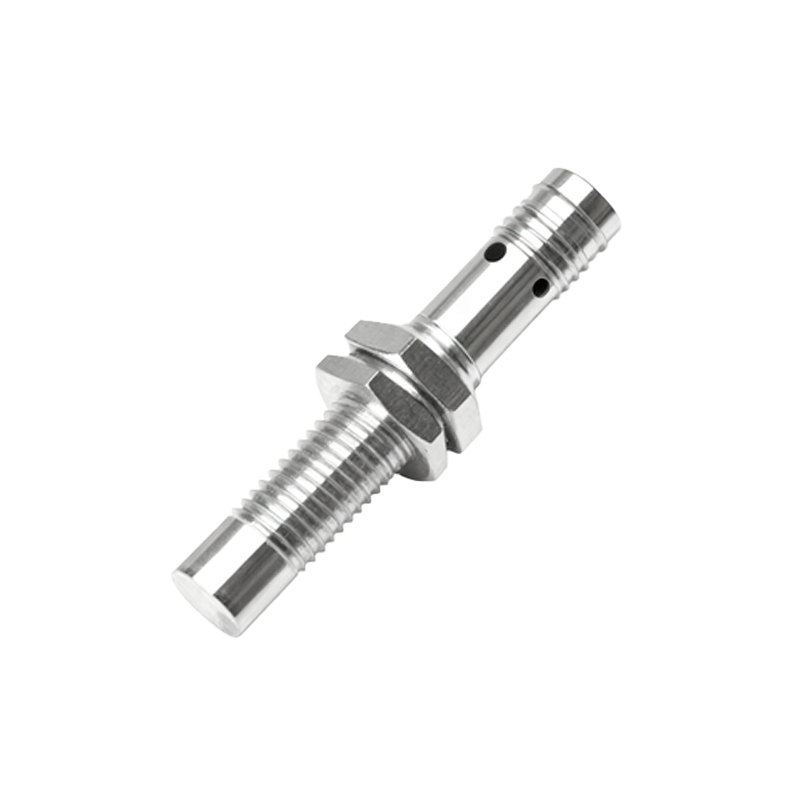
The actual calibration phase is a meticulous exercise in precision. Technicians utilize certified calibration equipment to verify and adjust the sensor's switching points, hysteresis, and repeatability. For instance, an inductive sensor tasked with detecting a metal component on a high-speed conveyor must have its sensing distance fine-tuned to avoid false negatives while maintaining a safe margin to prevent physical damage. This often involves programming adjustable parameters via teach-in functions or dedicated software interfaces. The goal is to achieve optimal performance where the sensor activates consistently at the precise required moment, every time, under real-world operating conditions.
Commissioning, or debugging, is the next critical stage. Here, the sensor is integrated into the larger control system, typically a PLC (Programmable Logic Controller). Specialists verify the electrical compatibility, ensuring correct wiring for PNP or NPN configurations and proper load handling. They then simulate process conditions to test the sensor's response. A common challenge is addressing "nuisance tripping," where a sensor is falsely activated by nearby non-target objects or environmental noise. Debugging experts employ techniques such as adjusting sensitivity, installing shielding, or repositioning the sensor to eliminate these issues. They also verify the communication protocols if the sensor is part of a networked IO-Link or AS-i system, ensuring seamless data exchange.
The value proposition of engaging a dedicated calibration company extends beyond the initial setup. They provide documented calibration certificates, which are often required for compliance with industry standards like ISO 9001 or specific automotive (IATF 16949) and pharmaceutical (cGMP) regulations. This documentation provides an auditable trail for quality assurance. Furthermore, these companies offer preventative maintenance programs, scheduling regular re-calibration to combat sensor drift—a gradual deviation from set parameters over time due to component aging or environmental stress. Predictive diagnostics, sometimes enabled by smart sensor data, can forecast failures before they cause costly unplanned downtime.
For plant engineers, partnering with a proficient sensor calibration firm translates directly to operational excellence. It minimizes production errors caused by faulty detection, reduces waste, prevents damage to machinery and tools, and enhances overall equipment effectiveness (OEE). In safety-critical applications, such as in robotic work cells or press brakes, perfectly calibrated sensors are non-negotiable for operator protection. Ultimately, while sensors are the eyes of the machine, calibration specialists are the optometrists, ensuring those eyes see with unwavering clarity and reliability. Investing in professional proximity sensor debugging is not merely a technical task; it is a strategic decision for building a resilient, efficient, and safe automated operation.