In the realm of industrial automation and precision measurement, selecting the appropriate sensing technology is paramount for operational efficiency, safety, and cost-effectiveness. Two of the most prominent and widely adopted technologies are ultrasonic sensors and laser sensors. While both serve the fundamental purpose of non-contact detection and measurement, their underlying principles, performance characteristics, and ideal applications differ significantly. This article provides a detailed technical comparison to guide engineers and system integrators in making informed decisions.
Fundamental Operating Principles
Ultrasonic sensors operate by emitting high-frequency sound waves (typically between 20 kHz and several hundred kHz) and then listening for the echo reflected from a target object. The sensor's microcontroller calculates the distance to the object based on the time interval between the emission and the reception of the echo (time-of-flight principle). This technology is analogous to sonar or radar but uses sound waves in the ultrasonic range.
Laser sensors, specifically laser distance sensors or laser triangulation sensors, utilize a focused beam of coherent light. In a common configuration, a laser diode projects a visible or infrared spot onto the target. The reflected light is focused onto a position-sensitive detector (e.g., a CCD or PSD array). The position of the light spot on this detector changes proportionally to the distance of the target. By analyzing this position, the sensor calculates the precise distance with high accuracy.

Key Performance Parameters: A Side-by-Side Analysis
1. Accuracy and Resolution: Laser sensors are the undisputed leaders in precision. They offer sub-micron to micron-level resolution and high repeatability, making them ideal for applications like wafer alignment, thickness measurement of thin materials, or vibration analysis. Ultrasonic sensors have inherently lower resolution, typically in the millimeter range, due to factors like the speed of sound variations with temperature and humidity, and the wider beam angle.
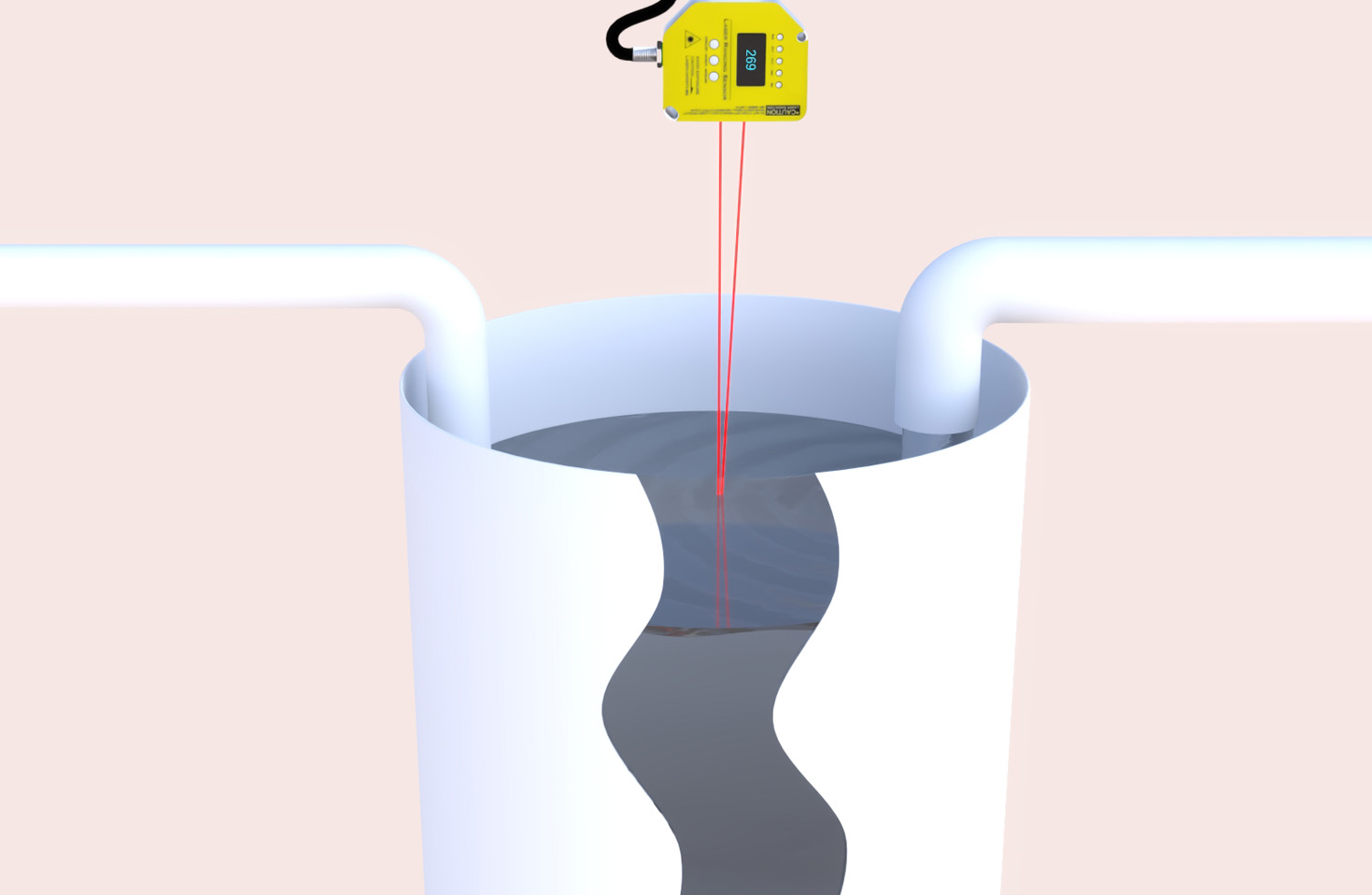
2. Measurement Range: Ultrasonic sensors generally excel in longer-range applications. Standard models can reliably measure from a few centimeters up to 10-15 meters, with specialized units reaching even farther. Laser sensors have a more limited optimal range, often from a few millimeters to several meters, with high-precision models usually working best at shorter distances.
3. Target Characteristics: This is a critical differentiator. Ultrasonic sensors are highly versatile regarding target material, color, and surface finish. They can reliably detect sound-absorbing materials (like cloth), transparent objects (glass, liquids), and objects with varying colors or glossy surfaces because sound waves are not affected by optical properties. Laser sensors, however, can struggle with transparent materials (the beam may pass through), highly reflective surfaces (causing saturation or beam deflection), or dark, light-absorbing surfaces (reducing signal strength).
4. Environmental Robustness: Ultrasonic sensors are robust in challenging environments. They are largely unaffected by dust, smoke, fog, or ambient light conditions. However, their performance can degrade in environments with strong air turbulence, extreme temperature gradients, or high levels of background noise in the same frequency range. Laser sensors can be impaired by airborne particulates, steam, or heavy contamination on the lens. They are also sensitive to ambient light interference, particularly bright sunlight, requiring careful installation and sometimes protective housings.
5. Response Speed and Update Rate: Laser sensors typically have much faster response times and higher sampling rates (often in the kilohertz range), enabling dynamic measurement of fast-moving objects. Ultrasonic sensors have slower measurement cycles due to the relatively slow speed of sound and the need for the echo to dampen before the next pulse is sent, limiting their use in high-speed applications.
6. Beon Pattern and Spot Size: Ultrasonic sensors emit a conical beam. The beam angle can be wide, which is advantageous for detecting misaligned objects or monitoring fill levels in large containers, but it reduces positional precision and can cause crosstalk between multiple sensors. Laser sensors produce a very small, precise spot, allowing for exact measurement at a specific point and easy avoidance of background interference.
Application Domains
* Ultrasonic Sensors Shine In: Liquid level measurement in tanks (chemical, water, food), bulk solid level detection, presence detection in dirty environments (packaging, lumber), parking assistance systems, object counting on conveyors with varying surface types, and simple distance measurement where extreme precision is not required.
* Laser Sensors are Preferred For: High-accuracy dimensional gauging, precise positioning in assembly robotics, contour and profile scanning, detection of extremely small parts, measurement of displacement and vibration, and applications requiring a very small measurement spot.
Cost and Integration Considerations
Generally, ultrasonic sensors offer a lower cost of entry, both in terms of unit price and simpler integration. They often require less calibration and are easier to set up for basic tasks. Laser sensors represent a higher initial investment and may require more expertise for optimal setup (aligning the beam, configuring for surface type). However, their unparalleled precision can justify the cost in applications where accuracy is directly tied to product quality or process control.
In conclusion, there is no universal "best" sensor. The choice between ultrasonic and laser technology is a classic trade-off analysis. For forgiving environments, versatile target detection, and longer ranges at a lower cost, ultrasonic sensors are an excellent choice. For applications demanding the highest levels of accuracy, speed, and point precision, despite more demanding environmental conditions and a higher price point, laser sensors are the superior solution. A thorough assessment of the specific application requirements—target properties, environmental factors, required precision, and budget—will lead to the correct technological selection, ensuring system reliability and performance.