In the world of industrial automation and electronic control, two components are fundamental for non-contact detection: proximity sensors and proximity switches. While the terms are often used interchangeably in casual conversation, they represent distinct technologies with specific operational principles and applications. Understanding the difference is crucial for selecting the right component for a task, ensuring efficiency, reliability, and cost-effectiveness.
At its core, a proximity sensor is a device that detects the presence or absence of an object within its sensing range without physical contact. It does this by emitting an electromagnetic field or a beam of electromagnetic radiation and then looking for changes in the field or return signal. The key output of a sensor is typically an analog signal or a digital signal that varies in strength or provides detailed information about the distance to the target. This makes sensors ideal for applications requiring precision, such as measuring position, speed, or even the thickness of an object. Common types include inductive sensors (for metals), capacitive sensors (for both metals and non-metals like liquids or plastics), ultrasonic sensors, and photoelectric sensors.
A proximity switch, on the other hand, is a specific type of proximity sensor configured to act as a binary switch. Its primary function is to provide a simple "on" or "off" digital output signal when an object enters its predefined sensing range. Think of it as a switch that is activated by presence rather than by a physical push or toggle. The internal sensing technology (inductive, capacitive, etc.) may be identical to that of a sensor, but the output circuitry is designed to produce a clean, two-state signal to directly control relays, PLC inputs, or other digital circuits. Its role is less about precise measurement and more about reliable detection for control purposes—like counting objects on a conveyor, confirming a part is in place for a machining operation, or triggering a safety gate.
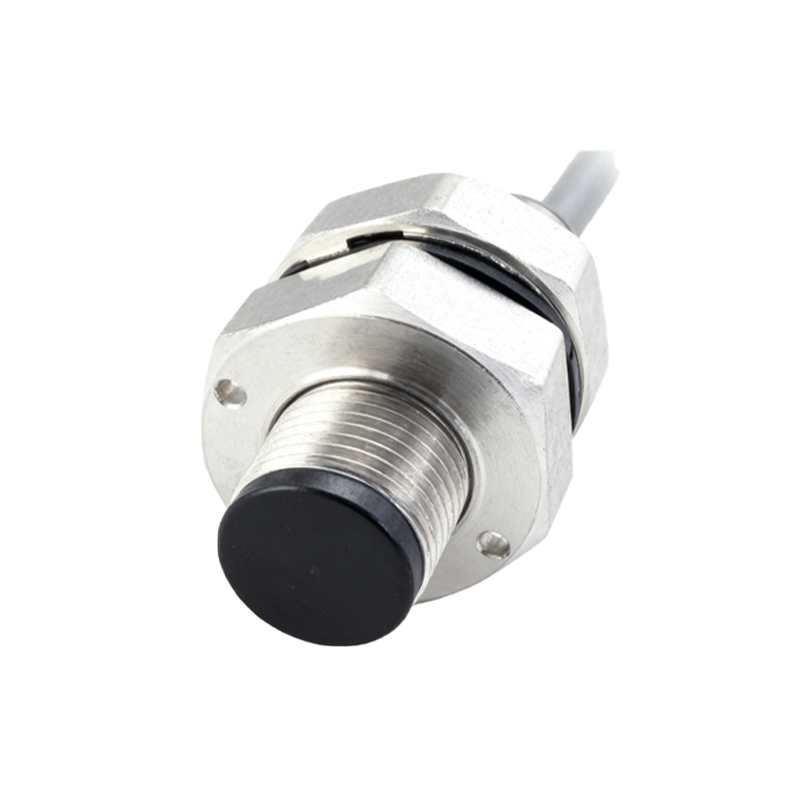
The choice between a sensor and a switch hinges on the application's requirements. For tasks demanding granular data, such as maintaining a precise gap between a roller and a material web or monitoring fill levels in a tank with continuous feedback, an analog-output proximity sensor is indispensable. Its output signal (e.g., 4-20 mA, 0-10 V) is proportional to the distance, providing valuable process information. Conversely, for straightforward presence detection—does a bottle pass a checkpoint? Is a machine door closed?—a proximity switch is often the simpler, more robust, and cost-effective solution. Its digital output (e.g., PNP/NPN) is perfect for direct integration into control logic.
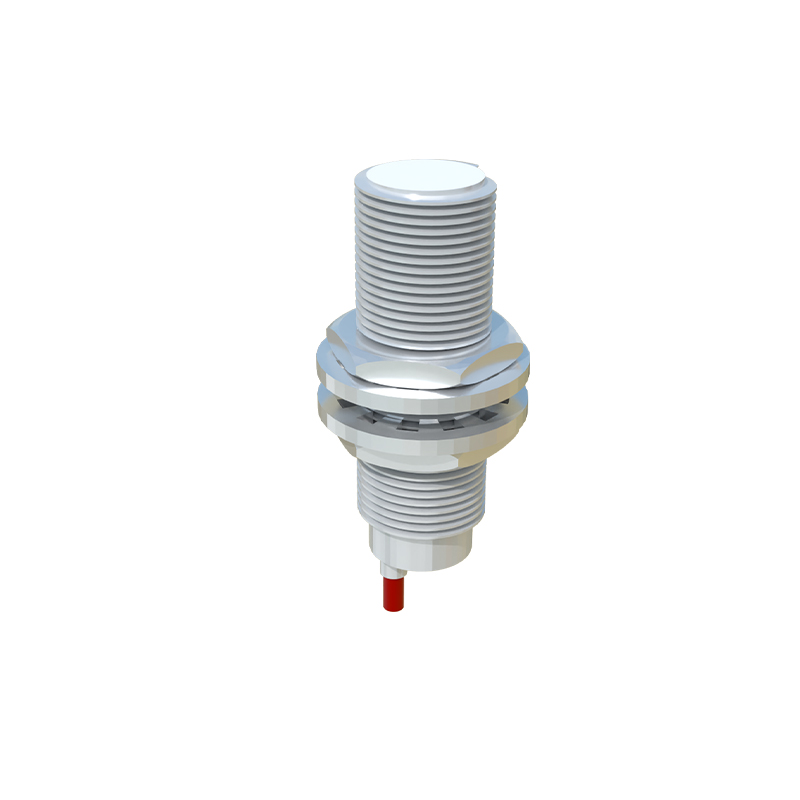
Several key factors influence selection beyond the basic analog vs. digital output distinction. Sensing range, the type of target material, environmental conditions (like dust, moisture, or temperature), response speed, and mounting requirements are all critical. Inductive proximity devices, for instance, are workhorses in metal-heavy manufacturing environments. Capacitive variants can detect non-metallic materials and are useful in packaging or liquid control. Ultrasonic and photoelectric options offer longer ranges for larger-scale applications.
In modern systems, both devices play complementary roles. A complex assembly line might use analog proximity sensors for precise robotic arm positioning and a network of rugged proximity switches for basic part verification and safety interlocking. The evolution towards Industry 4.0 and the Industrial Internet of Things (IIoT) sees even simple proximity switches gaining smart features, like diagnostic data (IO-Link technology), while advanced sensors provide richer data streams for predictive maintenance and process optimization.
Ultimately, recognizing that a proximity switch is a subset of proximity sensor technology designed for a specific switching function clarifies their roles. By carefully assessing whether the need is for measurement or detection, engineers and technicians can leverage the strengths of each to build more intelligent, responsive, and efficient automated systems. The correct implementation not only solves an immediate detection problem but also contributes to system longevity, safety, and data-driven insights.