Proximity sensors are indispensable components in modern industrial automation, serving as the primary interface for non-contact object detection. These devices detect the presence or absence of an object within a specified sensing range without any physical contact, offering significant advantages in reliability, speed, and durability over mechanical limit switches. The core principle involves generating an electromagnetic field or beam and monitoring changes in that field caused by the intrusion of a target object. This detection triggers an electrical output signal, which is then used to control machinery, count items, or signal a specific condition in a process.
Several key technologies dominate the proximity sensor landscape, each suited to different materials and environmental conditions. Inductive proximity sensors are the most common in industrial settings. They generate an oscillating electromagnetic field from a coil in the sensing face. When a metallic object (the target) enters this field, it induces eddy currents on the object's surface. These currents absorb energy from the oscillator, causing its amplitude to decrease. This change is detected by the sensor's circuitry, which subsequently switches the output state. Inductive sensors are ideal for detecting metals like steel, aluminum, and copper, with sensing ranges typically from a few millimeters to about 60 millimeters. They are robust, resistant to dirt, oil, and water (often rated IP67 or higher), and are widely used in machine tools, material handling, and automotive assembly lines for tasks such as position verification, end-of-travel detection, and part counting.
For non-metallic objects, capacitive proximity sensors are the preferred choice. They operate on a similar principle but can detect virtually any material, including plastics, wood, liquids, powders, and glass. A capacitive sensor generates an electrostatic field. When any object with a dielectric constant different from air enters this field, it causes a detectable change in the field's capacitance. This triggers the output. Capacitive sensors are commonly used in level detection for tanks (liquids or granules), material handling for non-metallic parts, and packaging applications. Their sensing range is generally shorter than inductive types and can be influenced by environmental factors like humidity.
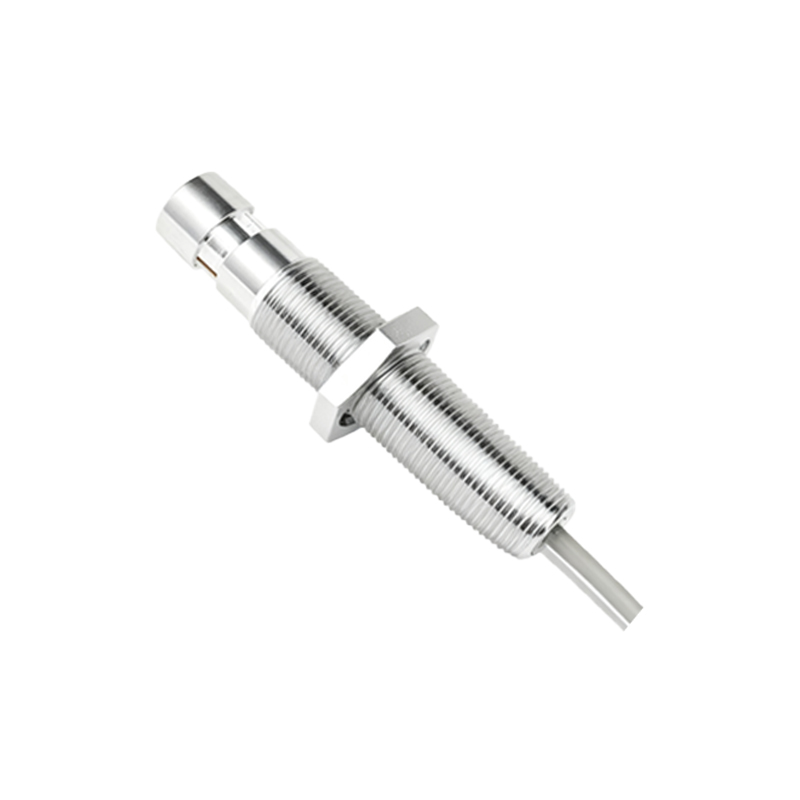
A third major type is the photoelectric sensor, which uses light to detect objects. It consists of a light emitter (usually an LED) and a receiver. When the emitted light beam is interrupted or reflected by an object, the change in light intensity at the receiver is detected, prompting an output change. Photoelectric sensors offer the longest sensing ranges, from centimeters to tens of meters. They come in three main configurations: through-beam (separate emitter and receiver), retro-reflective (uses a reflector), and diffuse (reflective), where the sensor uses light reflected directly from the target. These sensors are versatile for detecting objects of any material, color, or transparency, making them essential in packaging, conveyor systems, and automated storage.
When selecting a proximity sensor for a specific application, engineers must consider several critical parameters. The sensing range, or the maximum distance at which the sensor can reliably detect a standard target, is paramount. The target material directly dictates the sensor type: inductive for metals, capacitive for nearly everything else, and photoelectric for long-range or specific material needs. Environmental conditions are crucial; sensors may need to withstand extreme temperatures, washdowns, corrosive chemicals, or heavy vibration. The output type—typically NPN (sinking) or PNP (sourcing) transistor, or sometimes analog—must be compatible with the programmable logic controller (PLC) or other control system. The housing style (cylindrical, rectangular, block) and connection method (cable or quick-disconnect) are chosen based on mounting constraints.
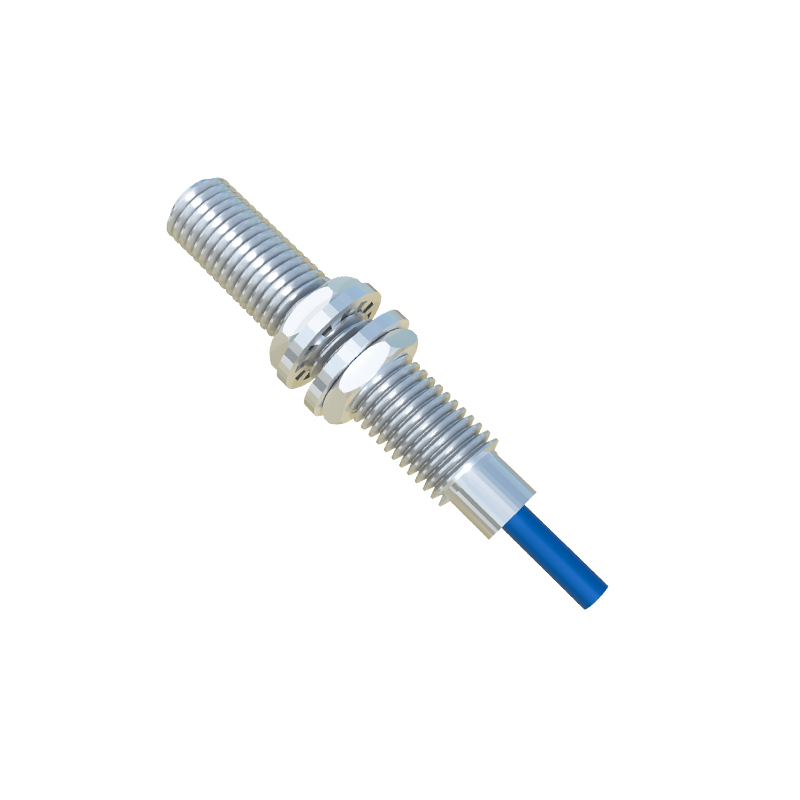
Installation and alignment are critical for reliable operation. Sensors must be mounted securely to prevent vibration-induced false triggers. For inductive and capacitive sensors, maintaining the correct gap from the target is essential; mounting too close can cause permanent activation, while too far reduces reliability. It is also vital to avoid sensing the background or other unintended objects. For photoelectric sensors, precise alignment of the beam is necessary, and the lens must be kept clean from dust, oil, or debris that could scatter or block the light.
In practice, proximity sensors form the backbone of automated systems. On a high-speed bottling line, inductive sensors verify the presence of metal caps, while capacitive sensors check liquid levels in translucent bottles before capping. Photoelectric sensors count boxes on a conveyor and ensure they are correctly positioned for palletizing. In robotic welding cells, inductive sensors confirm the precise position of a metal workpiece before the weld cycle begins. Their ability to operate millions of cycles without wear makes them far superior to mechanical switches in high-cycle applications.
Troubleshooting common issues often involves checking power supply integrity, verifying the output load, and inspecting for physical damage or contamination. False triggers can result from electrical noise, which may require proper shielding and grounding, or from environmental interference like metal chips accumulating