In the realm of industrial automation and precision engineering, laser lift sensors have emerged as a pivotal technology for non-contact measurement and control. These sophisticated devices utilize laser triangulation or time-of-flight principles to accurately determine the distance, position, or displacement of a target object. Unlike traditional mechanical or ultrasonic sensors, laser sensors offer unparalleled accuracy, often in the micrometer range, and high-speed response times, making them indispensable in applications where precision and reliability are paramount.
The core operational principle of a laser lift sensor involves emitting a focused laser beam onto the target surface. The reflected light is then captured by a sensitive receiver, such as a CCD or CMOS array. By analyzing the position or the phase shift of the reflected beam, the sensor's internal processor calculates the exact distance to the target. This non-contact method eliminates issues like mechanical wear, hysteresis, and target contamination, which are common drawbacks of tactile probes.
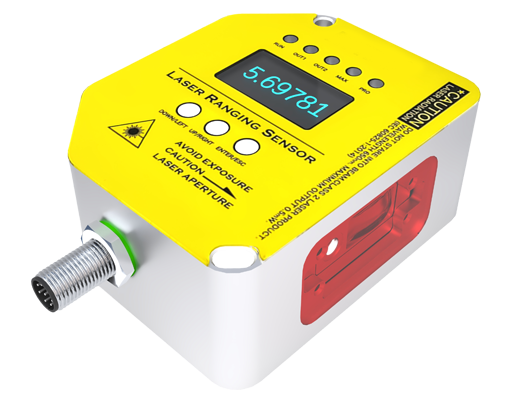
Key advantages of laser lift sensors include their exceptional resolution and repeatability. They can perform reliably in harsh industrial environments, with many models featuring robust housings rated for IP67 or higher, protecting against dust, moisture, and vibrations. Furthermore, their ability to measure a wide variety of materials—from reflective metals to dark, absorbent surfaces—enhances their versatility. Advanced models incorporate automatic surface compensation and ambient light filtering to maintain accuracy under changing conditions.
Typical applications span numerous sectors. In automotive manufacturing, laser sensors precisely measure component gaps and flushness during assembly. In electronics, they ensure the exact placement of microchips on circuit boards. The packaging industry relies on them for fill-level detection and thickness monitoring. Robotics integrators use these sensors for precise object positioning and palletizing. Additionally, in quality control labs, they facilitate detailed dimensional inspection and surface profiling.
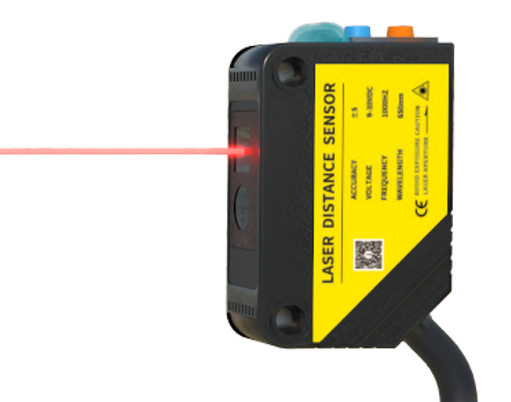
When selecting a laser lift sensor, engineers must consider several parameters. The measuring range, resolution, linearity error, and sampling rate are critical for matching the sensor to the application's demands. The type of output—analog (e.g., 4-20 mA, 0-10 V) or digital (e.g., RS-232, Ethernet/IP, PROFINET)—determines integration ease with existing PLCs or data acquisition systems. Environmental factors like ambient temperature, potential optical interference, and the target's surface properties (color, texture, reflectivity) also significantly influence performance.
Installation and calibration are straightforward but require attention to detail. The sensor should be mounted securely to minimize vibrations, and the laser beam must be aligned perpendicular to the target surface for optimal accuracy. Regular maintenance primarily involves keeping the lens clean and verifying calibration against a known reference. Most modern sensors feature user-friendly software for configuration, real-time monitoring, and diagnostics, streamlining the setup process.
Looking ahead, the evolution of laser lift sensor technology is geared towards smarter, more integrated solutions. Trends include miniaturization for space-constrained applications, enhanced connectivity for Industry 4.0 and IoT frameworks, and the integration of AI algorithms for predictive maintenance and adaptive measurement. These advancements promise to further elevate their role in enabling higher efficiency, reduced waste, and superior product quality across global manufacturing landscapes.
In conclusion, laser lift sensors represent a cornerstone of modern metrology and automation. Their ability to deliver precise, reliable, and non-contact measurements addresses the growing demands for speed and accuracy in industrial processes. As technology continues to advance, these sensors will undoubtedly become even more integral to innovative engineering solutions, driving productivity and quality to new heights.