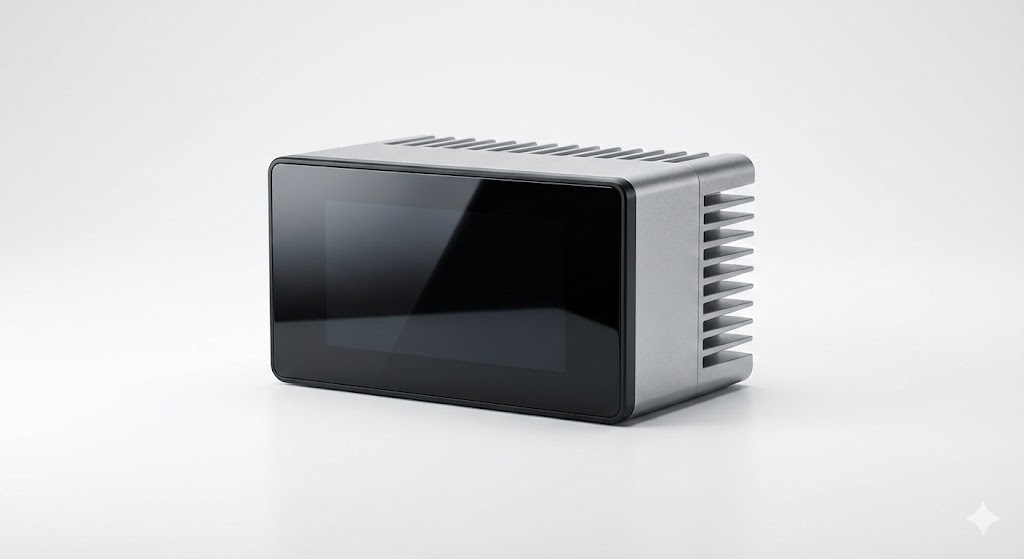
Unilateral laser sensors represent a pivotal advancement in non-contact measurement technology, widely utilized across industrial automation, robotics, and quality control systems. These sensors operate by emitting a focused laser beam from a single source toward a target surface, then detecting the reflected light to calculate distance, displacement, or profile characteristics with micron-level accuracy. Unlike bilateral or triangulation-based systems that require multiple emitters or receivers, unilateral designs integrate both components into one compact unit, enabling simplified installation and reduced alignment complexity. This architecture is particularly advantageous in confined spaces or dynamic environments where traditional sensors may struggle.
The core working principle hinges on time-of-flight (ToF) or phase-shift measurement techniques. In ToF models, the sensor calculates distance by measuring the time delay between laser emission and reception of the reflected signal, suitable for ranges up to several meters. Phase-shift variants analyze modulation frequency changes in the laser wave, offering higher precision for sub-millimeter applications. Advanced unilateral sensors incorporate CMOS or CCD arrays to capture surface contours, allowing for 2D/3D scanning without physical contact—ideal for inspecting delicate or high-temperature objects like semiconductor wafers or molten metals.
Key applications span diverse sectors. In automotive manufacturing, unilateral laser sensors monitor assembly line gaps and panel alignments, ensuring tolerances within ±0.1mm. Electronics producers employ them for PCB flatness verification and component placement validation. Logistics automation leverages these sensors for parcel dimensioning and robotic guidance, while aerospace industries rely on them for turbine blade inspection and composite material profiling. Their immunity to ambient light interference—achieved through narrow-band optical filters and pulsed laser operation—makes them robust even in harsh factory settings with variable lighting or vibrations.
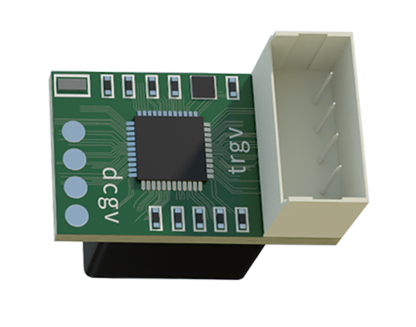
Modern unilateral laser sensors feature embedded microprocessors for real-time data processing, communicating via IO-Link, Ethernet/IP, or PROFINET protocols to integrate seamlessly with PLCs and SCADA systems. Calibration algorithms compensate for material reflectivity differences, from glossy metals to matte plastics, ensuring consistent readings. Some models include predictive diagnostics, alerting users to lens contamination or emitter degradation before failures occur.
Despite advantages, challenges persist. Highly transparent or absorptive materials (e.g., glass or black rubber) can scatter laser beams, requiring sensitivity adjustments. Multi-sensor synchronization in large-scale setups demands precise networking. Future trends point toward miniaturization using MEMS technology, enhanced AI-driven anomaly detection, and hybrid systems combining laser with ultrasonic or vision-based sensing for redundant accuracy. As Industry 4.0 accelerates, unilateral laser sensors will continue evolving as indispensable tools for smart manufacturing, driving efficiency and quality in an increasingly automated world.