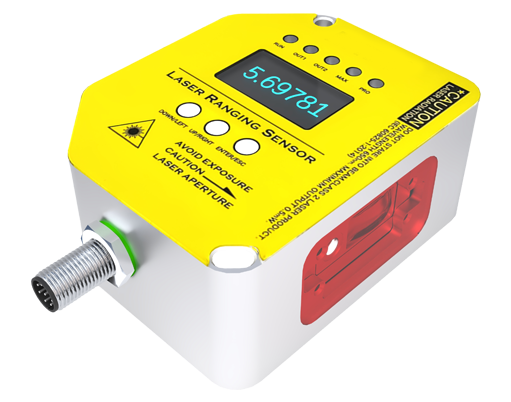
In the rapidly evolving landscape of industrial automation, precision, reliability, and efficiency are paramount. Among the myriad of sensing technologies available, BGS (Background Suppression) laser sensors have emerged as a critical component for countless applications, offering unparalleled accuracy in object detection and distance measurement. This article delves into the operational principles, key advantages, diverse applications, and essential selection criteria for BGS laser sensors, providing a comprehensive guide for engineers and system integrators.
At its core, a BGS laser sensor operates on the principle of triangulation. The sensor emits a focused beam of visible red laser light towards a target. The light reflected from the target is then captured by a receiving element, typically a position-sensitive detector (PSD) or a CMOS/CCD array. The fundamental innovation of BGS technology lies in its ability to distinguish between the light reflected from the desired target and the light reflected from the background. This is achieved through sophisticated internal optics and electronics that are pre-set to recognize the reflection from a specific, programmed sensing distance. Any light returning from points beyond this defined "cut-off" distance is electronically suppressed or ignored. Consequently, the sensor only triggers when an object is present within its precise, adjustable sensing window, effectively making it "blind" to the background.
The advantages of this technology are significant. First and foremost is its exceptional insensitivity to background interference. Unlike standard diffuse reflective sensors that can be triggered by distant objects or reflective surfaces behind the intended target, a BGS sensor reliably detects only objects within its defined range, regardless of their color, material, or surface texture. This makes it ideal for applications where the target and background have similar reflectivity or where the background is highly reflective. Secondly, BGS laser sensors offer extremely high precision and repeatability, often in the sub-millimeter range. They provide a very sharp switching point, enabling precise positioning and dimensional checking. Furthermore, the visible laser spot allows for easy alignment and setup, reducing installation and commissioning time.
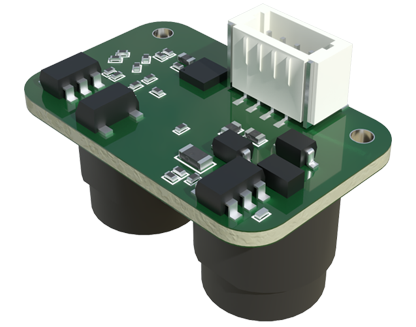
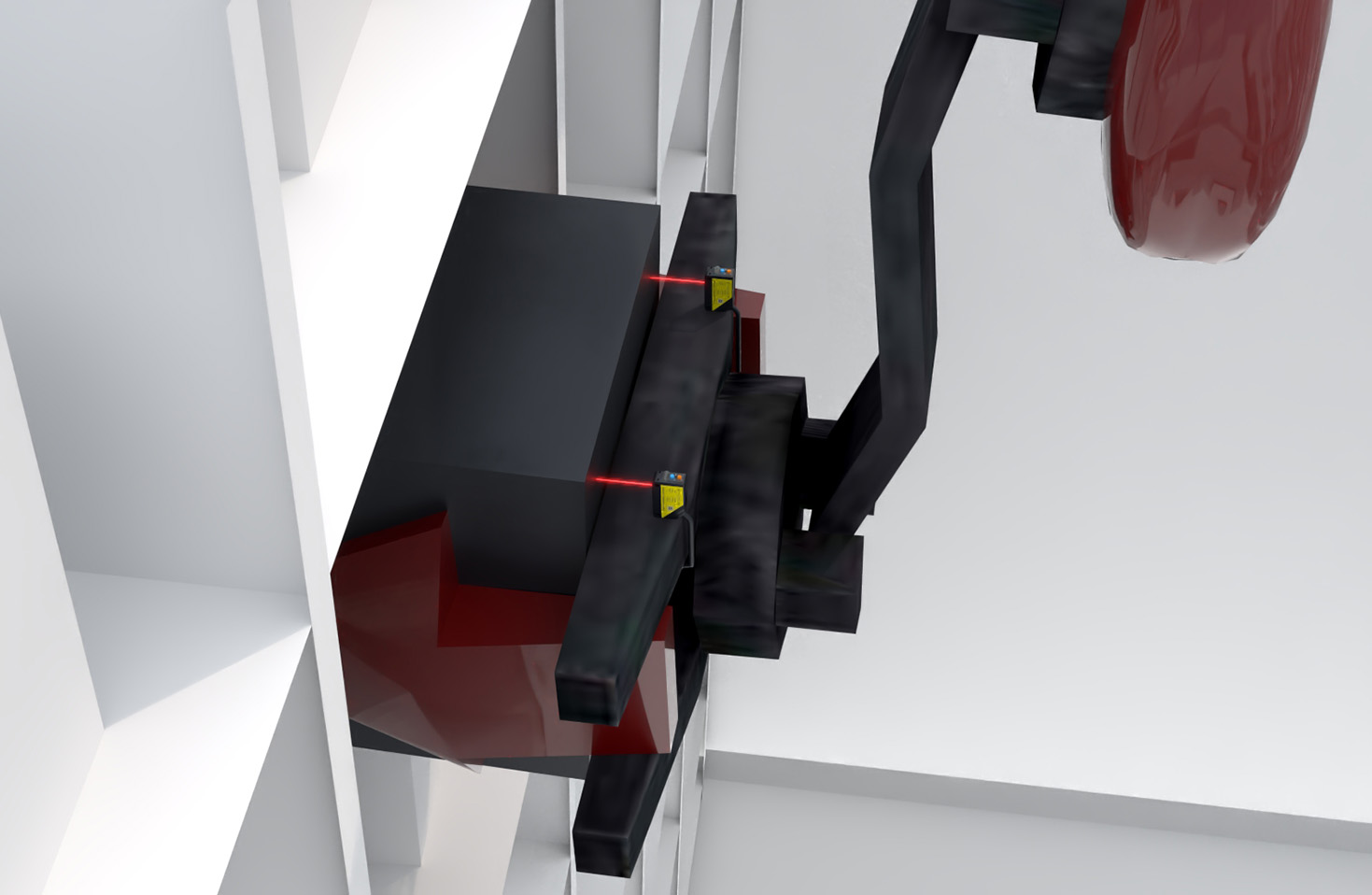
The applications for BGS laser sensors span across virtually every industry. In packaging and material handling, they are used for precise bottle cap presence detection, transparent film registration, and accurate carton counting on high-speed conveyors, where ignoring the conveyor belt itself is crucial. In the automotive sector, they ensure precise part placement in assembly robots, verify the presence of small components like pins or clips, and control weld gun positioning. Electronics manufacturing relies on them for detecting minute components on circuit boards, measuring chip heights, and verifying connector insertion. They are also indispensable in logistics for palletizing and depalletizing, where they must detect the edge of a box on a pallet without being affected by the pallet structure behind it. Additional uses include controlling fill levels in transparent containers, monitoring web breaks in printing, and ensuring safety in automated guided vehicles (AGVs) for obstacle detection at specific distances.
Selecting the right BGS laser sensor requires careful consideration of several parameters. The sensing range is the primary specification, defining the minimum and maximum distances at which the sensor can be effectively programmed to detect. The spot size is critical for detecting small objects; a smaller, more focused spot allows for higher resolution. Response time must be compatible with the application's speed to ensure no missed detections. Output type (e.g., NPN/PNP, analog, IO-Link) must align with the control system's requirements. Environmental robustness is key; look for high Ingress Protection (IP) ratings for dust and water resistance, wide operating temperature ranges, and rugged housings for harsh industrial environments. Features like teach-in functionality (for easy programming of the sensing distance via a button or remote input) and built-in diagnostics (via LED indicators or IO-Link) greatly enhance usability and maintenance.
In conclusion, BGS laser sensors represent a sophisticated and versatile solution for demanding detection tasks in industrial automation. Their ability to provide background-independent, highly precise, and reliable object detection makes them superior to conventional sensors in complex scenarios. By understanding their operating principle and meticulously matching their specifications—such as sensing range, spot size, speed, and environmental ratings—to the application's needs, engineers can leverage this powerful technology to enhance system accuracy, improve production quality, and boost overall operational efficiency. As automation continues to advance towards greater intelligence and flexibility, the role of precise, configurable sensors like the BGS laser type will only become more central to successful system design and implementation.