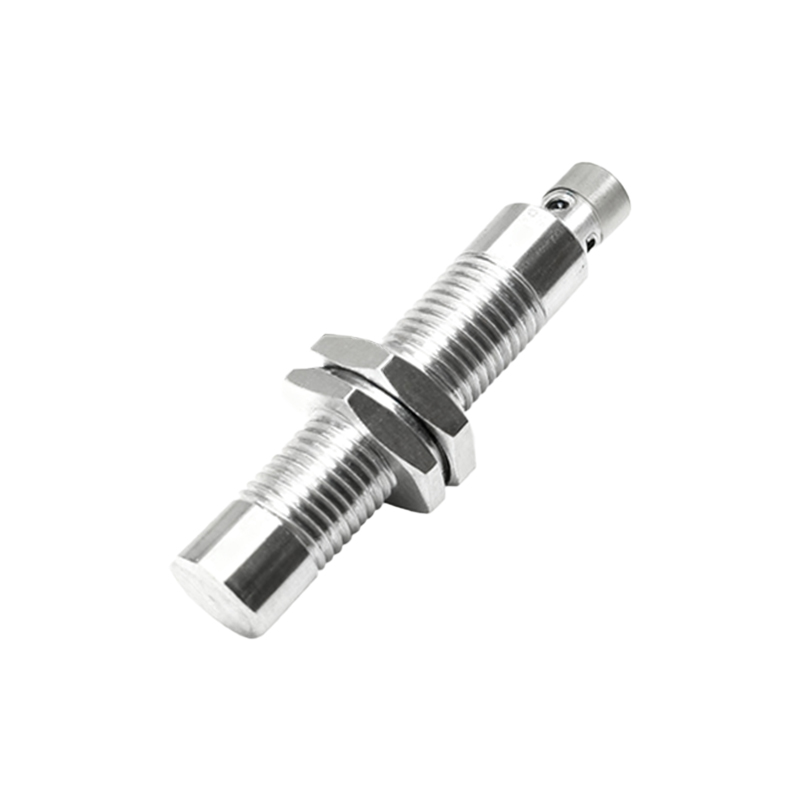
In modern industrial automation, robotics, and smart device development, proximity sensors play a critical role. They detect the presence or absence of objects within a specified range without physical contact. However, physically testing and validating these sensors across countless real-world scenarios can be prohibitively expensive, time-consuming, and sometimes dangerous. This is where proximity sensor simulation becomes an indispensable tool for engineers and developers. Simulation allows for the virtual modeling of sensor behavior within a digital environment, enabling rapid prototyping, algorithm testing, and system integration long before hardware is manufactured.
The core of proximity sensor simulation lies in creating accurate digital twins of both the sensor and its operational environment. This involves modeling the sensor's specific detection principle. For instance, simulating an inductive proximity sensor requires algorithms that calculate the change in an oscillating circuit's amplitude when a metallic object enters its electromagnetic field. A capacitive sensor simulation, on the other hand, must model the disturbance in an electrostatic field caused by any material. Optical and ultrasonic sensor simulations are more complex, involving ray tracing or sound wave propagation models to simulate the reflection or interruption of a beam or pulse. The fidelity of these physics-based models directly impacts the reliability of the simulation results.
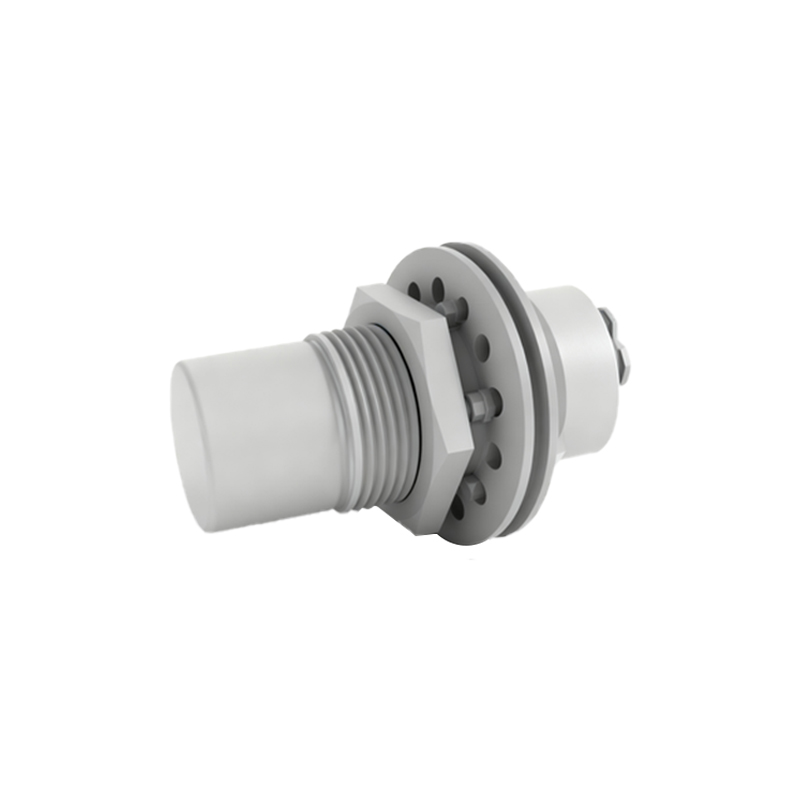
Several powerful software tools and platforms facilitate this process. Robotics simulators like Gazebo and Webots offer built-in plugins for common sensor types, including proximity sensors, allowing them to be placed on virtual robots navigating simulated worlds. For industrial automation, programmable logic controller (PLC) simulation software often integrates with 3D plant simulation tools (e.g., Siemens NX Mechatronics Concept Designer, Rockwell Emulate3D) to create a virtual commissioning environment. Here, a simulated proximity sensor on a conveyor belt can trigger events in a simulated PLC program, testing the entire control logic. Furthermore, general-purpose multiphysics simulation software like ANSYS or COMSOL can be used for high-fidelity, component-level analysis of sensor fields and interactions, though this is more computationally intensive.
The applications of proximity sensor simulation are vast. In automotive manufacturing, engineers simulate networks of sensors on assembly lines to optimize robot paths and prevent collisions, ensuring safety and efficiency. In consumer electronics, simulating the response of a smartphone's proximity sensor (which turns off the screen during a call) under various conditions—different ear shapes, phone case materials, lighting—helps refine its firmware algorithms. For autonomous mobile robots (AMRs) and drones, simulation is crucial for testing navigation and obstacle avoidance systems flooded with data from lidar, ultrasonic, and infrared proximity sensors in millions of virtual scenarios, including edge cases that would be risky to recreate physically.
A significant advantage of simulation is the ability to perform stress testing and failure mode analysis in a controlled, repeatable manner. Engineers can introduce noise, sensor drift, or complete failure into the model to see how the broader system—such as a robotic workcell or an advanced driver-assistance system (ADAS)—responds. This leads to more robust and fault-tolerant designs. Additionally, simulation supports standardization and collaboration. A sensor model with well-defined interfaces can be shared between teams working on mechanical design, electrical integration, and software development, ensuring everyone works from a common reference.
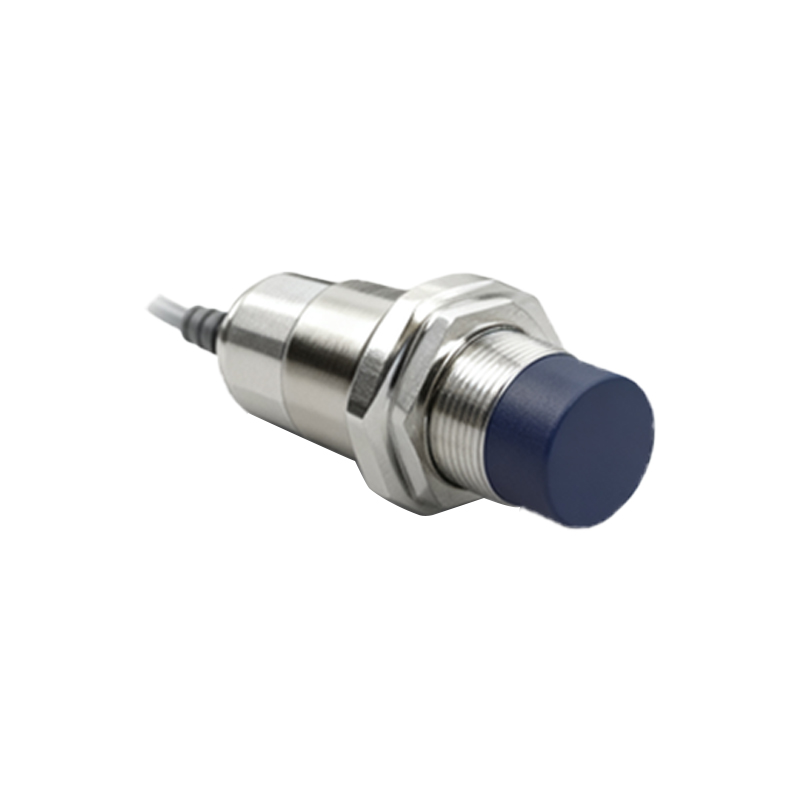
However, challenges remain in achieving perfect simulation. The real world is messy, with unpredictable surface reflectivities, material impurities, electromagnetic interference, and environmental factors like humidity or dust. Capturing all these nuances in a model is difficult. Therefore, a best-practice approach is a "simulation-in-the-loop" strategy. Development begins with high-level simulation for concept validation and control logic testing, progresses to more detailed real-time simulation for hardware-in-the-loop (HIL) testing, and is ultimately validated with targeted physical prototyping. This hybrid approach maximizes the benefits of virtual testing while grounding the design in reality.
In conclusion, proximity sensor simulation is not merely a cost-saving measure; it is a fundamental enabler of innovation in fields reliant on sensing and automation. By providing a safe, scalable, and flexible virtual sandbox, it accelerates development cycles, improves system reliability, and allows for the exploration of designs that might otherwise be too complex or risky to attempt. As simulation technologies continue to advance, particularly with integration into digital twin and AI-driven development platforms, their role in shaping the intelligent systems of the future will only become more profound.