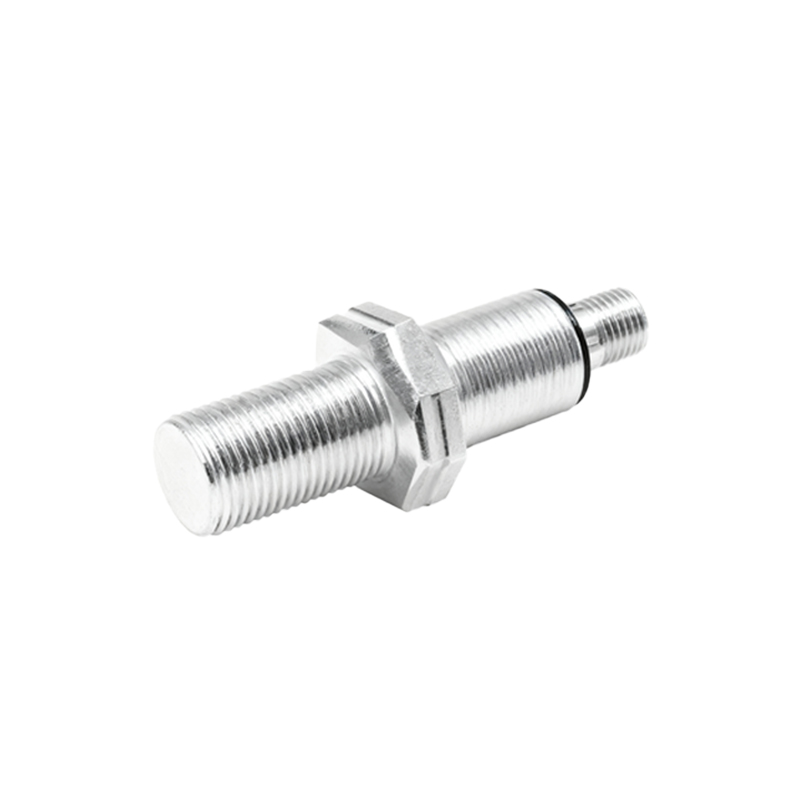
In the realm of industrial automation and control systems, the two-wire proximity sensor stands as a cornerstone of reliability and simplicity. Unlike its three-wire and four-wire counterparts, this sensor integrates seamlessly into control circuits with minimal wiring, offering a streamlined solution for object detection without physical contact. This article delves into the operational principles, key advantages, application considerations, and selection criteria for these ubiquitous devices.
At its core, a two-wire proximity sensor functions as a switch that opens or closes based on the presence or absence of a target object within its sensing range. The fundamental distinction lies in its wiring configuration. It connects in series with the load (such as a PLC input, relay, or indicator lamp) to the power supply, typically 10-30V DC or 20-250V AC. There is no separate wire for the output signal or a dedicated power supply line. In the DC version, the sensor itself consumes a small "quiescent current" or "leakage current" (typically under 2 mA) when in the "off" state to power its internal oscillator and electronics. When a metallic target (ferrous or non-ferrous, depending on the sensor type—inductive, capacitive, or ultrasonic) enters the sensing field, the internal circuit switches, allowing the full load current to flow. For AC sensors, a small residual voltage remains across the sensor when off.
The primary advantage of this design is its remarkable simplicity. Installation is faster and less error-prone due to the reduced wiring complexity. This translates directly into lower installation costs, especially in large-scale applications involving hundreds of sensors. The two-wire design is inherently compatible with traditional relay logic and can be directly substituted for mechanical limit switches, facilitating easy upgrades in legacy systems. Furthermore, the absence of a separate output wire often allows for a more compact sensor housing.
However, engineers must carefully consider several technical parameters. The aforementioned leakage current is critical. If this current is sufficient to hold on a highly sensitive PLC input module or a low-power relay, it can cause a "false on" signal. Therefore, ensuring the PLC input's minimum operating current is higher than the sensor's leakage current is paramount. A "bleeder resistor" or "load resistor" is sometimes installed in parallel with the load to ensure sufficient current flow to keep the sensor operational. Another key specification is the voltage drop across the sensor when in the "on" state. This "on-state voltage" or "saturation voltage" (usually 1.5-3V for DC types) reduces the voltage available to the load and must be accounted for in circuit design. Additionally, two-wire sensors generally have slightly lower switching frequencies and shorter sensing distances compared to three-wire models due to their power-sharing architecture.
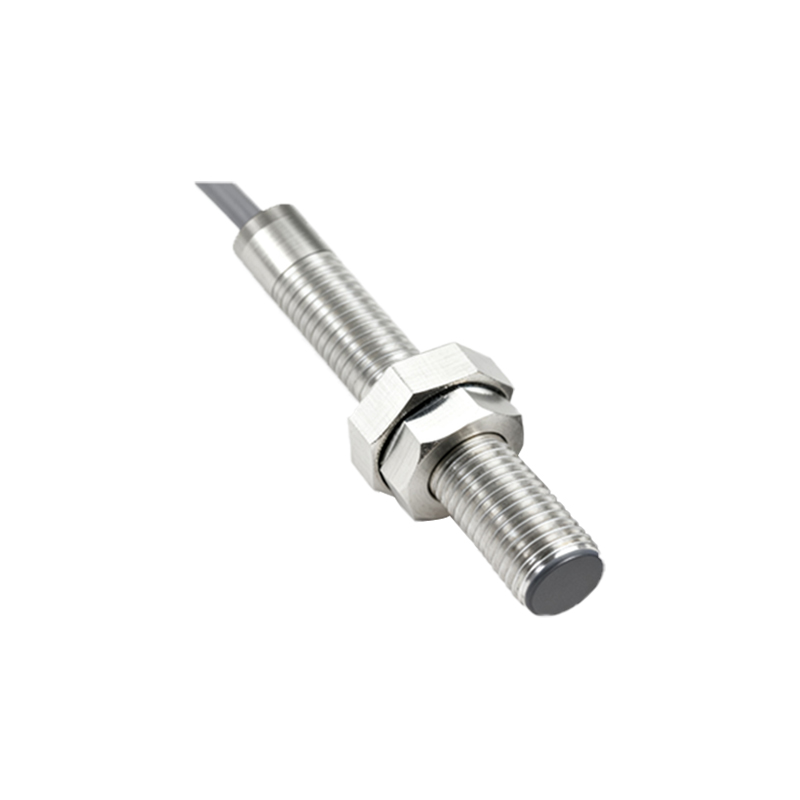
Selecting the appropriate two-wire proximity sensor requires a systematic approach. First, identify the target material. For metals, inductive sensors are standard. For non-metallic materials like wood, plastic, or liquids, capacitive sensors are necessary. Second, determine the required sensing distance (the rated operating distance, Sn) and ensure an adequate safety margin. The housing material is another vital choice: brass, stainless steel, or PBT plastic, depending on the environmental conditions regarding chemical exposure, physical impact, and temperature extremes. For DC systems, pay close attention to the polarity; most two-wire DC sensors are polarity-sensitive, though some modern versions offer reverse polarity protection. Finally, verify the sensor's compatibility with the control device's input characteristics regarding current consumption and voltage thresholds.
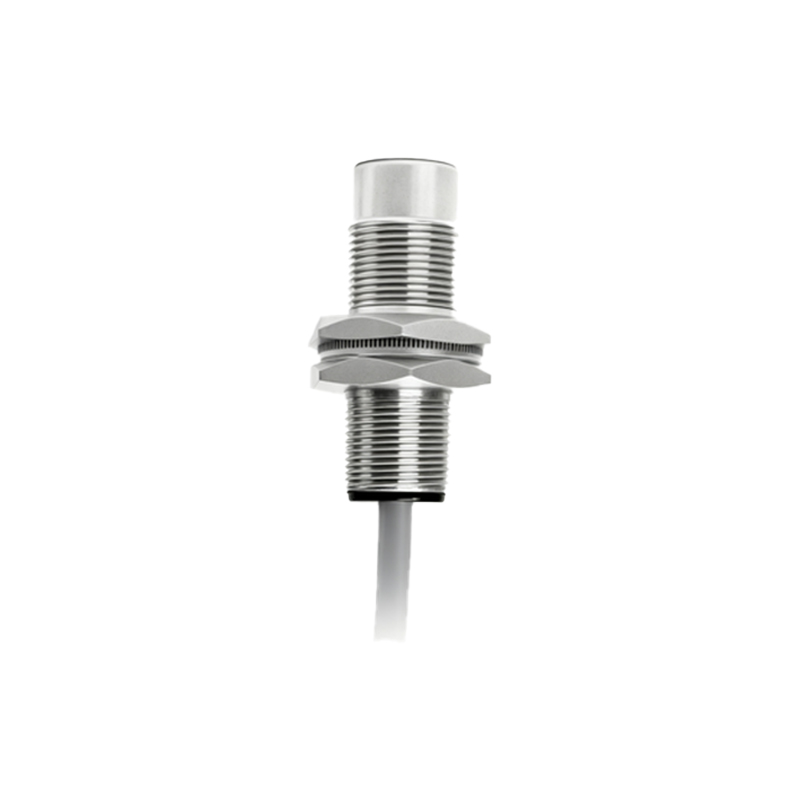
In practical applications, two-wire proximity sensors are extensively used for position detection of machine parts, end-of-travel limits, counting objects on conveyors, and monitoring bin levels. Their robustness in harsh industrial environments—resisting vibration, moisture, and electromagnetic interference—makes them indispensable. When integrating them into a PLC-based system, it is advisable to consult both the sensor datasheet and the PLC input module manual to confirm electrical compatibility.
In conclusion, the two-wire proximity sensor offers an elegant, cost-effective, and reliable sensing solution. Its simplicity in wiring and installation belies the need for careful electrical consideration during system design. By thoroughly understanding its operating characteristics, limitations, and selection parameters, electrical engineers can leverage this versatile component to build robust, efficient, and maintainable automation systems. As technology advances, newer models continue to offer improved performance, lower leakage currents, and enhanced protection features, solidifying their role in the future of industrial sensing.