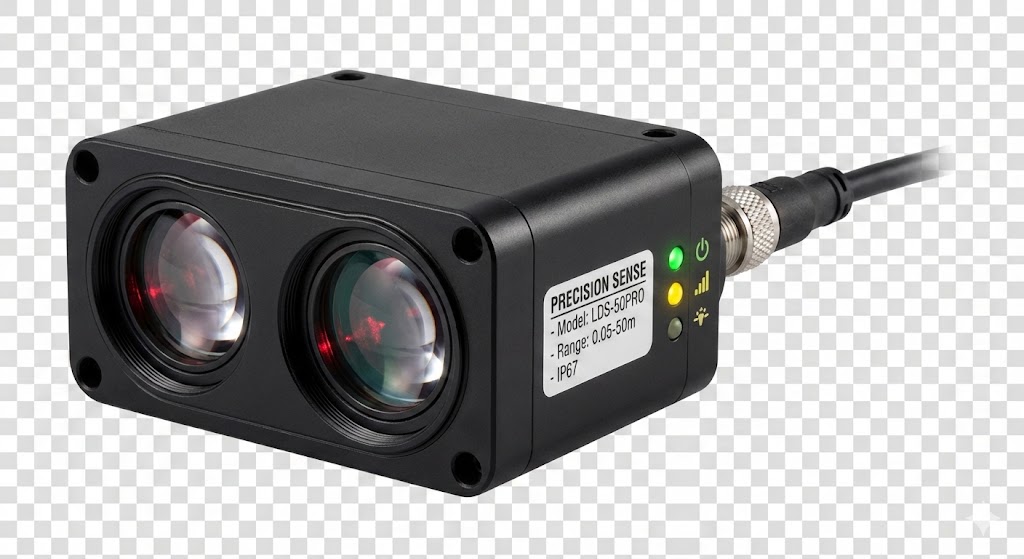
In the realm of industrial automation, the integration of multiple laser sensors has revolutionized precision measurement, quality control, and operational efficiency. These advanced devices, utilizing laser technology for non-contact sensing, offer unparalleled accuracy in detecting position, distance, displacement, and surface characteristics. By deploying multiple laser sensors in coordinated systems, industries can achieve comprehensive monitoring across complex production lines, ensuring real-time data acquisition and adaptive control.
The core advantage of multiple laser sensors lies in their ability to perform simultaneous measurements from different angles or locations. For instance, in automotive manufacturing, arrays of laser sensors are employed to scan vehicle bodies for dimensional accuracy, detecting minute deviations that could affect assembly. Similarly, in electronics, they inspect circuit boards for soldering defects or component placement, enhancing yield rates. The synergy between sensors allows for triangulation and 3D profiling, enabling detailed analysis of objects in motion without physical contact, which minimizes wear and reduces maintenance costs.
Key technologies driving this innovation include time-of-flight (ToF), triangulation, and confocal measurement principles. ToF sensors calculate distance based on laser pulse travel time, ideal for long-range applications like warehouse logistics. Triangulation sensors use geometric angles for high-resolution surface scanning, common in robotics for object recognition. Confocal sensors provide nanometer-level precision, crucial in semiconductor fabrication. When multiple sensors are networked, they form a robust sensing ecosystem, often integrated with IoT platforms for data analytics and predictive maintenance.
Applications span diverse sectors. In aerospace, laser sensor arrays monitor turbine blade wear during testing, ensuring safety and performance. In agriculture, they guide autonomous machinery for precise planting and harvesting. Challenges include environmental interference from dust or vibrations, but advancements in filtering algorithms and rugged designs mitigate these issues. Future trends point toward miniaturization, increased speed, and AI-enhanced sensor fusion, where multiple laser inputs combine with vision systems for smarter decision-making.

Ultimately, the strategic deployment of multiple laser sensors elevates industrial processes by boosting accuracy, reducing downtime, and enabling flexible automation. As industries embrace Industry 4.0, these sensors will continue to be pivotal in driving innovation, from smart factories to sustainable energy systems, underscoring their role as indispensable tools in modern engineering.