Vibration measurement is a critical aspect of condition monitoring, predictive maintenance, and quality control across numerous industries, from aerospace and automotive to manufacturing and energy. Traditional contact-based sensors, such as accelerometers, have long been the standard. However, the advent of laser-based vibration sensors has introduced a paradigm shift, offering non-contact, high-precision measurement capabilities that are indispensable for modern engineering challenges. This article delves into the operational principles, key advantages, diverse applications, and practical implementation considerations of laser sensors for vibration analysis.
At its core, a laser vibration sensor operates on the principle of laser Doppler vibrometry or, in simpler configurations, triangulation or interferometry. The most common and precise method is Laser Doppler Vibrometry (LDV). An LDV system directs a coherent laser beam at the target surface. The vibration of the surface causes a Doppler shift in the frequency of the reflected light. This shift is directly proportional to the instantaneous velocity of the target along the laser beam axis. By detecting and demodulating this frequency shift, the sensor accurately calculates the velocity and, through integration, the displacement of the vibrating object. This process occurs without any physical contact, eliminating mass-loading effects—a significant limitation of contact sensors that can alter the dynamic characteristics of lightweight or delicate structures.
The benefits of using laser sensors for vibration measurement are substantial. First and foremost is the non-contact nature, which allows for measurements on hot, rotating, electrically charged, or fragile components where sensor attachment is impossible or undesirable. This capability is crucial for testing micro-electromechanical systems (MEMS), turbine blades in operation, or sensitive historical artifacts. Secondly, laser sensors provide exceptional resolution and a wide frequency bandwidth, often from near DC to several MHz, enabling the capture of both very low-frequency oscillations and ultra-high-frequency dynamics. Furthermore, they offer a large stand-off distance, allowing measurements from a safe and convenient location. The spatial resolution is also very high, as the laser spot can be focused to a diameter of a few micrometers, enabling precise point measurements on small areas.
The applications of laser vibration sensors are vast and growing. In the automotive industry, they are used for modal analysis of engine components, brake squeal investigation, and NVH (Noise, Vibration, and Harshness) testing on entire vehicle bodies. In aerospace, they are essential for testing composite materials, monitoring turbine engine vibrations, and analyzing the structural dynamics of aircraft wings and fuselages. In manufacturing, they facilitate quality control by inspecting the vibrational characteristics of products like hard disk drives, silicon wafers, and precision bearings. In the energy sector, laser vibrometers monitor the condition of wind turbine blades and power generation equipment. Research and development laboratories rely on them for advanced studies in acoustics, biomechanics, and material science.
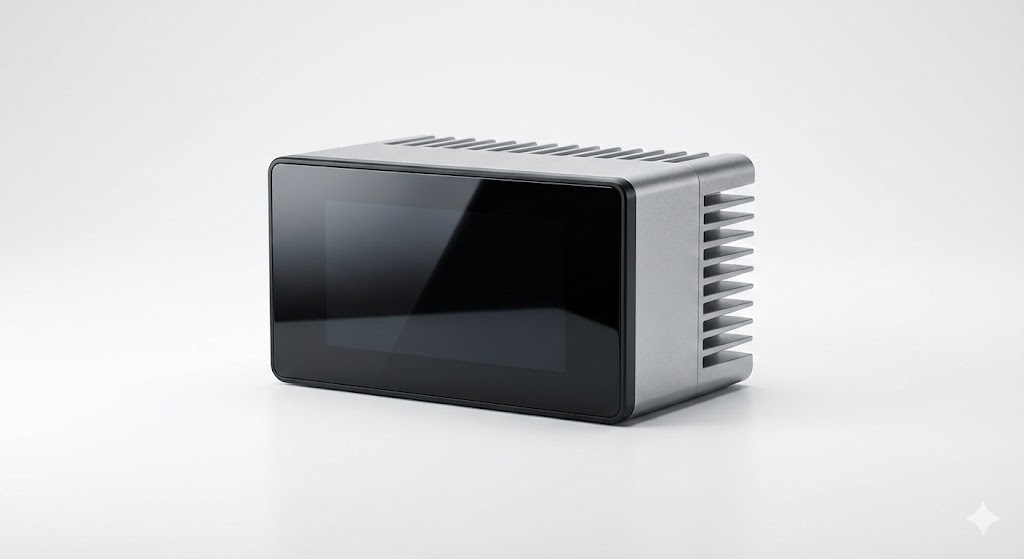
Implementing a laser-based vibration measurement system requires careful consideration of several factors. Target surface preparation is often necessary; a rough or diffusely reflecting surface is ideal. For highly reflective or specular surfaces, applying a retro-reflective tape or a fine scattering coating may be required to ensure a strong signal return. Alignment is critical; the laser beam must be perpendicular to the vibration direction of interest for accurate velocity measurement. Environmental conditions such as air turbulence, temperature gradients, and ambient light can affect the laser beam and should be minimized. The choice between a single-point vibrometer, a scanning vibrometer (which can automatically measure multiple points), or a 3D vibrometer (using multiple laser heads) depends on the application's complexity and the required data field.
When compared to traditional accelerometers, laser sensors excel in non-contact scenarios and high-frequency applications but may have a higher initial cost. Accelerometers remain the preferred choice for embedded, long-term monitoring where permanent attachment is feasible. Therefore, the selection is not about replacement but about choosing the right tool for the specific measurement task.
In conclusion, laser sensors represent a powerful and versatile technology for vibration measurement. Their non-contact, high-fidelity measurement capability solves numerous problems inaccessible to traditional methods. As technology advances, with developments in fiber optics, compact designs, and integrated data processing, laser vibrometry is becoming more accessible and integral to the toolkit of the modern electrical and mechanical engineer. Understanding their principles and best practices is key to leveraging their full potential for enhancing product reliability, ensuring operational safety, and driving innovation in dynamic analysis.