Linear displacement proximity sensors are fundamental components in modern industrial automation and precision measurement systems. These non-contact devices detect the presence, absence, or position of a metallic target along a linear axis with high accuracy and reliability. Unlike mechanical limit switches, they operate without physical contact, eliminating wear and tear and enabling high-speed operation in demanding environments.
The core operating principle of most linear displacement proximity sensors is based on electromagnetic induction, specifically the eddy current effect. The sensor contains an oscillator circuit that generates a high-frequency electromagnetic field at its active face. When a conductive (typically metallic) target approaches this field, eddy currents are induced on the target's surface. These currents draw energy from the oscillator, causing a change in its amplitude. An evaluation circuit within the sensor monitors this change. The amplitude reduction is proportional to the distance between the sensor and the target. This analog relationship is then converted into a corresponding output signal, either analog (e.g., 4-20 mA, 0-10 V) or digital (e.g., switching signal, IO-Link).
Key performance specifications define a sensor's suitability for an application. Measuring range, often from a few millimeters to several tens of millimeters, indicates the distance over which it can provide a linear output. Linearity error specifies the maximum deviation of the sensor's output signal from the ideal straight-line response. Repeatability is the sensor's ability to return to the same output value under identical conditions, a critical factor for precision. Temperature stability defines how much the output drifts with changes in ambient temperature. Finally, resolution refers to the smallest detectable change in displacement.
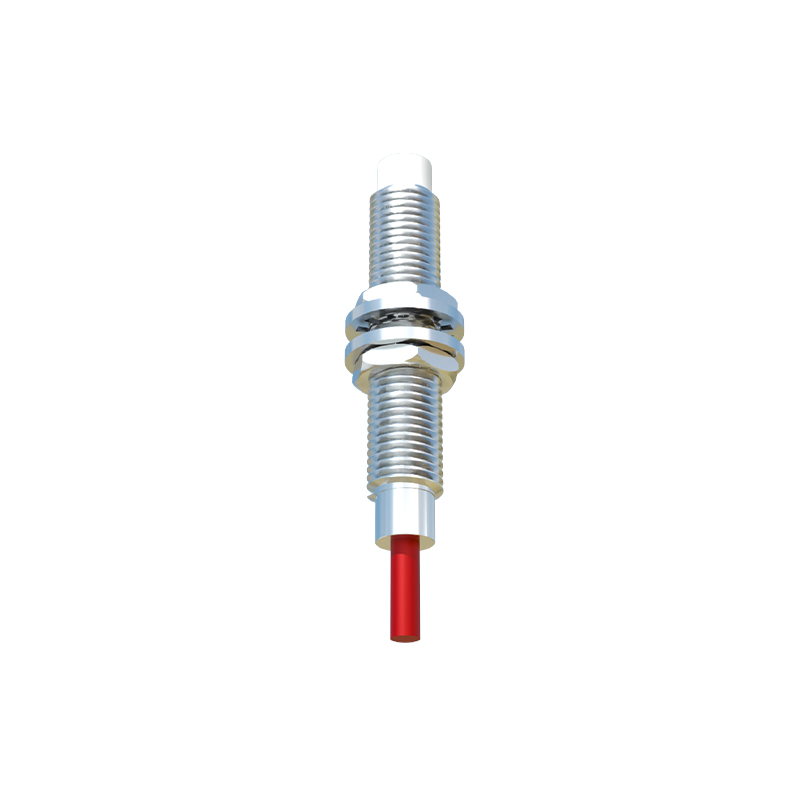
The advantages of these sensors are numerous. Their non-contact nature ensures a long operational life with no mechanical wear on the sensor or target. They offer high resolution and fast response times, suitable for dynamic measurement tasks. They are inherently robust, often housed in stainless steel bodies with ratings like IP67 or IP69K, making them resistant to dust, moisture, oils, and coolants common in industrial settings. They are largely immune to ambient light, dirt (if non-metallic), and acoustic noise interference.
Applications for linear displacement proximity sensors are vast across industry. In machine tools, they monitor spindle position, tool wear, and workpiece alignment. In hydraulic and pneumatic systems, they provide precise feedback on cylinder piston rod position. They are integral to robotics for end-effector positioning and assembly verification. In the automotive industry, they are used in testing rigs, brake pedal travel measurement, and suspension monitoring. They also play a role in semiconductor manufacturing equipment, packaging machinery, and press brake gauging systems.
Selecting the right sensor requires careful consideration of several factors. First, define the required measuring range and the desired output type (analog for continuous position, digital for limit detection). The target material is crucial; standard sensors are calibrated for mild steel, and correction factors must be applied for other metals like aluminum, copper, or stainless steel. The installation environment dictates the housing material (e.g., stainless steel for corrosive areas) and the required ingress protection (IP) rating. Consider the electrical requirements: supply voltage (e.g., 10-30 VDC) and output current/load compatibility. For high-accuracy applications, specifications like linearity, temperature drift, and long-term stability become paramount. Finally, mechanical factors like housing style (threaded barrel, rectangular), size, and mounting constraints must be evaluated.
Installation and commissioning are straightforward but require attention to detail. Ensure the sensor is mounted securely to prevent vibration-induced errors. The target should approach the sensor's active face perpendicularly and be larger than the sensing face to ensure a consistent output curve. Maintain a clean sensing area free of metallic debris. For analog sensors, the output often needs to be scaled within the controller (PLC, CNC) using the min and max displacement values corresponding to the output signal's lower and upper limits (e.g., 4 mA and 20 mA).
In summary, linear displacement proximity sensors are versatile, robust, and precise tools for industrial measurement. By understanding their operating principles, key specifications, and application requirements, engineers can effectively select and implement these sensors to enhance machine performance, ensure quality control, and enable advanced automation processes. Their continued evolution, integrating features like advanced diagnostics and industrial networking protocols, ensures they will remain a cornerstone of precision measurement.