In the realm of industrial automation and electronic control, proximity switches are indispensable components for non-contact detection. Among the various technologies available, the Hall Effect proximity switch stands out for its reliability, durability, and precision. This article delves into the operational principles, key advantages, common applications, and critical selection criteria for Hall Effect proximity switches, providing a comprehensive guide for engineers and technicians.
The fundamental principle behind a Hall Effect switch is the Hall Effect, discovered by Edwin Hall in 1879. It describes the generation of a voltage difference (the Hall voltage) across an electrical conductor, transverse to an electric current in the conductor and a magnetic field perpendicular to the current. In a Hall Effect proximity switch, a semiconductor element (the Hall sensor) is integrated into the device. When a magnetic field from a permanent magnet or an electromagnet approaches the sensor, it disturbs the charge carriers within the semiconductor. This disturbance generates a small but measurable Hall voltage. An integrated circuit within the switch then amplifies this signal. Once the magnetic flux density exceeds a predefined threshold, the circuit triggers a change in the output state—typically switching from an open to a closed circuit (or vice-versa), thereby signaling the presence of the target.
This operating principle confers several significant advantages over other proximity sensing technologies like inductive or capacitive switches. First, Hall Effect switches are true solid-state devices with no moving mechanical parts. This results in exceptionally long operational life, often exceeding millions of cycles, and high resistance to shock, vibration, and environmental contaminants such as dust, oil, and moisture. Second, they offer high switching accuracy and repeatability. The trigger point is precisely defined by the magnetic field strength, allowing for consistent detection even at very small sensing distances. Third, they can operate at very high switching frequencies, making them suitable for high-speed counting or speed detection applications, such as in rotary encoders or tachometers. Finally, they are inherently immune to non-ferrous materials; they only respond to magnetic fields, which prevents false triggering from non-target objects.
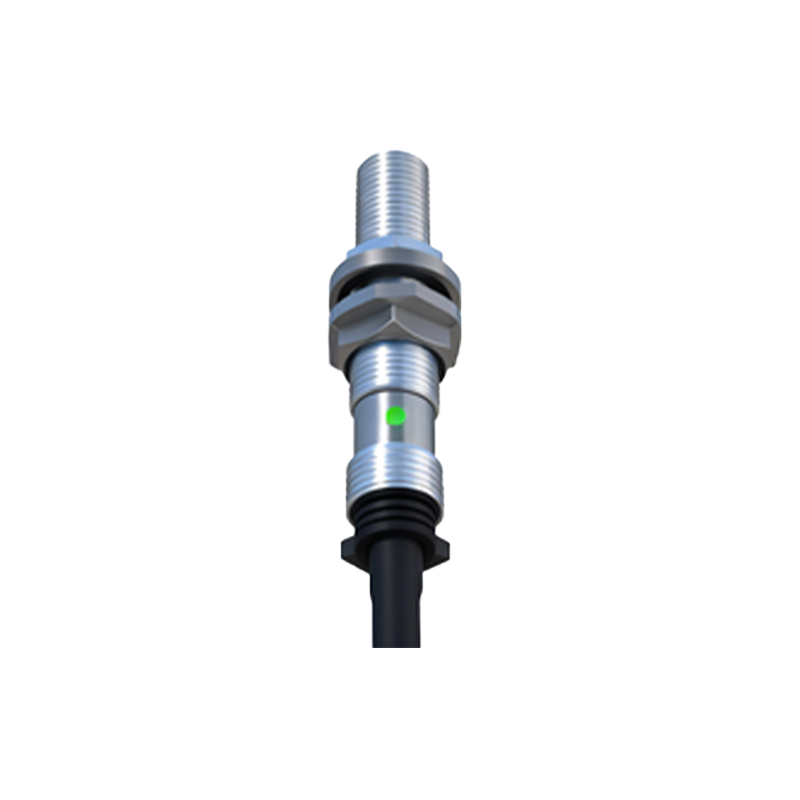
The applications for Hall Effect proximity switches are vast and span numerous industries. In the automotive sector, they are ubiquitous in anti-lock braking systems (ABS) for wheel speed sensing, in transmission systems for gear position detection, and in engine management for crankshaft and camshaft position sensing. In industrial automation, they are used for limit switching on linear actuators, detecting the position of cylinders, and as part of safety interlock systems. Consumer electronics utilize miniature Hall Effect switches for lid-open detection in laptops or flip-cover detection in smartphones. They are also critical in brushless DC motors to commutate the windings electronically. Furthermore, their ability to function in harsh environments makes them ideal for use in agricultural machinery, material handling equipment, and aerospace systems.
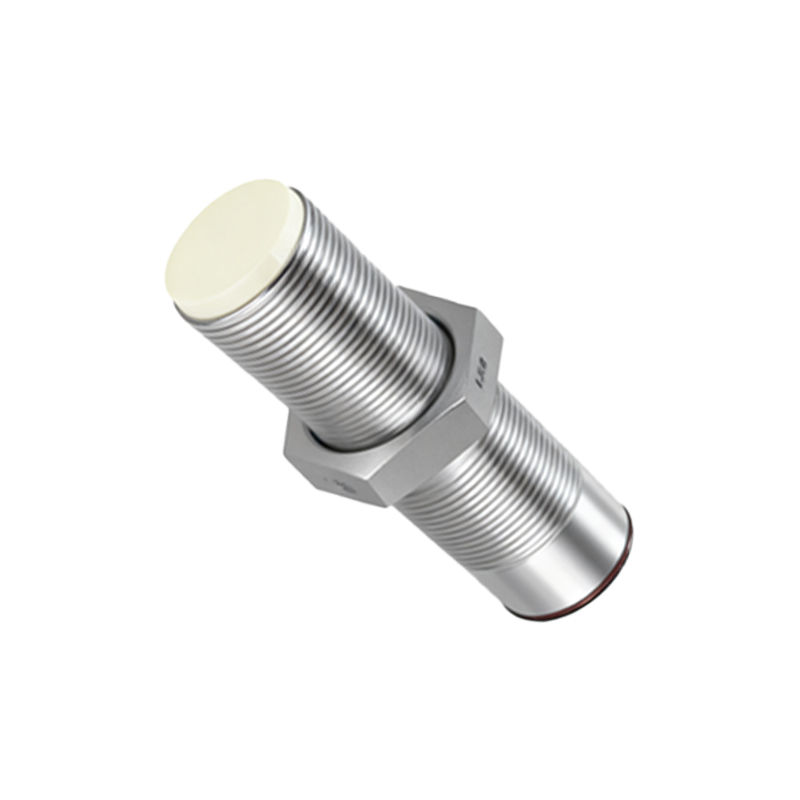
Selecting the appropriate Hall Effect switch for a specific application requires careful consideration of several parameters. The most critical is the sensing distance or operating point, which defines how close the magnet must be to activate the switch. Engineers must ensure this distance is compatible with the mechanical design. The type of output is another key decision: digital outputs (like NPN/PNP transistors or open-collector) are common for simple on/off control, while analog outputs provide a voltage proportional to the magnetic field strength for precise position feedback. The supply voltage range must match the available system power. Environmental ratings, particularly the Ingress Protection (IP) code for dust and water resistance and the operating temperature range, are vital for reliability in challenging conditions. Finally, the physical package—size, shape, and mounting style (e.g., threaded barrel, flat-pack)—must be chosen to fit the mechanical constraints of the installation.
In conclusion, Hall Effect proximity switches are a robust and versatile sensing solution grounded in a well-understood physical phenomenon. Their solid-state nature, high speed, accuracy, and immunity to environmental factors make them a preferred choice for demanding applications across automotive, industrial, and consumer fields. A thorough understanding of their working principle and a methodical approach to selection based on electrical, mechanical, and environmental requirements are essential for integrating them successfully into any design, ensuring reliable and long-lasting performance in automated systems.