In today's rapidly evolving industrial landscape, laser sensor technology stands as a cornerstone of precision measurement and automation. This demonstration aims to showcase the advanced capabilities of modern laser sensors, highlighting their operational principles, key features, and diverse applications across various sectors.
Laser sensors operate by emitting a focused beam of light toward a target object. The sensor then detects the reflected light and calculates parameters such as distance, displacement, or presence based on the time-of-flight, triangulation, or phase-shift methods. This non-contact measurement technique ensures high accuracy, often within micrometer ranges, and eliminates mechanical wear, making it ideal for demanding environments.
One of the primary advantages demonstrated is the sensor's exceptional speed and resolution. With response times in the microsecond range, laser sensors can perform real-time monitoring in high-speed production lines, such as in automotive assembly or electronics manufacturing. Their ability to detect minute changes in position or thickness ensures quality control, reducing waste and enhancing productivity.
Environmental robustness is another critical feature. Many industrial-grade laser sensors are designed with IP67 or higher ratings, providing resistance to dust, moisture, and vibrations. This durability allows deployment in harsh settings, including metalworking, food processing, and outdoor logistics, where consistent performance is paramount.
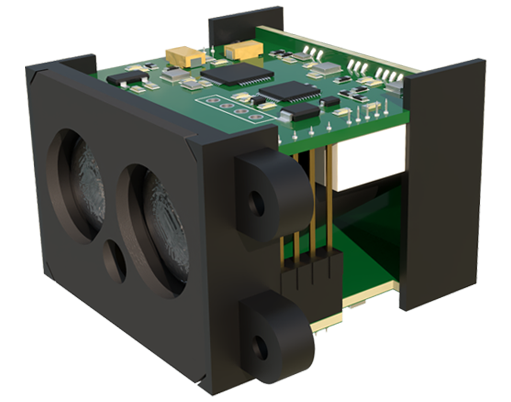
During the demonstration, we illustrate common applications:
- Dimensional Gauging: Measuring component sizes with high repeatability.
- Object Detection: Identifying presence or absence on conveyor belts.
- Level Monitoring: Controlling fill levels in tanks or silos.
- Surface Inspection: Detecting defects like scratches or dents on materials.
Integration with industrial networks, such as IO-Link, Ethernet/IP, or PROFINET, enables seamless data exchange with PLCs and SCADA systems. This connectivity supports Industry 4.0 initiatives, facilitating predictive maintenance and smart factory operations.
Furthermore, advancements in laser sensor technology include features like background suppression, which ignores irrelevant objects, and adjustable sensing ranges for flexible installation. These innovations simplify setup and reduce calibration time, lowering total cost of ownership.
Safety considerations are also addressed. Lasers used in industrial sensors typically comply with Class 1 or Class 2 safety standards, ensuring eye-safe operation without requiring protective gear in normal use. Proper alignment and shielding are still recommended to prevent accidental exposure.
In conclusion, this demonstration underscores how laser sensors drive efficiency and precision in modern industry. By offering reliable, non-contact measurement solutions, they empower businesses to optimize processes, ensure quality, and adapt to evolving technological demands. As automation continues to expand, laser sensors will remain indispensable tools for engineers and technicians worldwide.