In the intricate world of industrial automation, where precision is paramount and margins for error are vanishingly small, a class of devices operates with quiet reliability, often overlooked yet fundamentally critical. These are origin proximity sensors, the definitive starting point upon which entire mechanical systems calibrate their existence and function. Unlike their more generalized counterparts used for routine object detection, origin sensors serve a singular, masterful purpose: to establish an absolute, repeatable reference zero point, or "home" position, for a moving component.
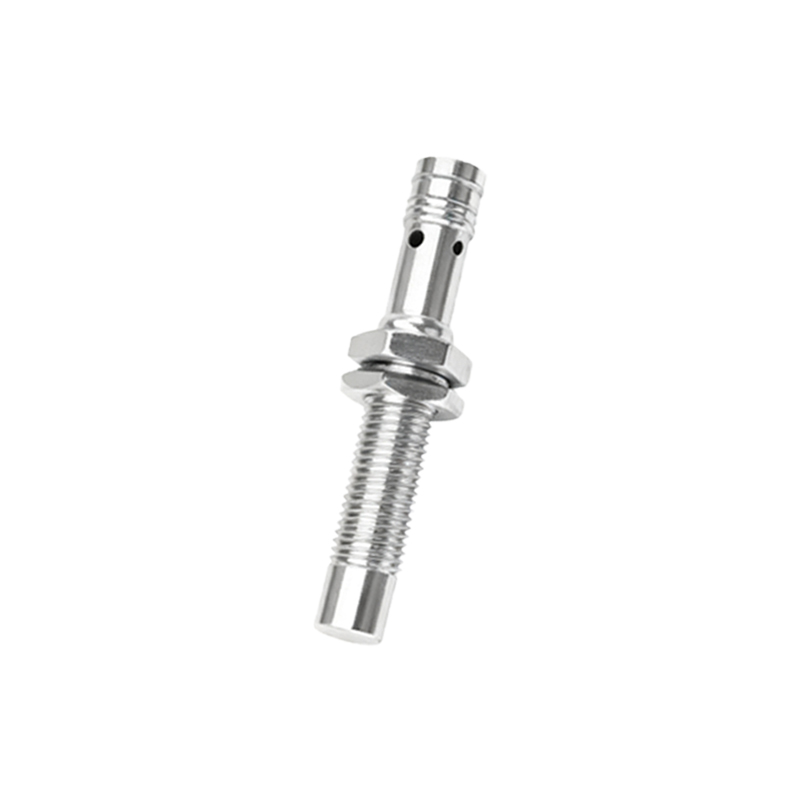
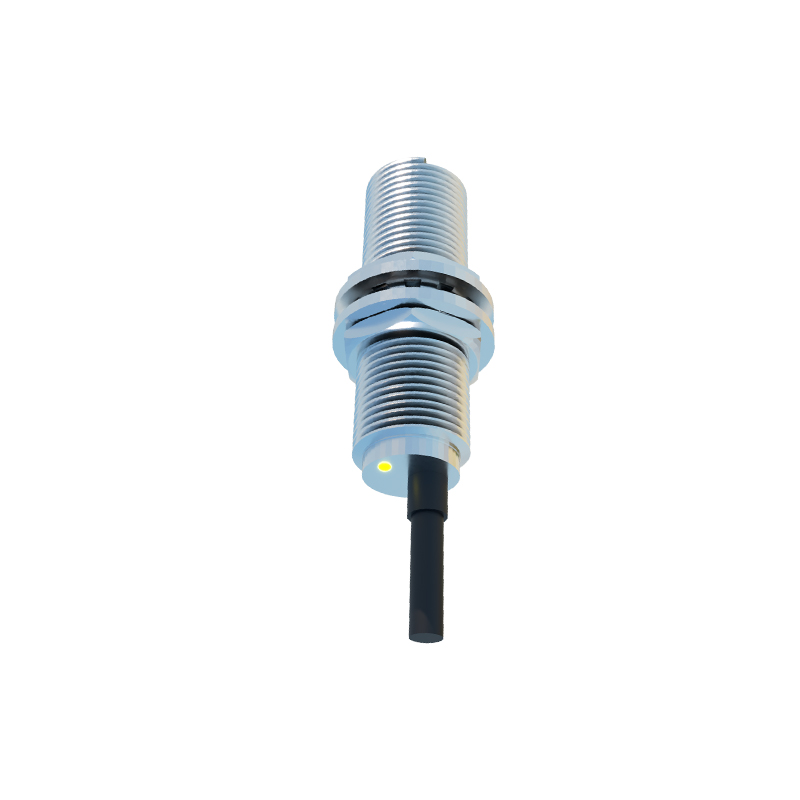
The principle of operation, while elegantly simple, is the bedrock of accuracy. Most commonly, these sensors employ inductive, capacitive, or optical technologies. An inductive origin sensor, for instance, generates an electromagnetic field. When a specific, often uniquely shaped, metal actuator or "dog" attached to a moving axis enters this field, it causes a detectable change in the sensor's oscillation. This precise moment of detection is communicated as a clean, high-speed electrical signal to the machine's controller. This signal does not merely indicate presence; it declares, unequivocally, "This is Point Zero." From this hallowed datum, every subsequent movement—every millimeter of travel, every rotation of a spindle—is calculated and controlled. The repeatability of finding this exact same physical point, cycle after cycle, is what separates adequate machinery from exceptional, high-precision equipment.
The applications are as diverse as modern industry itself. In computer numerical control (CNC) machining centers, an origin sensor defines the home position for the X, Y, and Z axes. Before any cutting tool begins its work, the machine must perform a referencing routine, swiftly moving each axis until its sensor is triggered. This process eliminates cumulative positional drift, ensuring that a part programmed in software is milled identically in the physical world, whether it's the first piece or the ten-thousandth. Robotic arms rely on these sensors to initialize their joint positions upon power-up, creating a known kinematic framework from which all complex paths and maneuvers are executed. In precision linear actuators, packaging machinery, and semiconductor fabrication equipment, the story is the same: consistent, reliable homing is non-negotiable.
Selecting the right origin proximity sensor is an exercise in matching specifications to environmental and functional demands. Engineers must consider the sensing distance, which is typically very short for homing to ensure high repeatability. The type of output signal (PNP/NPN, analog, or a dedicated high-speed homing signal) must be compatible with the PLC or motion controller. Robustness is key; sensors in machining environments must be shielded against coolant, metal chips, and vibration. Temperature stability is crucial for processes operating in non-climate-controlled spaces. Furthermore, the design of the actuator target is part of the equation. A steep, well-defined edge on the target metal flag provides a sharper, more consistent trigger signal than a rounded or irregular surface.
The consequences of a failing or poorly specified origin sensor are severe and immediate. A machine that "loses" its home position may experience misaligned operations, catastrophic collisions, scrapped workpieces, or unscheduled downtime. This makes the humble origin sensor not just a component, but a guardian of system integrity. Its failure is a single point of failure for precision.
As automation trends toward smarter, more interconnected systems (Industry 4.0), the role of the origin sensor evolves but remains foundational. While absolute encoders can provide position feedback without homing, they are far more costly and complex. For the vast majority of applications, the combination of a robust origin proximity sensor for definitive homing and incremental encoders for relative motion feedback offers an optimal balance of reliability, accuracy, and cost. Newer sensors integrate advanced diagnostics, communicating their health status directly to control networks, enabling predictive maintenance before a fault leads to a stoppage.
In conclusion, the origin proximity sensor is a masterpiece of focused engineering. It performs one task with unwavering dedication, transforming an arbitrary point in space into a pillar of certainty for automated systems. It is the silent sentinel that ensures every cycle begins from a perfect, known beginning, enabling the marvels of modern manufacturing to achieve their full potential. In the relentless pursuit of precision, it all starts at the origin.