In the world of industrial automation, robotics, and consumer electronics, proximity sensors are the silent sentinels that enable devices to "see" and react to their surroundings without physical contact. Among the various technologies employed, optical proximity sensors are particularly common. A point of frequent curiosity and occasional confusion arises from the colors of light they emit, specifically yellow and green. This article delves into the technical rationale behind these color choices, explaining their function, advantages, and typical applications.
At its core, an optical proximity sensor operates by emitting a beam of light and measuring the reflection. It consists of a light emitter, typically a Light Emitting Diode (LED), and a light detector, such as a photodiode or phototransistor. The sensor calculates the distance to an object based on the intensity or the time-of-flight of the reflected light signal. The wavelength, or color, of the emitted light is a critical design parameter, directly influencing the sensor's performance, accuracy, and suitability for different environments.
The human eye is most sensitive to green light, peaking at around 555 nanometers (nm). However, many proximity sensors utilize LEDs in the yellow and amber spectrum, ranging from approximately 585 nm to 595 nm. The primary reason for this choice is ambient light rejection. Sunlight and standard indoor lighting contain significant amounts of green and blue light. By using a yellow light source, the sensor can more easily distinguish its own emitted signal from the background ambient noise. The detector can be fitted with an optical filter that blocks other wavelengths, allowing only the narrow band of yellow light from the LED to pass through. This dramatically improves the signal-to-noise ratio, making the sensor more reliable and stable, especially in brightly lit conditions.
Green light LEDs, often around 525 nm, are also used in proximity sensing. Their adoption has increased with advancements in LED technology and the proliferation of specific applications. Green light can offer certain advantages. For instance, some materials and surfaces have different reflectivity properties at green wavelengths compared to yellow. Green light may provide better performance for detecting specific objects or colors. More importantly, green light is highly compatible with silicon-based photodetectors. Silicon detectors have a peak sensitivity in the near-infrared range, but they still respond very well to green light, often better than to deep red or some yellow wavelengths, leading to potentially stronger signal reception.
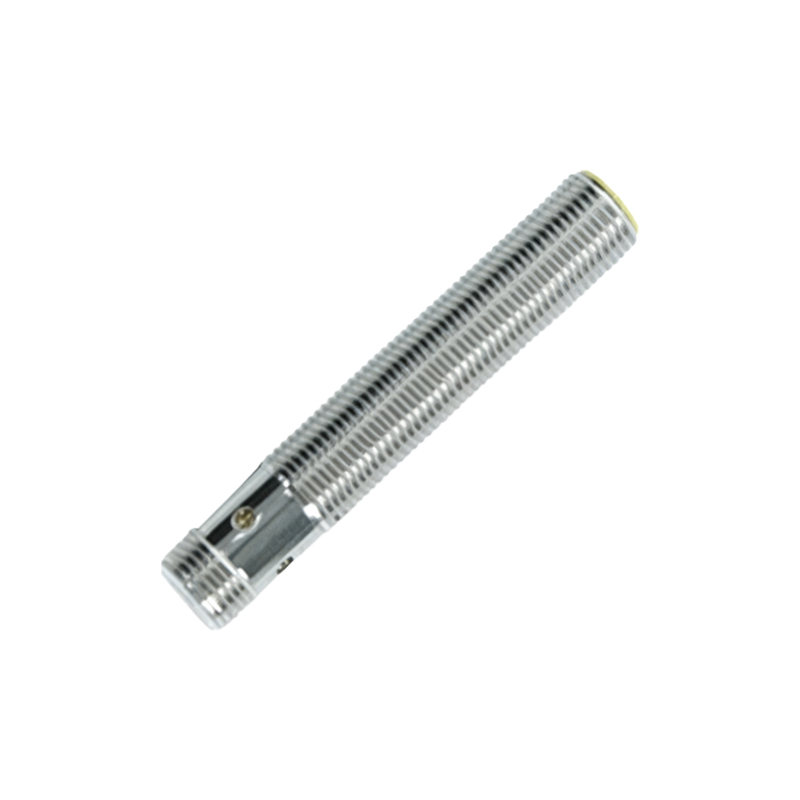
A key application driving the use of green light is in wearable devices, such as smartwatches and fitness trackers, for photoplethysmography (PPG) to measure heart rate and blood oxygen levels. While this is not strictly proximity sensing, the hardware is often integrated. The green light is highly absorbed by red blood cells, making it excellent for detecting blood flow changes under the skin. Therefore, a sensor module might use a green LED for biometric sensing and a dedicated infrared (IR) LED for true proximity detection (like turning off the screen when near your face during a call). The visible green light serves a dual purpose: a functional wavelength for health metrics and a visual indicator for the user that the sensor is active.
In contrast, yellow light is a classic, robust choice for general-purpose industrial and automotive proximity sensing. Its excellent ambient light immunity makes it ideal for outdoor applications, automated guided vehicles (AGVs), and object detection on factory floors where lighting conditions are variable and uncontrolled. The yellow glow is also distinctly visible, providing a clear operational indicator, which can be a safety or diagnostic feature.
It is crucial to understand that the choice between yellow and green is rarely about which color is universally "better." It is a careful engineering trade-off based on the specific use case:
Target Object Properties: How does the target material reflect different wavelengths?
Ambient Environment: Will the sensor operate in sunlight, under fluorescent lights, or in darkness?
Power Consumption: Different LED wavelengths have varying electrical efficiencies.
Secondary Functions: Is the sensor also required for biometric data collection?
Cost and Component Availability: Mature yellow LED technology is often cost-effective and readily available.
In summary, the yellow or green light from a proximity sensor is not an arbitrary aesthetic choice but a deliberate technical decision. Yellow light prioritizes stability and noise rejection in challenging lighting environments, making it a workhorse for industrial and automotive systems. Green light, while also effective for proximity, often finds its niche in consumer electronics where its properties align with additional functionalities like heart-rate monitoring. Both colors represent optimized solutions for enabling machines to perceive their proximity to the world reliably and efficiently. When selecting or working with these sensors, understanding the "why" behind the color of light provides deeper insight into their capabilities and optimal application.