Laser sensor technology has fundamentally transformed industrial measurement and control systems, offering unparalleled precision, speed, and reliability. At its core, a laser sensor operates by emitting a focused beam of light toward a target. The sensor then detects the reflected or scattered light, analyzing changes in properties such as time-of-flight, phase shift, or triangulation angle to calculate precise distance, displacement, or presence. This non-contact measurement principle is critical in environments where physical contact could damage delicate objects or introduce errors.
The manufacturing process of laser sensors is a sophisticated blend of optoelectronics, microelectronics, and precision engineering. It begins with the selection and fabrication of the laser diode, typically using semiconductor materials like gallium arsenide. The wavelength—common choices being visible red (650 nm) or infrared (905 nm)—is chosen based on the application's requirements for visibility, surface properties of targets, and eye safety regulations. The laser diode is then integrated with driver circuitry that ensures stable, pulsed, or modulated light output, which is essential for accurate distance measurement, especially in challenging conditions like varying ambient light.
Next, the optical system is assembled. This includes collimating lenses that shape the divergent laser beam into a tight, parallel stream, and receiving lenses that collect the reflected light. For sensors based on triangulation, the precise angular alignment between the emitter, the target, and the position-sensitive detector (PSD) or CMOS/CCD array is calibrated to micron-level tolerances. The housing is designed not only for mechanical protection but also to shield internal components from dust, moisture, and electromagnetic interference, often achieving IP67 or higher ingress protection ratings.
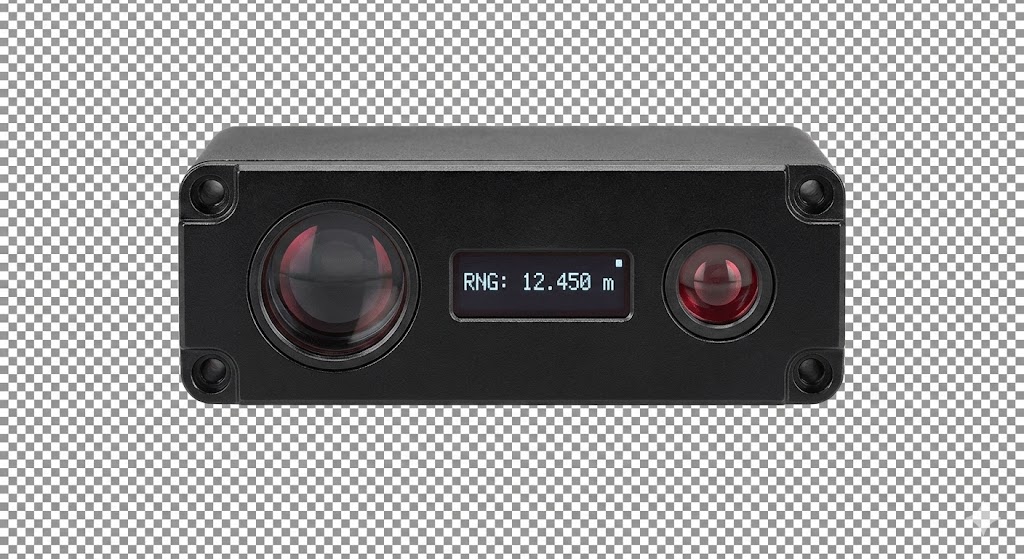
The heart of the sensor's intelligence lies in its signal processing unit. Advanced algorithms filter out noise, compensate for temperature drift, and interpret the raw optical data. Modern sensors increasingly incorporate microprocessors capable of real-time data analysis, enabling features like background suppression, multi-point averaging, and output switching based on user-defined thresholds. Communication interfaces such as IO-Link, Ethernet/IP, or PROFINET are now standard, allowing for seamless integration into Industry 4.0 and smart factory networks, facilitating predictive maintenance and data analytics.
Applications are vast and growing. In automotive assembly, laser sensors perform gap and flush measurement with sub-millimeter accuracy. In electronics manufacturing, they verify component placement on PCBs. Logistics and packaging rely on them for precise object detection and dimensioning. Furthermore, emerging fields like autonomous mobile robots (AMRs) use LiDAR, a advanced form of laser sensing, for navigation and obstacle avoidance.
Looking ahead, the future of laser sensor technology is geared toward miniaturization, enhanced intelligence, and multi-functionality. The integration of AI directly at the sensor edge will allow for more complex pattern recognition and decision-making. Developments in VCSEL (Vertical-Cavity Surface-Emitting Laser) arrays and SPAD (Single-Photon Avalanche Diode) detectors promise higher resolution and longer ranges for 3D sensing. As material science advances, we can expect sensors capable of operating in even more extreme temperatures and corrosive environments. The convergence of high precision, robust industrial design, and smart connectivity ensures that laser sensors will remain indispensable tools in the pursuit of greater automation, quality control, and operational efficiency across countless industries.