Proximity sensors are indispensable components in modern industrial automation systems, offering non-contact detection of metallic and non-metallic objects. These devices enhance operational safety, improve efficiency, and reduce mechanical wear. Understanding their proper application is crucial for engineers and technicians working in manufacturing, packaging, material handling, and automotive industries.
There are four primary types of proximity sensors: inductive, capacitive, ultrasonic, and photoelectric. Inductive sensors detect metallic objects using electromagnetic fields, making them ideal for metal detection in machinery. Capacitive sensors can detect both metallic and non-metallic materials, including liquids and powders, by measuring changes in capacitance. Ultrasonic sensors use sound waves to detect objects at greater distances, while photoelectric sensors rely on light beams, suitable for precise positioning and small object detection.
Selecting the right sensor begins with defining the application requirements. Consider the target material, required sensing distance, environmental conditions (temperature, humidity, contaminants), and output type (PNP/NPN, analog, IO-Link). For instance, inductive sensors excel in dirty environments but only work with metals. Capacitive sensors handle various materials but may be affected by humidity. Always refer to the sensor's datasheet for specifications like nominal sensing distance (Sn), hysteresis, and repeat accuracy.
Installation practices significantly impact sensor performance. Ensure proper mounting alignment, avoiding metal-to-metal contact for inductive sensors. Maintain adequate clearance around the sensing area to prevent interference from adjacent objects. For flush-mounted inductive sensors, the sensing range is reduced, while non-flush models offer longer ranges. Use brackets or adjustable mounts to fine-tune positioning. Regular maintenance includes cleaning lenses for photoelectric sensors and checking for buildup on capacitive sensor faces.
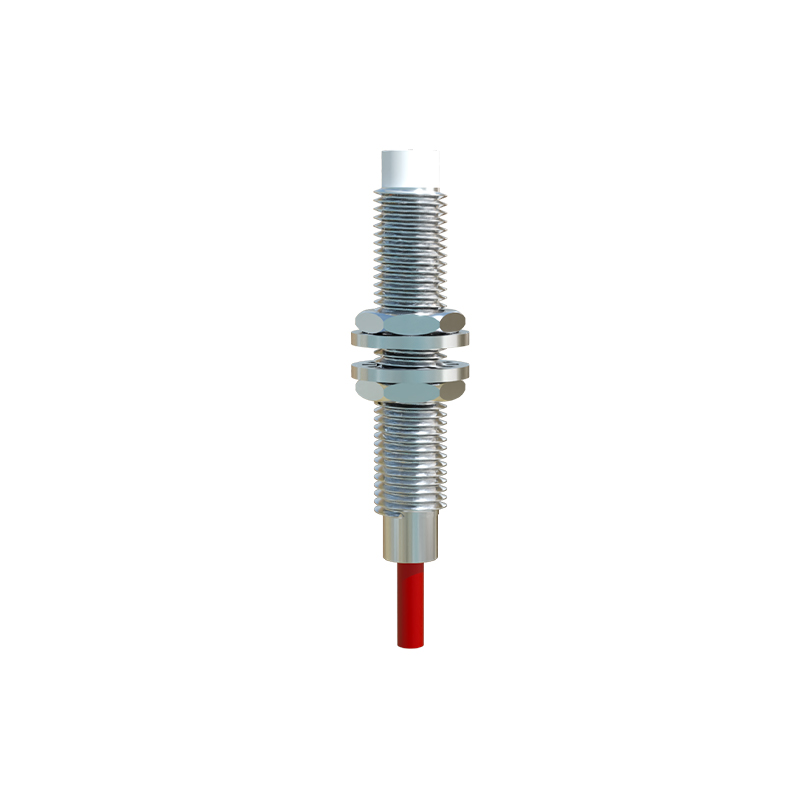
Wiring and electrical integration require attention to detail. Connect sensors according to the manufacturer's wiring diagram, ensuring correct polarity for DC models. Implement shielding for cables in electrically noisy environments to prevent false triggering. For multi-sensor setups, avoid interference by spacing sensors appropriately or using models with synchronization capabilities. Always adhere to local electrical codes and safety standards, such as IEC 60947-5-2.
Advanced features like analog output, temperature compensation, and IO-Link communication enable smarter automation. Analog sensors provide continuous distance measurement, useful for positioning control. IO-Link sensors offer parameterization, diagnostics, and process data integration into PLC systems. These features facilitate predictive maintenance and Industry 4.0 applications.
Common pitfalls include incorrect sensor type selection, improper mounting, and environmental factors. For example, using an inductive sensor to detect plastic will fail. High-vibration environments may require sensors with robust housings. Always test the sensor with the actual target material under operating conditions before final installation.
In summary, proximity sensors are versatile tools that, when applied correctly, significantly enhance automation system reliability. By considering sensor type, installation, wiring, and advanced features, engineers can optimize performance and longevity. Continuous learning about new sensor technologies and adherence to best practices will ensure successful implementation in diverse industrial applications.