In the rapidly evolving landscape of industrial automation and precision measurement, TAc Laser Sensors have emerged as a cornerstone technology. These sensors, leveraging the principles of triangulation and advanced signal processing, offer unparalleled accuracy, speed, and reliability for a multitude of demanding applications. This article delves into the core operational principles, key advantages, diverse industry applications, and future trends of TAc laser sensors.
At its heart, a TAc (Triangulation Analog CMOS) laser sensor operates on the fundamental principle of optical triangulation. The sensor projects a focused, high-intensity laser beam onto the target surface. The light reflected from this surface is then captured by a receiving lens and focused onto a highly sensitive CMOS (Complementary Metal-Oxide-Semiconductor) linear image sensor. The precise position of the laser spot on this CMOS array changes proportionally with the distance to the target. An integrated microprocessor analyzes this positional shift with exceptional speed, converting it into an extremely accurate analog or digital distance measurement. This method allows for non-contact measurement, which is critical for delicate, hot, moving, or otherwise inaccessible surfaces.
The advantages of TAc laser sensors are numerous and significant for industrial settings. First and foremost is their exceptional precision, capable of resolving measurements down to the sub-micron level. They offer high-speed response, making them ideal for dynamic processes on production lines. Their robustness is another key feature; they are designed to withstand harsh industrial environments, including vibration, ambient light interference, and varying surface conditions (color, material, texture). Many models incorporate advanced algorithms to compensate for these variables, ensuring stable and repeatable readings. Furthermore, their compact form factor and ease of integration into existing control systems (via standard interfaces like analog voltage/current, RS-232, Ethernet/IP, or PROFINET) make them highly versatile.
The application spectrum for TAc laser sensors is vast and continues to expand. In automotive manufacturing, they are indispensable for tasks such as gap and flush measurement on vehicle bodies, brake disc thickness monitoring, and robotic guidance for welding and assembly. In the electronics industry, they ensure the precise height and coplanarity of components on printed circuit boards (PCBs) and measure the thickness of semiconductor wafers and coatings. Packaging lines utilize them for fill-level detection, bottle height inspection, and label positioning. In metal processing, they control roll gaps, measure sheet flatness, and guide cutting tools. Beyond traditional manufacturing, they are used in robotics for 3D profiling and bin picking, and in logistics for dimensioning packages.

Looking forward, several trends are shaping the development of TAc laser sensors. The integration of AI and machine learning is enhancing their capability for intelligent decision-making, such as classifying surface defects or adapting to complex patterns in real-time. The demand for miniaturization continues, enabling their use in increasingly confined spaces. Enhanced connectivity through Industrial Internet of Things (IIoT) protocols is turning these sensors into data nodes, feeding critical measurement data into cloud platforms for predictive maintenance and process optimization. Furthermore, advancements in laser diode and CMOS technology are pushing the boundaries of measurement range, resolution, and power efficiency.
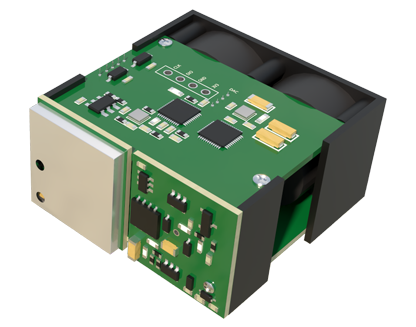
In conclusion, TAc laser sensors represent a mature yet continuously advancing technology that is critical to modern precision engineering and automated manufacturing. Their ability to deliver fast, accurate, and reliable non-contact measurements solves complex challenges across a diverse range of industries. As innovation in processing power, connectivity, and intelligent algorithms progresses, TAc laser sensors will undoubtedly solidify their role as essential tools for driving quality, efficiency, and innovation in the industrial world. Engineers and system integrators must stay abreast of these developments to fully leverage the potential of this powerful sensing technology.