In the intricate landscape of industrial automation and control systems, photoelectric proximity sensors stand as pivotal components, enabling precise, non-contact detection across a myriad of applications. These sensors operate on a fundamental principle: they emit a beam of light—typically infrared, visible red, or laser—and detect changes in the received light signal caused by the presence or absence of a target object. This simple yet robust mechanism underpins their widespread utility, offering distinct advantages over mechanical or other sensing technologies.
The core function of a photoelectric sensor is to determine object presence, position, or quality without physical contact. This non-contact nature eliminates mechanical wear and tear, significantly enhancing operational longevity and reliability. In high-speed production lines, such as those in packaging or automotive assembly, these sensors perform critical tasks like counting bottles, detecting label placement, or verifying component assembly. Their rapid response time, often in the microsecond range, ensures seamless process flow and minimizes downtime. Furthermore, the ability to sense a diverse range of materials—including glass, metal, plastic, and even liquids—makes them exceptionally versatile. Unlike inductive sensors that only detect metals, photoelectric sensors can be configured for various surface properties and colors, though reflective characteristics must be considered during selection and setup.
Three primary operating modes define their application scope: through-beam, retro-reflective, and diffuse reflective. Through-beam sensors, comprising separate emitter and receiver units, offer the longest sensing ranges and highest reliability, as they detect an object interrupting a direct beam. They are ideal for harsh environments with potential interference. Retro-reflective models use a single housing with both emitter and receiver, relying on a reflector to bounce the light back. They provide a good balance of range and ease of installation. Diffuse reflective sensors, also in a single unit, detect light reflected directly off the target object itself. This mode is suited for shorter ranges and applications where installing a reflector is impractical, though it can be influenced by the object's color and surface texture.
The integration of advanced features has further expanded their role. Modern photoelectric sensors incorporate background suppression technology, which allows them to ignore distant objects or background surfaces, focusing only on targets within a precise window. This is crucial in automated storage and retrieval systems for accurate pallet detection. Color sensors, a specialized variant, can distinguish between colors, ensuring correct part selection in electronics manufacturing. Additionally, fiber optic versions enable sensing in extremely confined, hot, or hazardous spaces by transmitting light through flexible cables, with only the small-diameter tips exposed to the environment.
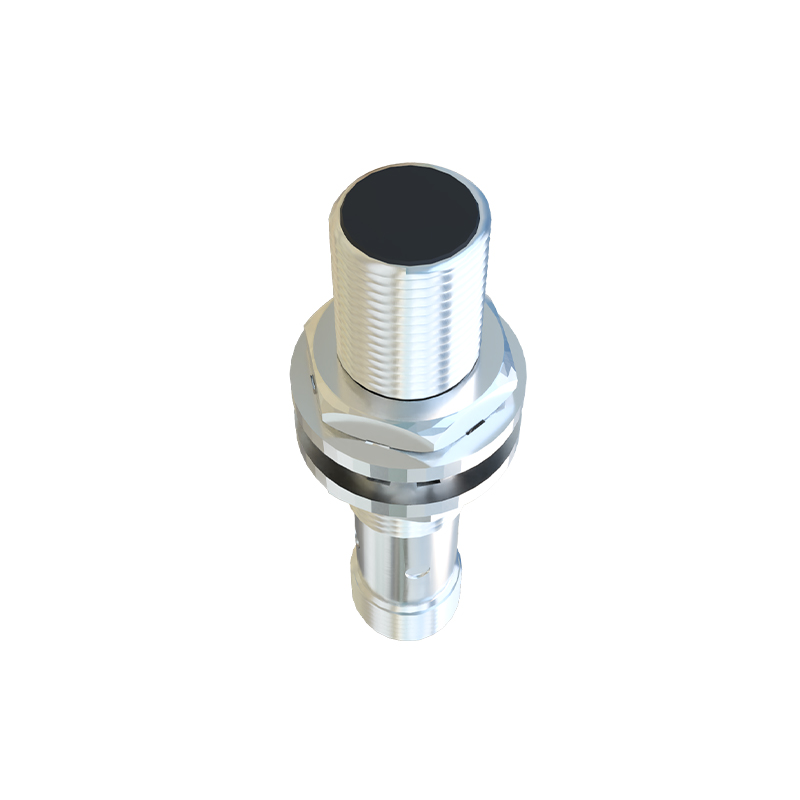
In terms of electrical integration, these sensors typically provide digital output signals (e.g., PNP/NPN) compatible with Programmable Logic Controllers (PLCs) and other control systems. This facilitates real-time feedback for process control, error proofing, and data collection. Their environmental robustness is another key attribute; many are housed in rugged, IP67 or higher-rated enclosures, resistant to dust, moisture, and vibration, ensuring stable performance in demanding settings like food processing plants or outdoor logistics.
Ultimately, the strategic deployment of photoelectric proximity sensors enhances system efficiency, safety, and quality control. They form the sensory foundation for automated guidance, robotic positioning, and intricate inspection tasks. By providing reliable, instantaneous data on object status, they enable smarter, more responsive automation architectures. As Industry 4.0 and the Internet of Things (IoT) evolve, these sensors are increasingly equipped with IO-Link and other communication protocols, offering diagnostic data and parameter configurability for predictive maintenance and deeper system integration. Their enduring importance lies in their adaptability, precision, and critical role in transforming mechanical processes into intelligent, interconnected operations.