In the rapidly evolving landscape of industrial automation and precision measurement, laser sensors have become indispensable tools. Their ability to provide non-contact, high-accuracy, and high-speed measurements makes them critical across diverse applications, from manufacturing assembly lines to autonomous vehicle navigation. However, the term "laser sensor" encompasses a wide array of technologies, each with distinct operating principles, performance characteristics, and ideal use cases. For engineers and system integrators, selecting the appropriate type is paramount to project success. This guide delves into the key differences between the primary categories of laser sensors, focusing on their underlying technology and practical implications.
The most fundamental distinction lies in the method of distance or displacement measurement. The two predominant technologies are Triangulation-based Laser Sensors and Time-of-Flight (ToF) Laser Sensors.
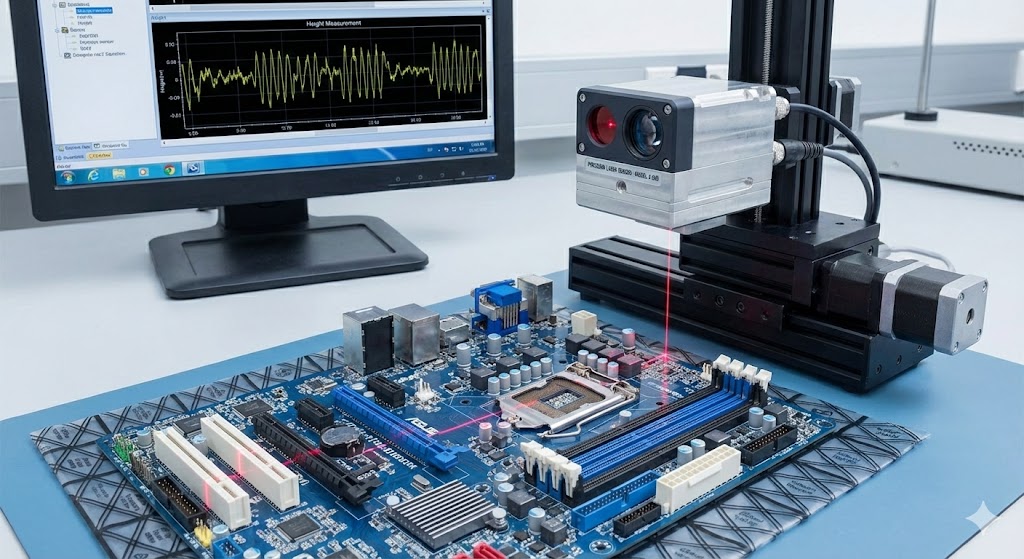
Triangulation Laser Sensors operate on a simple geometric principle. The sensor emits a laser beam onto a target. The reflected light is then focused onto a position-sensitive detector (PSD) or a CMOS/CCD array at a known angle relative to the emission axis. As the target's distance changes, the position of the light spot on the detector shifts. By calculating this shift, the sensor determines the distance with high precision. These sensors excel in short to medium-range applications, typically from a few millimeters up to about one meter. They offer exceptional resolution, often in the micron or sub-micron range, making them ideal for tasks like thickness gauging, vibration analysis, and precise profile measurement. However, their accuracy can be influenced by the target's surface color, reflectivity, and angle. A highly reflective or specular surface can saturate the detector, while a dark, absorptive surface may return too weak a signal.
In contrast, Time-of-Flight (ToF) Laser Sensors measure distance by calculating the time it takes for a laser pulse to travel to the target and back. Using the constant speed of light, the distance is derived from the formula: Distance = (Speed of Light × Time of Flight) / 2. ToF sensors are designed for long-range measurements, from several meters to hundreds or even thousands of meters. They are the technology of choice for applications like LiDAR in autonomous vehicles, aerial surveying, and bulk level monitoring in large silos. While generally offering lower resolution (centimeter to millimeter level) compared to triangulation sensors at short ranges, modern phase-shift ToF sensors can achieve high precision. Their performance is less sensitive to surface properties but can be affected by ambient light and atmospheric conditions over very long distances.
Beyond these two, Laser Confocal Displacement Sensors represent a high-end category for ultra-precise measurement. They use a unique optical system where only light reflected from the exact focal point passes through a confocal pinhole to reach the detector. By rapidly scanning the wavelength of the laser (chromatic aberration principle) or physically moving the optics, they can detect the precise point of focus on a surface. This technology provides nanometer-level resolution and is capable of measuring transparent materials (like glass), multi-layered surfaces, and highly reflective or curved objects where triangulation sensors struggle. Their primary trade-offs are cost, measurement range (usually very short), and sometimes slower measurement speeds.
Another critical differentiation is between 1D, 2D, and 3D Laser Sensors. A standard point sensor provides a single measurement at a point (1D). A 2D laser profile sensor, or laser line scanner, projects a laser line onto a target. A camera captures the deformation of this line, generating a cross-sectional profile of the object. This is fundamental for contour inspection, weld seam tracking, and volume calculation. 3D laser scanners build upon this by moving the profile sensor or the target, stitching together multiple profiles to create a complete three-dimensional point cloud model for reverse engineering and quality control.
Choosing the right sensor requires a careful analysis of application requirements. Key specification comparisons include:
* Measurement Range vs. Resolution: Triangulation offers high resolution over short ranges; ToF offers long range with moderate resolution.
* Spot Size: A small spot size (triangulation/confocal) allows for precise measurement of small features or edges.
* Sampling Rate/Speed: Critical for dynamic measurements on fast-moving production lines. Triangulation and modern ToF sensors can reach kHz rates.
* Target Surface Dependency: Evaluate the sensor's tolerance to color, material, reflectivity, and transparency. Confocal sensors are most robust for difficult surfaces.
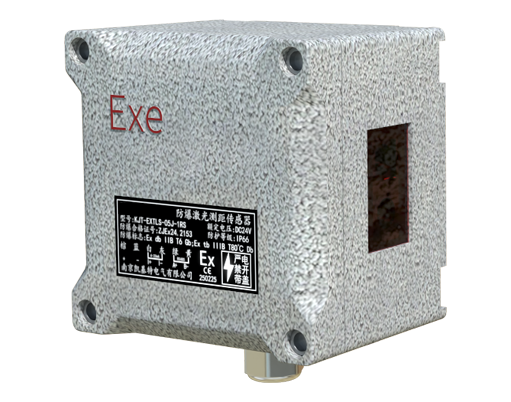
* Environmental Robustness: Consider IP ratings, resistance to dust, vibration, and ambient light interference. Industrial-grade ToF and triangulation sensors are built for harsh environments.
In conclusion, there is no universal "best" laser sensor. A triangulation sensor is unmatched for micron-level inspection on a conveyor belt, a ToF sensor is essential for mapping a warehouse for autonomous mobile robots, and a confocal sensor is the only solution for measuring the thickness of a transparent OLED layer. Understanding these core technological differences—triangulation, Time-of-Flight, and confocal—along with dimensional output (1D/2D/3D), empowers engineers to make informed, optimized selections. The future points towards sensor fusion and smarter sensors with embedded processing, but a solid grasp of these fundamental principles remains the cornerstone of effective implementation in any electrical or automation engineering project.