In the realm of industrial automation, the demand for precision, reliability, and durability in sensing technology is paramount. Yaskawa Electric Corporation, a global leader in motion control and robotics, extends its engineering excellence into the domain of proximity sensors, offering solutions that are integral to modern manufacturing and process control systems. Yaskawa proximity switches are designed to detect the presence or absence of objects without physical contact, utilizing various sensing principles such as inductive, capacitive, and magnetic technologies to cater to diverse industrial applications.
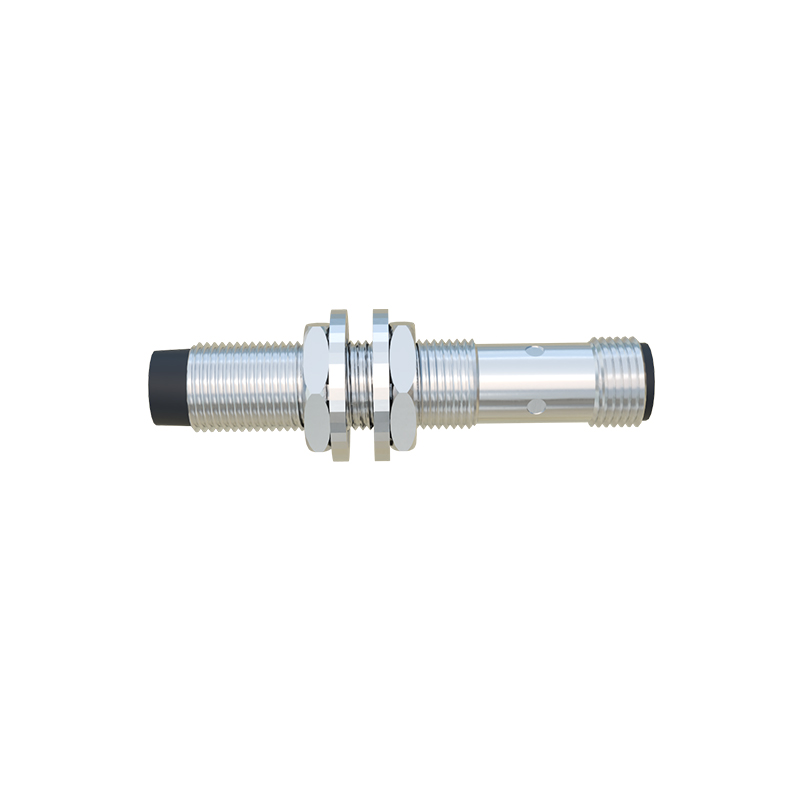
Inductive proximity sensors, a cornerstone of Yaskawa's portfolio, are predominantly used for detecting metallic objects. These sensors generate an electromagnetic field, and when a metal target enters this field, it induces eddy currents that alter the oscillation amplitude, triggering the switch output. Yaskawa's inductive sensors are renowned for their high switching frequency, exceptional repeat accuracy, and robust construction, making them ideal for harsh environments with exposure to dust, coolant, or oil. Models are available in diverse form factors, including cylindrical, rectangular, and ring-shaped designs, with sensing ranges optimized for specific operational needs.
For non-metallic materials such as plastics, glass, wood, or liquids, Yaskawa provides capacitive proximity sensors. These devices measure changes in capacitance caused by the presence of any material that alters the dielectric constant of the sensing field. This versatility allows them to be employed in level detection, material handling, and packaging applications. Yaskawa engineers these sensors with adjustable sensitivity, enabling fine-tuning to ignore interfering backgrounds or container walls, thus ensuring false-trigger-free operation in complex setups.
Magnetic proximity sensors, another critical offering, are designed to detect permanent magnets. They are commonly used in conjunction with pneumatic cylinders for position feedback or in safety applications like door monitoring. Yaskawa's magnetic sensors offer long sensing distances and are immune to non-ferrous metals, providing reliable performance in spaces where other sensor types might be influenced by surrounding metallic structures.
The engineering philosophy behind Yaskawa proximity switches emphasizes not only functional performance but also integration and longevity. Key features include:
High Environmental Resistance: Many models boast IP67, IP68, or IP69K ratings, ensuring protection against water ingress and dust, suitable for washdown areas in food & beverage or pharmaceutical industries.
Wide Voltage Range: Compatibility with both DC and AC power supplies (e.g., 10-30V DC, 90-250V AC) simplifies inventory and installation.
Output Flexibility: Options include NPN/PNP transistor outputs, NO/NC (Normally Open/Normally Closed) contacts, and analog outputs for distance-proportional signals, providing seamless interface with PLCs (Programmable Logic Controllers) and other control systems.
LED Status Indicators: Built-in LEDs offer clear visual confirmation of power status and output switching, aiding in rapid commissioning and troubleshooting.
Short-Circuit and Reverse Polarity Protection: Integrated protective circuits enhance system reliability and prevent damage from wiring errors.
In practical application, Yaskawa proximity sensors are deployed across a spectrum of industries. In automotive assembly lines, they precisely detect parts on conveyors or verify robot end-effector positions. In material handling, they monitor pallet presence and control automated storage and retrieval systems. In machine tools, they provide limit switching and tool presence verification. Their robustness ensures consistent operation under extreme conditions of vibration, temperature fluctuations, and electromagnetic interference.
Selecting the appropriate Yaskawa proximity sensor requires consideration of several factors: the material composition of the target object, the required sensing distance, the operating environment (temperature, potential contaminants), the electrical characteristics of the control system, and the physical mounting constraints. Yaskawa provides comprehensive technical documentation, including detailed specifications, dimensional drawings, and application notes, to guide engineers and technicians in making optimal selections.
Maintenance of these devices is typically minimal due to their non-contact nature, which eliminates mechanical wear. However, periodic checks are recommended to ensure the sensing face remains clean and free from buildup that could attenuate the sensing field, and to verify stable mounting to prevent misalignment.
In conclusion, Yaskawa proximity sensors embody a synthesis of precision engineering and practical design, delivering the dependable detection capabilities that form the sensory foundation of automated systems. Their performance contributes directly to enhanced productivity, improved quality control, and increased operational safety. For system integrators and plant engineers seeking reliable sensing solutions backed by a legacy of motion control expertise, Yaskawa's range of proximity switches presents a compelling choice, ensuring that machines not only move with precision but also perceive their environment with accuracy and reliability.