In the realm of modern industrial manufacturing, the integration of automated laser welding systems with advanced laser sensors represents a paradigm shift towards unprecedented levels of precision, efficiency, and process reliability. This synergy is not merely an incremental improvement but a fundamental transformation in how high-quality welds are achieved across diverse materials and complex geometries. The core principle hinges on using laser sensors—often based on triangulation, confocal chromatic, or time-of-flight technologies—to provide real-time, non-contact feedback to the welding control system. This closed-loop control is the cornerstone of true automation.
The operational workflow begins long before the welding laser is activated. Laser sensors perform critical pre-process tasks such as seam tracking and joint finding. Traditional robotic welding paths are programmed based on ideal, nominal part dimensions. However, real-world components exhibit inherent variations due to tolerances, thermal distortion from previous processes, or fixture inconsistencies. A laser seam tracker projects a line or pattern onto the workpiece ahead of the welding head. By analyzing the deformation of this pattern at the joint interface—be it a butt, lap, or fillet joint—the sensor calculates the precise joint position in three-dimensional space. This data is fed to the robot controller, which dynamically adjusts the welding torch path in real-time, ensuring the laser focal point remains perfectly centered on the joint. This eliminates costly rework due to misaligned welds and allows for the use of less precise, more cost-effective fixtures.
During the welding process itself, laser sensors shift their role to process monitoring and control. Key parameters such as weld pool geometry, penetration depth, and surface topology are monitored. For instance, a coaxial monitoring system using a vision sensor integrated into the welding head can observe the melt pool dynamics. Algorithms analyze the pool size and shape, which correlate directly with penetration and heat input. If deviations from the predefined acceptable range are detected—indicating potential issues like gaps, burn-through, or insufficient penetration—the system can make immediate compensatory adjustments. These may include modulating laser power, adjusting travel speed, or altering wire feed rate in hybrid laser-arc processes. This real-time intervention ensures consistent weld quality from the first to the thousandth part.
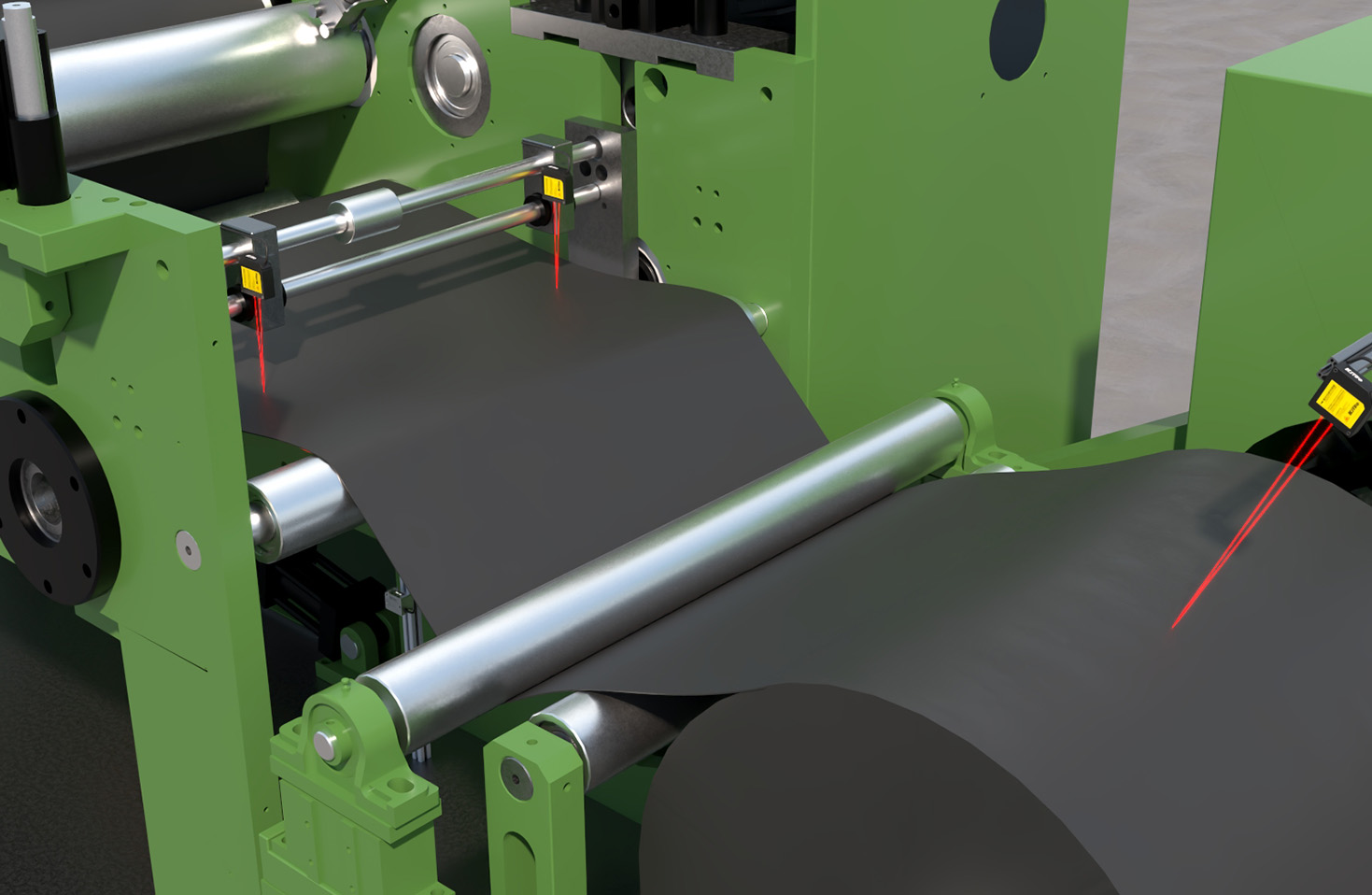
Post-weld inspection is another domain where laser sensors excel. High-resolution 3D scanners can create a detailed topographic map of the finished weld bead. This data is used to verify critical quality attributes such as bead width, height, undercut, and the presence of surface defects like porosity or cracks—all without destructive testing. This inline inspection capability facilitates 100% quality verification and seamless integration into Industry 4.0 data ecosystems, enabling traceability and predictive maintenance.
The material versatility enabled by sensor-guided laser welding is profound. It excels with challenging materials like aluminum alloys, advanced high-strength steels, titanium, and dissimilar metal combinations, where precise heat input control is paramount to avoid metallurgical defects. Industries at the forefront of adoption include automotive, where it is used for body-in-white assembly and battery tray welding; aerospace, for critical engine and airframe components; and medical device manufacturing, where miniaturization and hermetic seals are essential. The result is a dramatic reduction in cycle times, material waste (through optimal weld sizing), and energy consumption compared to conventional welding methods.
However, implementing such a system requires careful consideration. The choice of sensor technology must align with the specific application—considering factors like stand-off distance, required resolution, and the intense plasma and spatter environment near the weld zone. System integration, robust calibration protocols, and the development of intelligent algorithms to interpret sensor data are crucial for success. The initial investment is significant, but the return is measured in superior quality, reduced operational costs, and enhanced manufacturing agility.
In conclusion, the marriage of automated laser welding with intelligent laser sensor feedback is redefining precision manufacturing. It transforms welding from a largely static, pre-programmed operation into a dynamic, adaptive, and data-rich process. As sensor technology and data analytics continue to advance, we can expect these systems to become even more autonomous, capable of self-optimization and handling increasingly complex fabrication tasks, solidifying their role as an indispensable tool in the smart factory of the future.