In the realm of industrial automation, robotics, and scientific instrumentation, laser sensors have become indispensable for achieving high-precision, non-contact measurement. These sensors operate by emitting a laser beam and analyzing the reflected light to determine parameters such as distance, displacement, presence, or thickness. However, the raw electrical signal generated by the photodetector within a laser sensor is often weak, noisy, and susceptible to interference. This is where signal amplification becomes a critical engineering discipline. Amplification is not merely about increasing signal magnitude; it is about faithfully enhancing the signal-to-noise ratio (SNR) and preserving the integrity of the original measurement data for reliable system control.
The core of a typical laser sensor, such as a triangulation or time-of-flight (ToF) sensor, is its photodiode or position-sensitive detector (PSD). These components convert incident photons into a minute photocurrent, often in the nanoampere or microampere range. This current is inherently low-level and can be easily corrupted by electromagnetic interference (EMI) from motors, power lines, or other industrial equipment. Furthermore, the signal may suffer from ambient light noise, especially if the sensor operates without a modulated laser source. Therefore, the first stage of the signal chain is almost always a transimpedance amplifier (TIA).
A transimpedance amplifier is specifically designed to convert this small photocurrent into a more robust voltage signal. Its key parameter is the feedback resistor, which sets the gain (V_out = I_in * R_feedback). Selecting this resistor involves a fundamental trade-off: a higher resistance yields greater output voltage but also increases thermal noise and reduces bandwidth. For pulsed laser systems like ToF, bandwidth is paramount to accurately capture fast edges. Engineers must carefully select low-noise, low-input-bias-current operational amplifiers (op-amps) for the TIA stage to minimize errors. Proper PCB layout is equally crucial, with guard rings and shielded enclosures often employed to prevent leakage currents and capacitive coupling from degrading the signal.
Following the TIA, further amplification and conditioning are usually necessary. This secondary stage, often a non-inverting or instrumentation amplifier configuration, boosts the voltage to a level suitable for analog-to-digital conversion (ADC). Instrumentation amplifiers are preferred for their excellent common-mode rejection ratio (CMRR), which allows them to reject noise that appears identically on both signal lines. This is vital in electrically noisy environments. Filtering is integrated at this stage. A low-pass filter removes high-frequency noise beyond the sensor's useful bandwidth, while a band-pass filter can be used for modulated systems to isolate the specific frequency of the laser, effectively nullifying the influence of constant ambient light.
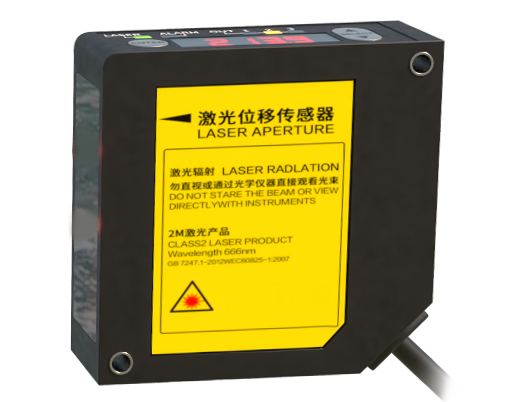
For digital laser sensors with pulsed or encoded output, the amplification challenge shifts towards preserving the timing and shape of digital pulses. High-speed comparators are used after initial amplification to convert the analog pulse into a clean digital signal. Here, hysteresis (Schmitt trigger action) is often added to prevent oscillation when the signal passes through the threshold voltage due to noise. The design must ensure minimal propagation delay and jitter to maintain timing accuracy, which is critical for distance measurement in LiDAR applications.
The choice of components and architecture is dictated by the application. In a factory floor machine for gauging component thickness, stability and temperature drift are primary concerns. Precision, low-drift amplifiers with auto-zeroing capabilities may be used. In a autonomous vehicle's LiDAR, the focus is on extreme bandwidth, dynamic range, and fast recovery from saturation (e.g., from a highly reflective surface). Here, specialized high-speed amplifiers and logarithmic amplifiers might be part of the chain to handle a vast range of return signal strengths.
Ultimately, successful laser sensor amplification is a systems engineering task. It requires a deep understanding of the sensor's physics, the noise characteristics of the environment, and the requirements of the downstream digital processing system. A well-designed amplification chain ensures that the precision inherent in the laser beam is not lost in translation, enabling control systems to make accurate, real-time decisions based on clean, trustworthy data. It transforms a fragile physical phenomenon into a robust electrical command, bridging the gap between delicate optical measurement and the robust world of industrial action.