In the realm of industrial automation and control, the reliable detection of objects, position, and current is paramount. Two of the most prevalent technologies serving this critical function are Hall Effect sensors and proximity switches. While both are non-contact sensing solutions, their underlying principles, capabilities, and optimal applications differ significantly. Understanding these distinctions is crucial for engineers and system designers to select the appropriate device for a given task, ensuring system reliability, efficiency, and cost-effectiveness.
The Hall Effect sensor operates on a fundamental principle of physics discovered by Edwin Hall in 1879. When a current-carrying conductor or semiconductor is placed in a perpendicular magnetic field, a voltage difference, known as the Hall voltage, is generated across the conductor. This voltage is proportional to the strength of the magnetic field. Modern Hall Effect sensors integrate this sensing element with signal conditioning circuitry to produce a clean, usable output signal—either analog (proportional to field strength) or digital (on/off). Their primary function is to detect the presence, strength, and polarity of a magnetic field. This makes them exceptionally versatile. They are widely used for measuring rotational speed (by detecting a magnet on a rotating shaft), linear position sensing, current sensing (by measuring the magnetic field around a current-carrying conductor), and as the core component in brushless DC motor controllers.
Proximity switches, often simply called proximity sensors, encompass a broader category of devices that detect the presence or absence of a target object without physical contact. The most common types are inductive, capacitive, and photoelectric. Inductive proximity switches generate an electromagnetic field and detect the eddy current losses induced in a metallic target. Capacitive types detect changes in capacitance caused by the presence of any material, metallic or non-metallic. Photoelectric sensors use a light beam (visible, infrared, or laser) to detect an object's interruption or reflection. Their output is typically a discrete digital signal, signaling the object's presence within a defined sensing range. The key characteristic is their ability to detect the object itself, not necessarily a magnetic field associated with it.
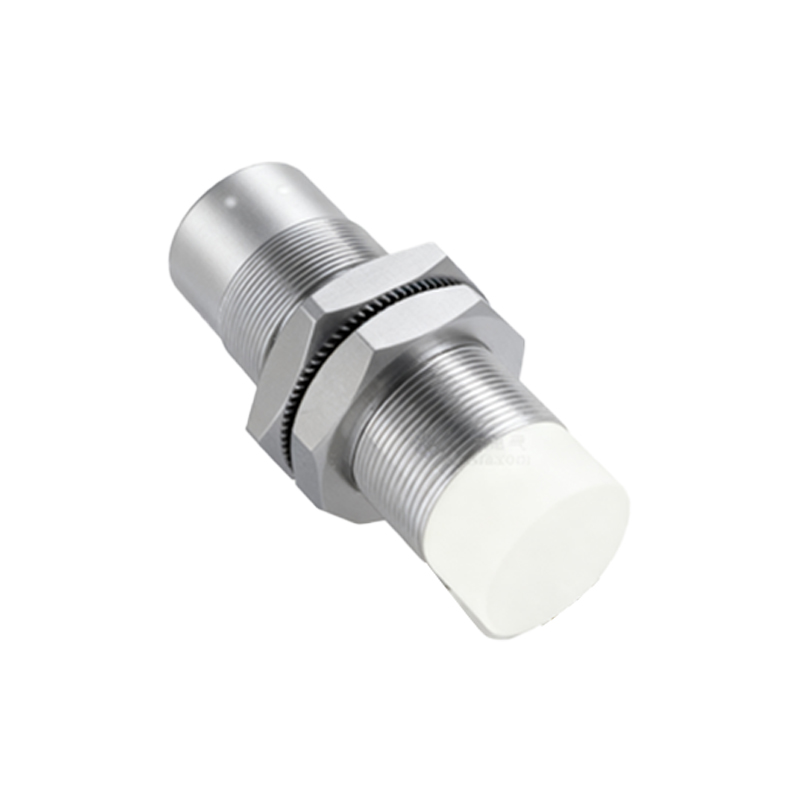
The choice between a Hall Effect sensor and a proximity switch hinges on several critical application parameters. First, consider the target. A Hall Effect sensor requires a magnetic field to actuate; therefore, the target must be a permanent magnet or a ferromagnetic object (like steel) that can be magnetized or used to influence a magnet's field. Standard inductive proximity switches, in contrast, are designed specifically for metallic targets, primarily ferrous metals. For non-metallic targets, capacitive or photoelectric proximity switches are the necessary choice.
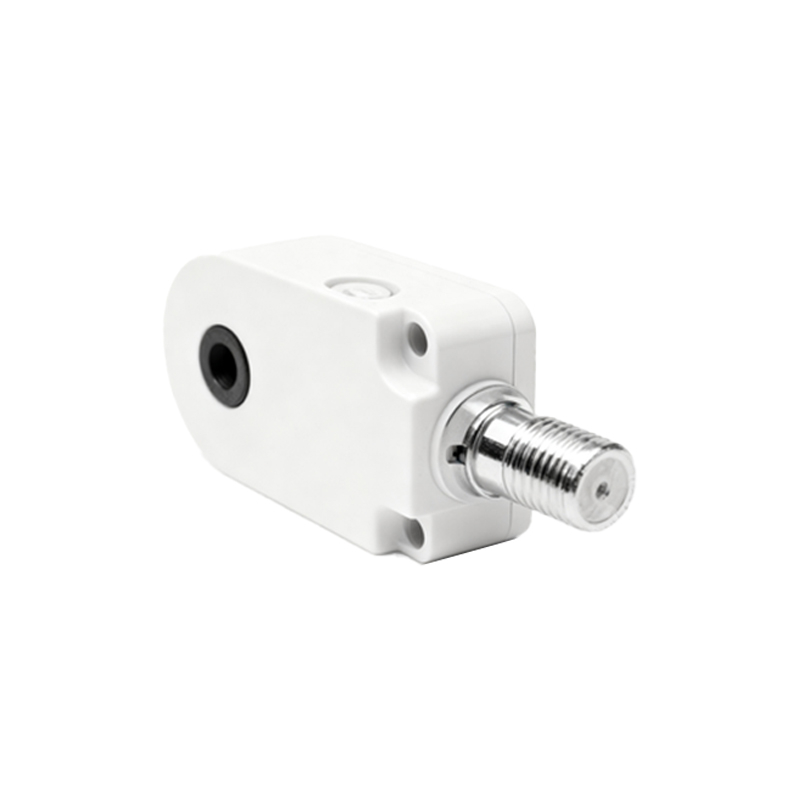
Second, consider the required output and functionality. If the application demands precise measurement of magnetic field strength, linear/angular position, or current, an analog Hall Effect sensor is often the only viable solution. For simple presence detection, both digital Hall sensors and proximity switches can work, but environmental factors come into play. Hall Effect sensors are generally immune to dust, oil, moisture, and non-magnetic contaminants, as they respond solely to magnetic flux. Inductive proximity sensors can be affected by conductive swarf or certain environmental conditions but are robust in dirty industrial settings. However, strong external magnetic fields can interfere with a Hall sensor's operation, while they have no effect on an inductive probe.
Third, operational characteristics differ. Hall Effect sensors can have extremely high switching frequencies, often into the hundreds of kHz range, making them ideal for high-speed rotational counting. Inductive proximity switches have lower maximum frequencies, typically up to several kHz. The sensing distance for a standard Hall sensor is relatively short and is heavily dependent on magnet strength and orientation. Inductive sensors offer well-defined, fixed sensing ranges (e.g., 2mm, 5mm, 10mm) for standardized target materials.
In practical application, a Hall Effect sensor is the preferred choice for gear tooth speed sensing, seat belt buckle detection (using a magnet), electronic throttle position, and DC motor current monitoring. An inductive proximity switch is the workhorse for detecting a metal machine part on an assembly line, verifying the position of a cylinder rod, or counting metal cans. For detecting plastic bottles, liquid levels, or wood panels, capacitive or photoelectric proximity switches are selected, options not available with Hall technology.
In conclusion, there is no universal "best" sensor. The Hall Effect sensor is a specialized, magnetic-field-centric device offering measurement and high-speed capabilities. Proximity switches are object-centric detectors available in varieties tailored to different target materials. A thorough analysis of the target material, required output signal, environmental conditions, and performance specifications is essential. By correctly applying these principles, engineers can leverage the strengths of both technologies to build more robust, precise, and efficient automated systems.