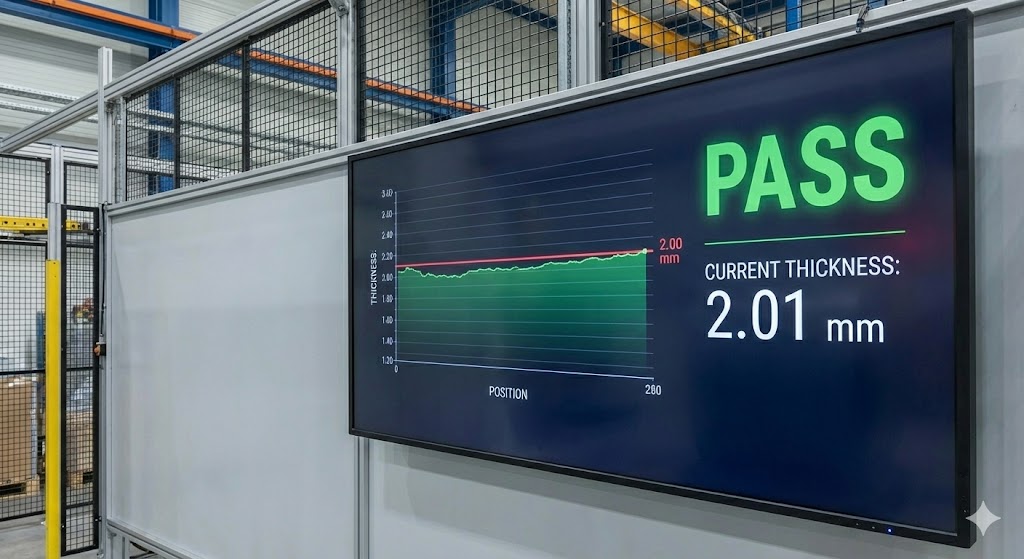
Laser sensors have emerged as a cornerstone of modern detection technology, transforming industries from manufacturing to robotics with their precision and reliability. At their core, these devices operate by emitting a focused beam of light—typically from a laser diode—and measuring the reflection to determine distance, presence, or characteristics of an object. Unlike traditional mechanical or ultrasonic sensors, laser sensors offer non-contact measurement, minimizing wear and enabling high-speed operations in harsh environments. One key advantage is their exceptional accuracy, often achieving micrometer-level resolution, which is critical in applications like automated assembly lines where minute deviations can lead to product defects. For instance, in automotive manufacturing, laser sensors are deployed for quality control, scanning components to ensure dimensional conformity and detecting surface flaws invisible to the human eye.
The versatility of laser sensors extends beyond industrial settings. In logistics, they facilitate automated sorting systems by rapidly identifying package dimensions and positions, boosting efficiency in warehouses. Environmental monitoring also benefits, with laser-based LiDAR systems mapping terrain or detecting pollutants in the atmosphere. A notable innovation is the integration of time-of-flight (ToF) principles, where sensors calculate distance based on the time taken for light to travel to and from an object. This technology powers advancements in autonomous vehicles, enabling real-time obstacle detection and navigation. However, challenges persist, such as interference from ambient light or reflective surfaces, which engineers mitigate through adaptive algorithms and filtering techniques.
Looking ahead, the evolution of laser sensors is driven by miniaturization and smart connectivity. Emerging trends include the development of MEMS-based lasers, which reduce size and cost while maintaining performance, and IoT integration for predictive maintenance in industrial networks. As industries embrace Industry 4.0, laser sensors are becoming integral to cyber-physical systems, providing data for AI-driven analytics. For engineers, selecting the right sensor involves balancing factors like range, wavelength, and environmental robustness. Ultimately, laser sensors exemplify how optical engineering continues to push boundaries, offering solutions that enhance safety, productivity, and innovation across global sectors. Their role in shaping a more automated and precise future remains undeniable, underscoring the importance of ongoing research in photonics and material science.