Infrared proximity sensors are pivotal components in modern industrial automation, offering non-contact detection capabilities that enhance efficiency and safety. These sensors operate by emitting infrared light and measuring the reflection from nearby objects. The input mechanism relies on the principle that infrared waves, typically in the 850nm to 950nm wavelength range, are absorbed or reflected differently based on an object's material, color, and distance. In industrial settings, this technology is widely used for object detection, positioning, and collision avoidance in machinery such as conveyor systems, robotic arms, and automated guided vehicles (AGVs).
The core of an infrared proximity sensor's input system involves an emitter and a receiver. The emitter sends out modulated infrared pulses to reduce interference from ambient light, while the receiver detects the reflected signals. When an object enters the sensor's detection range, the reflected infrared light intensity changes, triggering an electrical output signal. This signal can be analog (e.g., voltage or current proportional to distance) or digital (e.g., a switch-like on/off state), depending on the sensor type. Analog inputs provide continuous data for precise measurements, ideal for applications like level monitoring or thickness gauging. Digital inputs, on the other hand, are simpler and cost-effective for basic presence detection tasks.
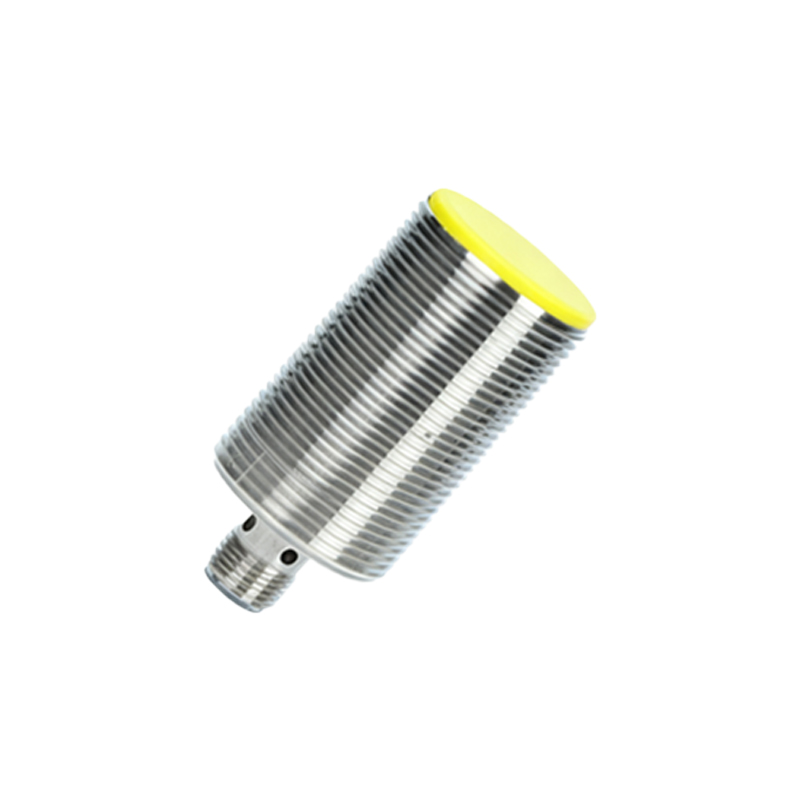
Key factors influencing infrared proximity sensor inputs include environmental conditions, object properties, and sensor specifications. For instance, dust, humidity, or temperature fluctuations can attenuate infrared signals, leading to false readings. To mitigate this, industrial-grade sensors often feature robust housings and signal processing algorithms that filter out noise. Additionally, objects with dark or non-reflective surfaces may absorb more infrared light, reducing detection range, while shiny materials can cause over-reflection and inaccuracies. Engineers must calibrate sensors based on these variables, selecting appropriate models with adjustable sensitivity and response time.
In practice, integrating infrared proximity sensors into control systems requires attention to electrical compatibility and data interpretation. Most sensors interface with programmable logic controllers (PLCs) or microcontrollers via standard protocols like 4-20mA, 0-10V, or digital I/O. Proper wiring and shielding are essential to prevent electromagnetic interference (EMI) from affecting input signals. For advanced applications, such as predictive maintenance or quality inspection, sensor inputs can be combined with machine learning algorithms to analyze patterns and predict failures. For example, in packaging lines, infrared sensors detect misaligned items and feed data to actuators for real-time corrections, minimizing downtime.
Despite their advantages, infrared proximity sensors have limitations. They may struggle in environments with high infrared interference, such as direct sunlight or other infrared sources. Alternative technologies like ultrasonic or laser sensors might be preferred for long-range or high-precision needs. However, infrared sensors remain popular due to their affordability, fast response (often in milliseconds), and versatility. Ongoing innovations, such as multi-spectral infrared sensors and IoT-enabled models, are expanding their capabilities, allowing for smarter input data collection and integration into Industry 4.0 frameworks.
To optimize performance, regular maintenance and testing are crucial. Engineers should verify sensor alignment, clean lenses to prevent dirt buildup, and monitor input signals for drift. Calibration checks using reference objects ensure accuracy over time. By understanding these principles, industrial professionals can leverage infrared proximity sensor inputs to build reliable, automated systems that boost productivity and safety. As technology evolves, these sensors will continue to play a vital role in shaping the future of industrial automation, from smart factories to autonomous logistics.