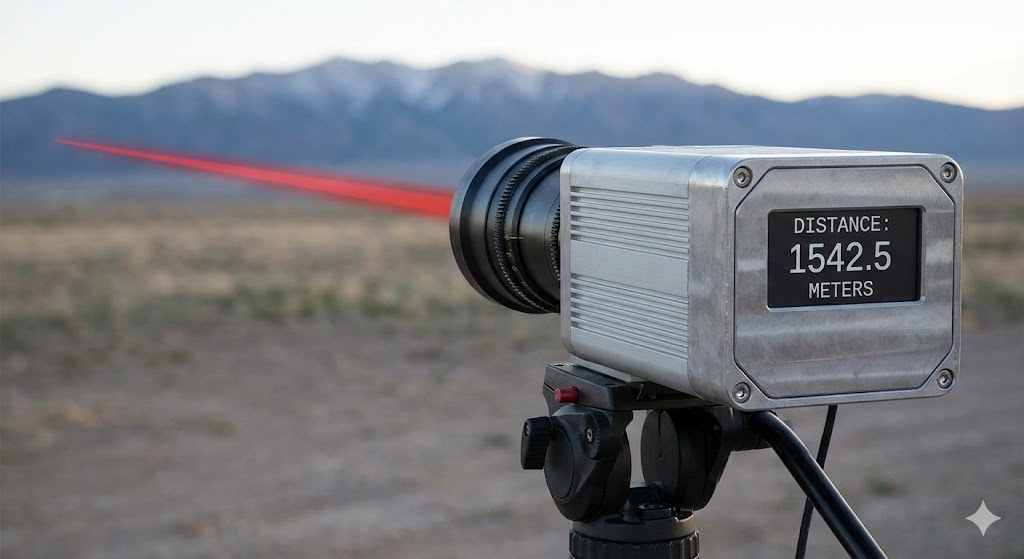
Displacement laser sensors represent a cornerstone of modern precision measurement, offering unparalleled accuracy in industrial and research applications. These devices utilize laser triangulation or interferometry principles to measure minute changes in position, distance, or thickness with sub-micron resolution. In manufacturing, they ensure quality control by monitoring component dimensions in real-time, detecting deviations as small as 0.1 micrometers. Automotive and aerospace industries rely on them for aligning critical assemblies, while semiconductor fabrication uses them for wafer inspection and lithography alignment.
The core technology involves emitting a focused laser beam onto a target surface. Reflected light is captured by a high-resolution detector, and displacement is calculated based on the beam's angle or phase shift. Advanced models incorporate blue-violet lasers (wavelengths around 405 nm) for enhanced performance on organic or translucent materials, where traditional red lasers may scatter or penetrate excessively. Blue lasers provide finer spot sizes and improved signal-to-noise ratios, making them ideal for measuring delicate surfaces like polymers, thin films, or biological samples.
Key advantages include non-contact operation, eliminating mechanical wear and allowing measurements on sensitive or moving objects. High-speed sampling rates (up to 50 kHz) enable dynamic analysis of vibrations or rapid production lines. Integration with IoT systems allows for predictive maintenance, where sensors detect early signs of equipment misalignment. However, environmental factors like ambient light, dust, or surface reflectivity can affect accuracy, necessitating calibration and protective enclosures in harsh settings.
Emerging trends involve miniaturization of sensor modules for embedded applications in robotics and medical devices. Combined with AI algorithms, displacement lasers now enable adaptive manufacturing—automatically adjusting processes based on real-time measurement data. As Industry 4.0 advances, these sensors will become integral to smart factories, driving efficiency and reducing waste through microscopic-level monitoring. For engineers, selecting the right sensor requires balancing wavelength, measurement range, and environmental robustness to match specific operational demands.
In summary, displacement laser sensors are indispensable tools for precision engineering, evolving with innovations like blue laser technology to meet increasingly complex measurement challenges across diverse sectors.