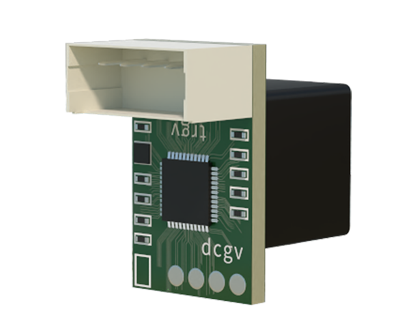
Laser ultrasonic sensors represent a significant leap forward in non-destructive testing (NDT) and precision measurement technologies. Unlike conventional ultrasonic sensors that require physical contact or coupling media, laser ultrasonic systems utilize laser beams to generate and detect ultrasonic waves in materials. This non-contact approach offers unparalleled advantages in terms of speed, accuracy, and applicability to complex or hazardous environments. The fundamental principle involves directing a pulsed laser onto the target surface. The rapid thermal expansion caused by the laser pulse generates broadband ultrasonic waves within the material. A separate detection laser, often a continuous-wave or interferometric system, then measures the minute surface displacements caused by these propagating waves. By analyzing the time-of-flight, frequency, and amplitude of these ultrasonic signals, detailed information about the material's internal structure, thickness, and potential defects like cracks, voids, or delaminations can be extracted with micron-level resolution.
The industrial applications of laser ultrasonic sensors are vast and growing. In the aerospace sector, they are indispensable for inspecting composite materials used in aircraft fuselages and wings. Their ability to detect subsurface flaws without damaging the delicate carbon-fiber-reinforced polymer (CFRP) structures is critical for ensuring flight safety. The automotive industry employs these sensors for online quality control during manufacturing processes, such as inspecting welds in car bodies or measuring the thickness of coatings and paints on moving production lines. In the energy sector, particularly in nuclear power plants, laser ultrasonics provides a means for remote inspection of critical components exposed to high temperatures and radiation, where traditional sensors cannot survive. Furthermore, the semiconductor industry utilizes this technology for characterizing thin films and detecting micro-cracks in silicon wafers, which is essential for maintaining high chip yield rates.
Recent technological advancements have focused on enhancing the robustness, speed, and data-processing capabilities of these systems. The development of more sensitive interferometers, such as confocal Fabry-Perot or photorefractive crystal-based detectors, has significantly improved signal-to-noise ratios, enabling inspection of rougher surfaces. The integration of advanced scanning galvanometers and robotics allows for the automated inspection of large and geometrically complex parts. Moreover, the advent of high-speed data acquisition systems coupled with sophisticated algorithms, including machine learning for pattern recognition and defect classification, is transforming raw ultrasonic data into actionable insights in real-time. This shift towards smart, automated inspection is a cornerstone of Industry 4.0, facilitating predictive maintenance and zero-defect manufacturing paradigms.
Despite their advantages, challenges remain. The initial capital investment for high-power, stable laser systems and sophisticated optical detection units is substantial. The technique can also be sensitive to surface conditions; highly reflective or transparent materials may require surface preparation or specialized laser wavelengths. However, ongoing research in fiber lasers, compact photonic components, and cost-effective system designs is steadily lowering these barriers. As the technology matures, its integration into more mainstream industrial quality assurance workflows is inevitable. In conclusion, laser ultrasonic sensors are a transformative tool for modern engineering. By providing precise, non-contact, and rapid material evaluation, they enhance product quality, operational safety, and manufacturing efficiency across a spectrum of high-tech industries, paving the way for more intelligent and reliable industrial systems.