In industrial automation and precision measurement applications, laser sensors have become indispensable tools due to their high accuracy, non-contact operation, and rapid response times. However, achieving optimal performance from these sophisticated devices requires a deep understanding of their adjustable parameters and a systematic approach to tuning them. This article delves into the critical parameters of laser sensors and provides a comprehensive guide for engineers to fine-tune them for specific operational environments and tasks.
The foundation of laser sensor operation lies in its ability to emit a focused beam of light and accurately measure the properties of the reflected signal. Key performance indicators such as measurement resolution, repeatability, and linearity are directly influenced by several configurable settings. Among the most crucial parameters are the sensing range, response time, output logic, and beam spot size.
Sensing range, often defined by minimum and maximum distances, must be configured to match the physical constraints of the application. Setting the range too broadly can introduce noise from background objects, while too narrow a range may cause the sensor to miss the target entirely. Modern laser sensors often feature teach-in functions or software interfaces for precise range setting. Engineers should utilize these tools to establish the exact start and end points of the measurement field, ensuring the sensor operates within its optimal linear zone as specified in the datasheet.
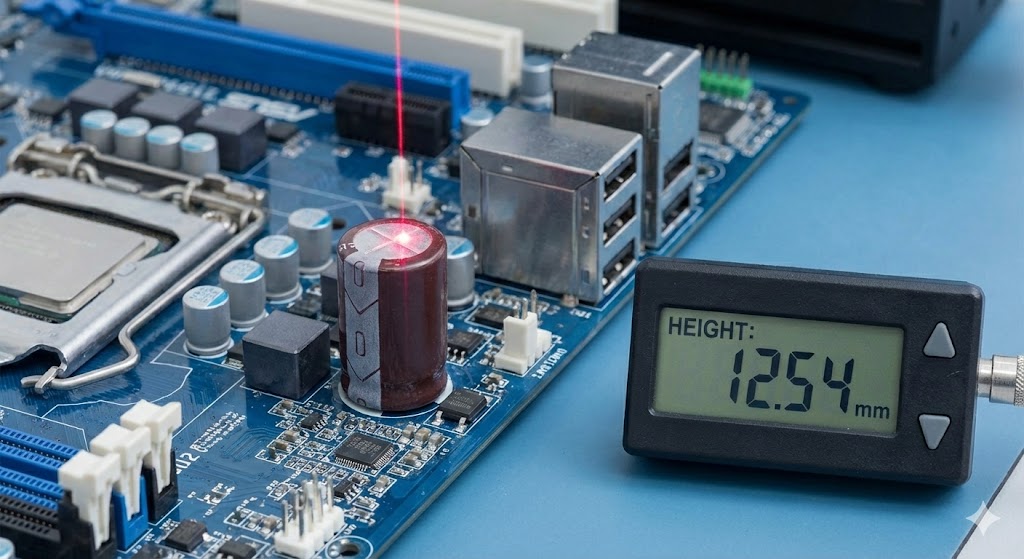
Response time, or the sensor's update rate, determines how quickly it can detect changes. In high-speed applications like conveyor belt sorting or robotic assembly, a slow response time leads to missed events. Conversely, an excessively fast setting in a stable environment can make the sensor overly sensitive to minor vibrations or dust. Adjusting the response time involves finding a balance: it must be fast enough to capture all relevant state changes but slow enough to filter out environmental noise. Many sensors offer filtering options (like moving average or peak-hold filters) that are integral to this adjustment.

The output configuration is another vital area. Laser sensors typically provide digital (switch) or analog (current/voltage) outputs. For binary tasks like object detection, a digital output with adjustable switching thresholds is used. The hysteresis setting—the difference between the switch-on and switch-off points—is critical here. Adequate hysteresis prevents chattering (rapid on/off cycling) when a target is near the threshold. For analog outputs representing distance or intensity, scaling the 4-20 mA or 0-10 V signal to correspond precisely to the physical measurement range is essential for accurate data acquisition by PLCs or controllers.
Beam characteristics, including spot size and shape, significantly affect measurement precision. A smaller spot size allows for higher resolution, enabling the detection of fine details or edges. However, a very small spot can be difficult to align and may be adversely affected by surface roughness. Some sensors allow adjustment of the beam focus or offer different lens options. For diffuse reflection sensors, the receiver gain or sensitivity setting must be tuned based on the target's reflectivity. A high-gloss white surface requires lower gain than a dark, matte surface to prevent saturation of the receiver.
Environmental compensation is often overlooked. Parameters related to ambient light rejection and temperature drift compensation are available in advanced models. In environments with strong ambient light (e.g., near welding stations or sunlight), enabling background suppression modes or adjusting the modulation frequency of the laser can drastically improve reliability. Temperature compensation settings help maintain accuracy in environments with significant thermal fluctuations.
The tuning process should always be iterative and data-driven. Start by consulting the manufacturer's manual for default settings and recommended procedures. Use a stable, representative target for initial calibration. Employ an oscilloscope or the sensor's diagnostic outputs to monitor the raw signal strength and noise level. Adjust one parameter at a time, documenting the effect on the output. For critical applications, perform repeatability tests under real-world conditions, not just in a controlled lab setting. Statistical process control (SPC) methods can be applied to quantify repeatability and stability after adjustments.
Finally, consider the integration with the larger control system. Parameter adjustments like the ON-delay/OFF-delay timers can help synchronize the sensor's output with PLC scan times, avoiding false triggers. Communication protocol settings (e.g., IO-Link, EtherNet/IP) should be configured to ensure seamless data exchange, allowing for remote monitoring and dynamic parameter changes if supported.
In conclusion, mastering laser sensor parameter adjustment is not a one-time task but an ongoing aspect of system maintenance and optimization. By methodically addressing range, response, output, beam properties, and environmental factors, engineers can unlock the full potential of laser sensing technology, ensuring robust, accurate, and reliable performance in the most demanding industrial applications. Regular re-evaluation as application conditions evolve is the hallmark of a proficient practice.