In the realm of industrial automation and precision measurement, TCP Laser Sensors have emerged as a cornerstone technology. TCP, which stands for Tool Center Point, is a critical concept in robotics and CNC machinery, defining the precise point where the tool interacts with the workpiece. A TCP Laser Sensor is a sophisticated non-contact measurement device designed to accurately locate, measure, and monitor this point or other critical features in real-time. This article delves into the operational principles, key applications, and essential selection criteria for these powerful sensors.
At its core, a TCP Laser Sensor operates on the principle of optical triangulation. The sensor projects a focused, coherent laser beam onto the target surface. The light reflected from this point is then captured by a receiving lens and focused onto a highly sensitive position-sensitive detector (PSD) or a CMOS/CCD array. When the target's distance changes, the position of the reflected light spot shifts on the detector. The sensor's internal processor calculates this displacement with extreme accuracy, translating it into a precise distance measurement. This method allows for micron-level resolution and high-speed response, which is indispensable for dynamic industrial processes.
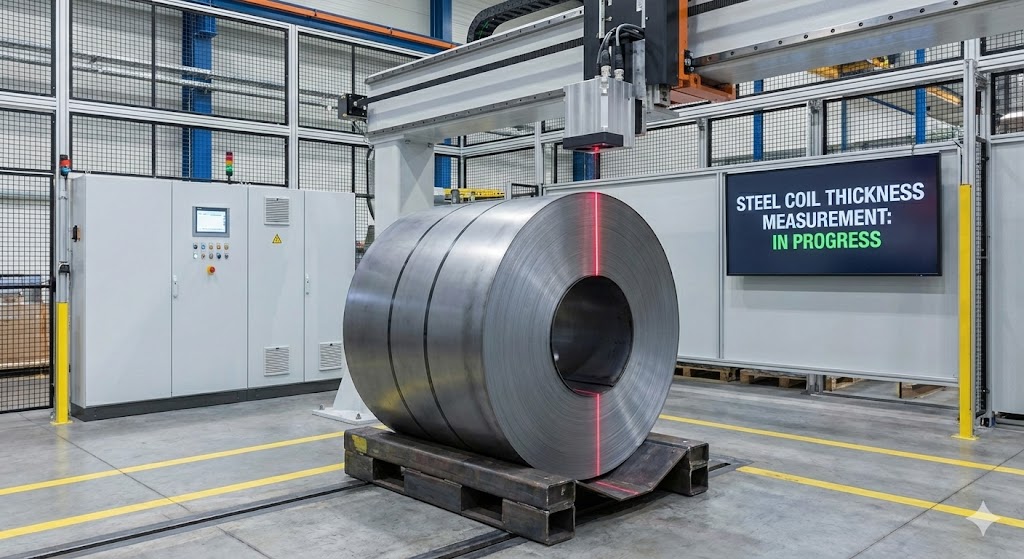
The applications of TCP Laser Sensors are vast and transformative across multiple sectors. In robotic welding, these sensors are paramount for seam tracking and weld seam finding. Before the welding arc is initiated, the sensor scans the joint, providing the robot controller with exact coordinates to adjust the TCP path, ensuring perfect weld placement even with part variations or fixturing tolerances. In machine tool calibration and setup, TCP Laser Sensors are used to measure tool length and diameter, as well as to define the machine's coordinate system origin with unparalleled accuracy, drastically reducing setup time and improving machining precision. Furthermore, they play a vital role in quality control and inspection tasks, such as measuring part dimensions, checking for presence, verifying coplanarity of surfaces, and detecting edge positions on moving production lines. In assembly applications, they guide robots for precise part placement and insertion.
Selecting the right TCP Laser Sensor for a specific application requires careful consideration of several technical parameters. The first is measurement range and standoff distance. The sensor must operate within a distance window that suits the mechanical constraints of the application. Resolution and linearity are next; they define the smallest detectable change and the accuracy across the entire range, respectively. For high-speed processes like on-the-fly inspection, a high sampling rate (often in the kHz range) is crucial to avoid motion blur and ensure data integrity. The type of laser (typically red or blue) and its spot size matter for different surface materials and finishes; a blue laser often performs better on shiny or organic surfaces. Environmental robustness is non-negotiable in industrial settings. Look for sensors with high IP ratings (e.g., IP67) for dust and water resistance, robust housing to withstand vibration, and stable performance across a wide operating temperature range. Finally, the output interface must be compatible with the host system, whether it's analog voltage/current, digital I/O, or industrial communication protocols like EtherCAT, PROFINET, or Ethernet/IP for seamless integration into modern smart factories.
Integration and calibration are critical final steps. Proper mechanical mounting to minimize vibration and thermal effects is essential. The sensor must then be calibrated within the control system's framework. This often involves teaching the sensor its position relative to the robot's base or machine coordinate system through a series of precise measurements on a known reference. Modern sensors often come with intuitive software suites that simplify this process and offer advanced features like multi-point measurement, data logging, and programmable logic.
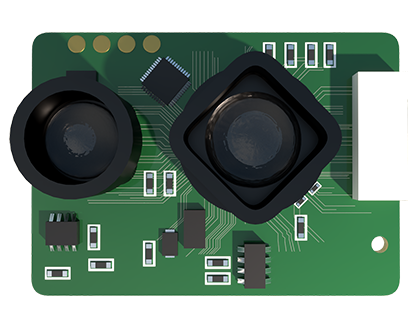
In conclusion, TCP Laser Sensors are more than just measurement tools; they are enablers of precision, flexibility, and intelligence in automated manufacturing. By providing real-time, high-fidelity data about the tool's interaction point or the workpiece itself, they close the control loop, allowing systems to adapt and correct errors autonomously. As Industry 4.0 drives demand for greater adaptability and zero-defect production, the role of these sensors will only become more central. Understanding their principles and carefully matching their capabilities to application needs is key to unlocking their full potential for enhancing productivity, quality, and operational efficiency on the factory floor.