In the realm of industrial automation and control systems, the performance of proximity sensors is a critical factor influencing efficiency, precision, and safety. Among the various technical specifications, response frequency stands out as a paramount parameter that directly impacts system behavior. This article delves into the intricacies of response frequency in proximity sensors, exploring the implications of high and low frequencies, their determining factors, and optimal selection criteria for diverse applications.
Fundamentally, the response frequency of a proximity sensor, often measured in Hertz (Hz), defines the maximum number of detection operations (ON/OFF cycles) it can perform per second. A sensor with a high response frequency can detect targets passing by at very high speeds or at very short intervals. Conversely, a sensor with a low response frequency is suitable for applications where targets move slowly or detection events are infrequent.
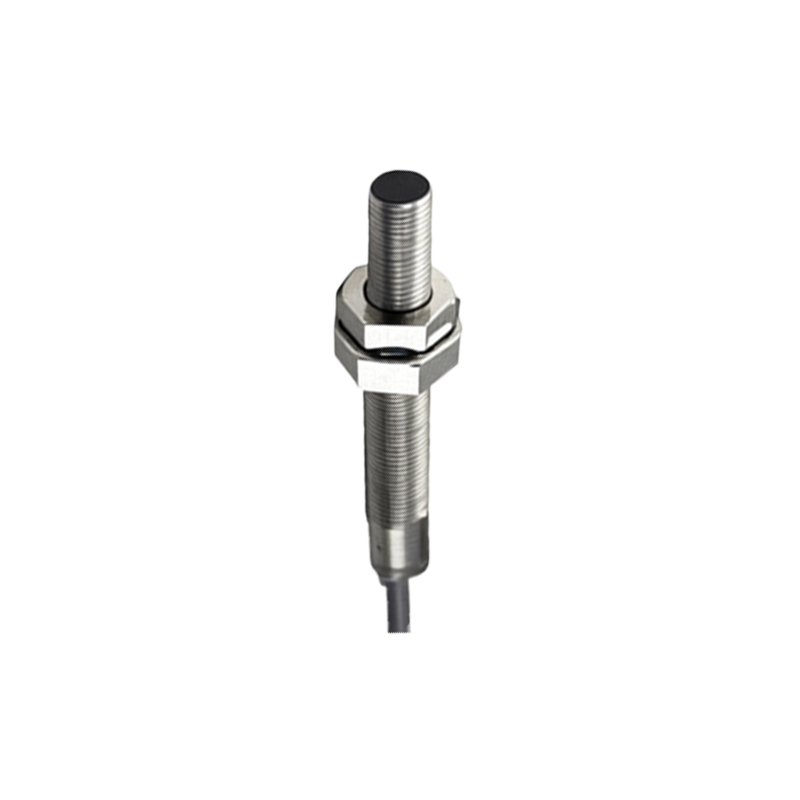
The core technology behind the sensor largely dictates its potential response frequency. Inductive and capacitive proximity sensors, which rely on changes in electromagnetic fields, typically offer high response frequencies, often ranging from 500 Hz to 5 kHz, with some specialized models exceeding 10 kHz. These are ideal for high-speed counting, precision positioning on fast-moving conveyors, or monitoring rotating machinery like motor shafts or gear teeth. Photoelectric sensors, depending on their sensing mode (through-beam, retro-reflective, diffuse), can also achieve very high frequencies, sometimes up to 50 kHz, making them perfect for ultra-high-speed packaging lines or detecting minute objects.
On the other hand, sensors designed for specific challenging environments or specialized detection might operate at lower frequencies. For instance, certain ultrasonic proximity sensors or sensors with built-in heavy-duty output delays for noise immunity may have lower maximum response rates. Using a sensor with an insufficiently high response frequency for a high-speed application leads to "missed counts." The sensor cannot toggle its output state quickly enough to register every passing object, resulting in inaccurate data, process errors, and potential product quality issues.
Several key factors influence the achievable response frequency of a proximity sensor:
1. Sensor Circuitry and Design: The speed of the oscillator, amplifier, and output switching circuit is fundamental. Advanced designs with fast-switching solid-state outputs (like MOSFET or CMOS) enable higher frequencies.
2. Detection Distance and Target Size: Generally, the shorter the sensing distance and the larger the target relative to the sensor face, the higher the achievable stable response frequency. Long-range detection often requires more signal processing time, which can reduce the maximum frequency.
3. Output Configuration: Two-wire DC sensors often have a slightly lower response frequency compared to three-wire DC models due to their inherent residual current (leakage current). Three-wire DC PNP or NPN sensors provide the highest response performance.
4. Load and Supply Voltage: The electrical characteristics of the connected load (e.g., PLC input, relay) and the stability of the supply voltage can affect the switching speed and thus the practical response frequency.
5. Environmental Conditions: Extreme temperatures, strong electromagnetic interference, or contamination on the sensor face can degrade performance and effectively lower the operational response frequency.
Selecting the appropriate response frequency requires careful calculation. Engineers must consider the speed of the target (V) and its size or the required detection pitch (D). A simplified formula is: Required Response Frequency (Hz) = Target Speed (m/s) / Detection Pitch (m). It is standard practice to select a sensor with a rated response frequency at least 1.5 to 2 times higher than the calculated requirement to account for real-world variances, ensuring a reliable safety margin.
In conclusion, there is no universal "better" choice between high and low response frequency; the correct choice is dictated by the application's demands. High-frequency sensors are the engines of high-speed automation, enabling precision and throughput. Low-frequency sensors are perfectly adequate and often more cost-effective for slower processes, general presence detection, or in environments where other robust features are prioritized. A thorough understanding of this specification, coupled with a precise analysis of the application's mechanical and temporal parameters, is essential for deploying proximity sensors that deliver optimal reliability and contribute to a seamless, efficient, and intelligent industrial operation.