In the realm of industrial automation, robotics, and smart systems, the ability to detect the presence, absence, or distance of an object without physical contact is paramount. Among the various technologies enabling this capability, ultrasonic proximity sensors stand out for their reliability, versatility, and robustness across challenging environments. Unlike optical or inductive sensors, ultrasonic sensors utilize sound waves beyond the range of human hearing, typically around 40 kHz to 400 kHz, to perform precise measurements and detection tasks.
The fundamental operating principle of an ultrasonic proximity sensor is elegantly simple, inspired by the natural echolocation used by bats. The sensor contains a transducer that acts as both a transmitter and a receiver. In a typical cycle, the transmitter emits a short, high-frequency burst of ultrasonic pulses. These sound waves travel through the air at a known speed (approximately 343 meters per second at room temperature). If an object is present within the sensor's detection range, the sound waves reflect off its surface and travel back to the sensor. The receiver detects this echo, and an internal microcontroller calculates the time elapsed between the emission and the reception of the signal. This time-of-flight measurement is then converted into an accurate distance reading. For simple presence detection, the sensor is configured to switch its output state when an object enters a predefined zone.
This core principle grants ultrasonic sensors several distinct advantages. First, they are largely unaffected by the target object's material properties, such as color, transparency, or reflectivity to light. They can reliably detect glass, liquids, transparent films, and matte black surfaces that often confound photoelectric sensors. Second, environmental factors like dust, smoke, fog, or ambient light conditions have minimal impact on their performance, making them ideal for harsh industrial settings, outdoor applications, and cleanrooms. Third, they offer relatively long sensing ranges compared to many other proximity sensor types, with some models capable of detecting objects several meters away.
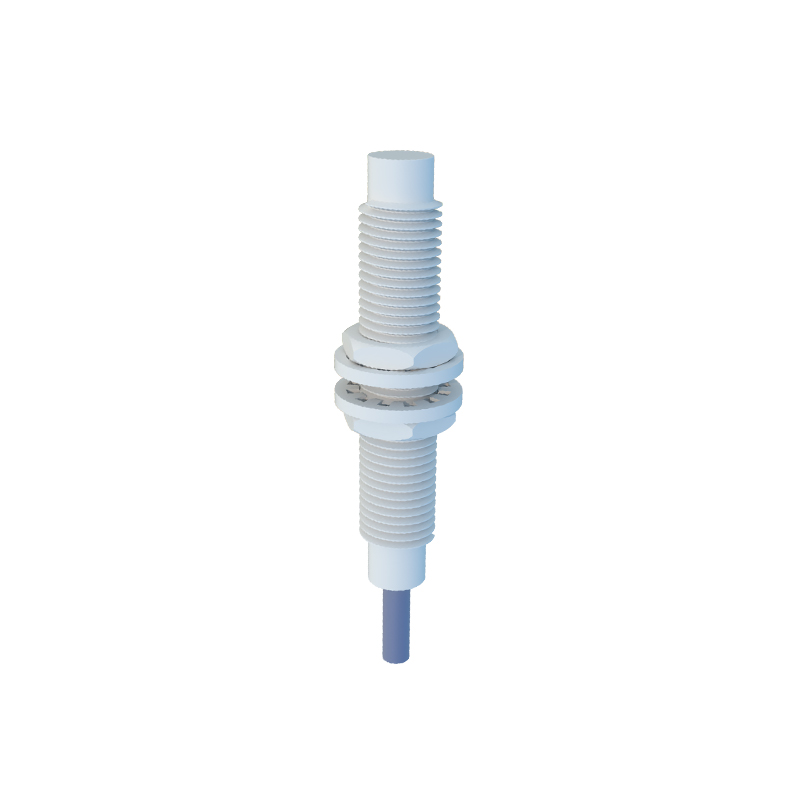
The applications for ultrasonic proximity sensors are vast and varied. In factory automation, they are deployed for precise positioning on assembly lines, controlling loops in winding machines, and detecting stacked materials like boxes or metal sheets. In the automotive industry, they are integral to parking assistance systems and collision avoidance mechanisms. Within the packaging sector, these sensors ensure consistent fill levels in bottles and containers, regardless of the liquid's color or transparency. They also play a crucial role in robotics for obstacle detection and navigation, and in logistics for palletizing and warehouse management systems. Emerging applications include smart trash cans, touchless faucets, and drone altitude control.
Selecting the right ultrasonic sensor for a specific application requires careful consideration of several key parameters. The sensing range is the most critical, defined by both a minimum and maximum distance. Objects placed too close may fall within the sensor's "blind zone" and not be detected. The beam angle determines the detection field's width; a narrow beam is suitable for precise detection of small objects, while a wide beam is better for general presence detection or uneven surfaces. Response time indicates how quickly the sensor can take a measurement and update its output, which is vital for high-speed processes. Output type is another decision point: analog outputs (e.g., 4-20 mA, 0-10V) provide continuous distance information, while discrete outputs (e.g., NPN/PNP) offer simple on/off switching at set points. Environmental ratings for temperature, humidity, and Ingress Protection (IP) are essential for ensuring longevity in the intended operating conditions.
Despite their robustness, ultrasonic sensors have limitations. Very soft or sound-absorbing materials (like foam or thick fabric) may not reflect sufficient sound energy for reliable detection. Extreme temperature fluctuations can affect the speed of sound, though many modern sensors include temperature compensation circuitry. Highly turbulent air or strong air currents can also deflect the ultrasonic beam. Therefore, a thorough evaluation of the application environment is always recommended.
In conclusion, ultrasonic proximity sensors provide a powerful, non-contact solution for distance measurement and object detection where other technologies may falter. Their material independence, environmental resilience, and flexible configuration options make them a cornerstone of modern sensing technology. By understanding their operating principles, strengths, and key selection criteria, engineers and system integrators can effectively harness their capabilities to enhance automation, improve safety, and drive innovation across countless industries.