In the world of industrial automation and smart systems, the ability to detect objects without physical contact is not just a convenience—it's a fundamental requirement for efficiency, safety, and precision. This is where proximity switches and sensors come into play, serving as the silent, reliable sentinels of modern machinery. Unlike mechanical limit switches that require direct touch, these devices sense the presence or absence of an object through various fields and signals, offering a leap in reliability and operational life.
At their core, proximity sensors are defined by their non-contact operation. They emit a field or beam and detect changes in that field caused by a target object entering their sensing range. This simple principle belies a sophisticated technology that comes in several primary types, each suited to specific materials and environments. The most common variants include inductive, capacitive, ultrasonic, and photoelectric sensors.
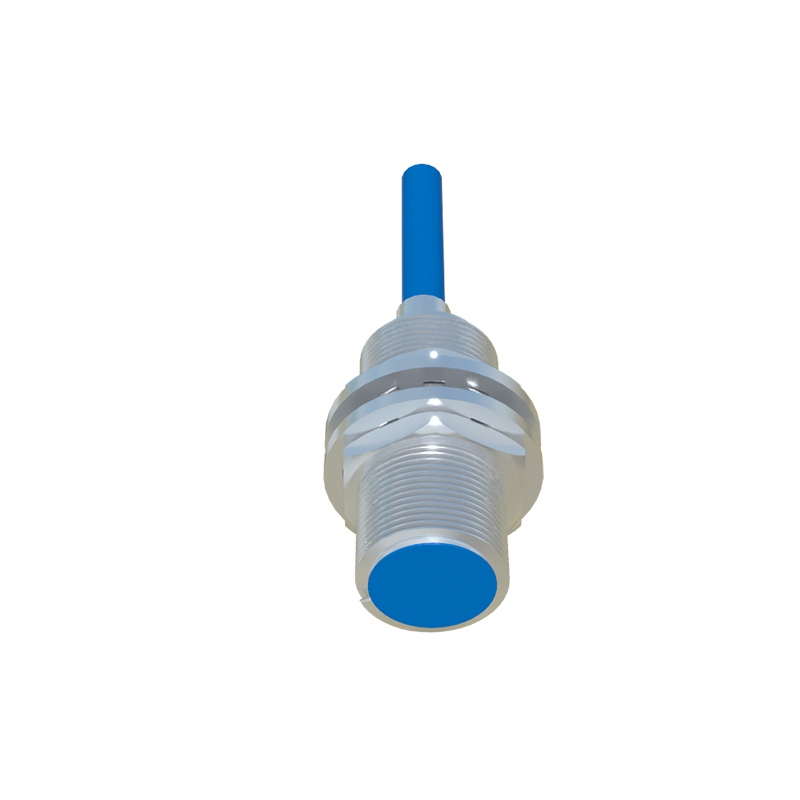
Inductive proximity sensors are the workhorses for metal detection. They generate an electromagnetic oscillating field. When a metallic object enters this field, it induces eddy currents within the target, causing a change in the sensor's oscillation amplitude. This change is detected and converted into a solid-state output signal, typically switching a load on or off. Their robustness makes them ideal for harsh industrial settings like machine tools, automotive assembly lines, and material handling systems, where they count parts, control positioning, or confirm the presence of metal components.
For non-metallic materials—liquids, plastics, wood, or granules—capacitive proximity sensors are the go-to choice. They function similarly to inductive types but generate an electrostatic field. Any object with a dielectric constant different from air (which is nearly all materials) will alter the capacitance of the sensing field, triggering the switch. This makes them perfect for level detection in tanks, monitoring paper or plastic film in packaging, or detecting filled containers on a conveyor belt, even through thin non-metallic walls.

Photoelectric sensors, another major category, use light beams. An emitter sends out a beam of light (often infrared, visible red, or laser), and a receiver detects it. The sensor triggers when the target either interrupts this beam (through-beam mode), reflects it back (retro-reflective mode), or reflects it diffusely (diffuse mode). They offer the longest sensing ranges and can detect virtually any object, regardless of material, making them versatile for packaging, logistics, and automated storage systems.
Ultrasonic sensors measure the time it takes for a sound pulse to reflect back from a target. They excel at precise distance measurement and can detect a wide variety of objects, including transparent ones that challenge photoelectric sensors. Common applications include liquid level control, loop control in winding machines, and presence detection on complex assembly lines.
The advantages of using proximity switches are manifold. The absence of mechanical contact eliminates wear and tear, granting them an exceptionally long service life. They are not affected by the surface condition of the target—whether oily, dirty, or wet—ensuring consistent performance. Their high switching speed and frequency enable them to keep pace with fast-moving production lines. Furthermore, their solid-state design provides remarkable resistance to vibration and shock.
Selecting the right sensor requires careful consideration of several factors. The material of the target object is paramount—metal dictates inductive, while non-metals may require capacitive or photoelectric. The required sensing distance, or range, varies greatly between types. Environmental conditions like temperature extremes, dust, moisture, or chemical exposure demand sensors with appropriate ingress protection (IP) ratings. The output type, such as NPN, PNP, or analog, must be compatible with the control system (e.g., a PLC). Finally, the physical size and mounting style must fit the application's spatial constraints.
Installation and alignment are critical for optimal performance. Sensors must be mounted securely to prevent misalignment from vibration. For inductive and capacitive sensors, it's crucial to maintain a "non-sensing" zone around the active face to avoid interference from the mounting bracket or nearby metal. Photoelectric and ultrasonic sensors need a clear line of sight to their target, free from obstructions or background interference. Regular maintenance, though minimal, involves keeping the sensing face clean and periodically checking the electrical connections and output signals.
The evolution of proximity sensing technology continues to push boundaries. Modern sensors are becoming smarter, integrating IO-Link communication to provide not just a simple on/off signal but also diagnostic data like operating hours, temperature warnings, and signal strength. This facilitates predictive maintenance, reducing downtime. Miniaturization allows them to fit into increasingly compact devices, while enhanced sensing ranges and improved immunity to environmental interference expand their application scope.
From ensuring a robotic gripper has picked up a part to preventing a press from operating without a workpiece in place, proximity switches and sensors form the essential sensory layer of automation. They are the foundational elements that enable machinery to "see" and