In the realm of modern electronics and automation, human proximity sensor coils stand as a critical component enabling touchless interaction, safety mechanisms, and energy efficiency. These coils, typically crafted from conductive wire wound into a specific pattern, form the inductive heart of many proximity detection systems. Their primary function is to generate an electromagnetic field. When a human body or any conductive object enters this field, it causes a detectable change—often in the coil's inductance or the frequency of an associated oscillator circuit. This perturbation is the fundamental signal that indicates "presence.
The underlying principle is based on electromagnetic induction and the conductive properties of the human body. Unlike simple metal detectors, sensing a human body presents a unique challenge due to its lower and more complex conductivity. The coil is usually part of a resonant circuit, such as in a Colpitts or Hartley oscillator configuration. At its resonant frequency, the circuit operates stably. The human body, acting as a lossy dielectric conductor, introduces eddy currents and capacitive coupling when in proximity. This interaction effectively changes the coil's effective inductance and adds parasitic capacitance to the system, thereby shifting the resonant frequency or damping the oscillation amplitude. Sophisticated signal processing circuitry monitors this shift or amplitude change, triggering a predefined output.
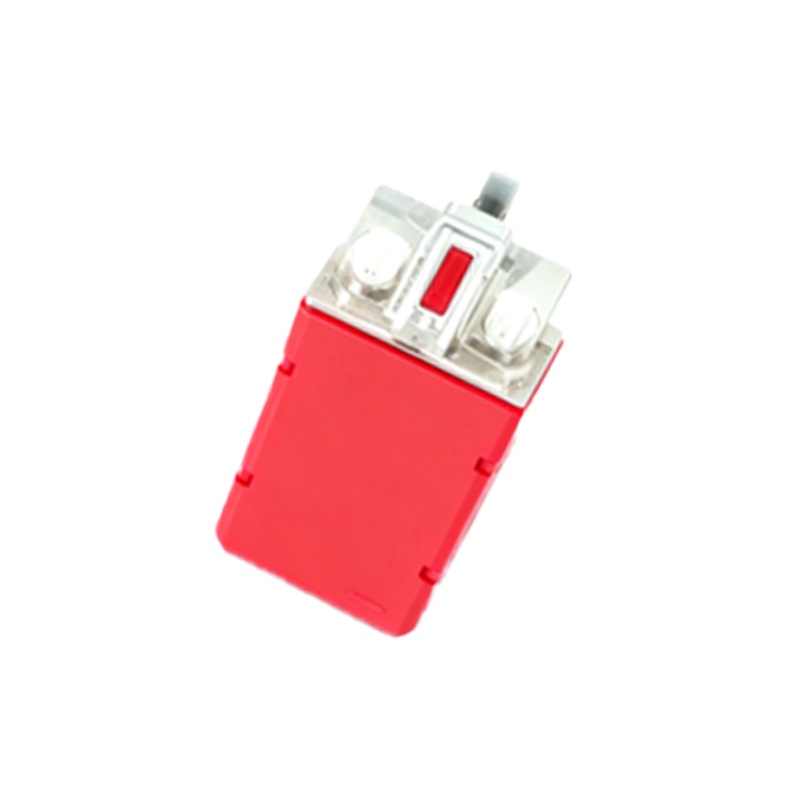
The applications for these sensor coils are vast and growing. A ubiquitous example is the touchless faucet or soap dispenser in public restrooms, where a hand waved near the sensor activates the water flow, promoting hygiene and conservation. In the automotive industry, they are integrated into door handles for keyless entry systems, detecting the approach of a user's hand to unlock the vehicle. For safety, they are employed in industrial machinery to create presence-sensing fields, immediately halting operation if a worker gets too close to a hazardous area. Consumer electronics also leverage this technology for features like display wake-on-approach in laptops or phones, saving battery life.
Designing an effective human proximity sensor coil involves several nuanced considerations. The coil's geometry—its diameter, number of turns, and winding pattern—directly influences the shape, strength, and sensitivity of the generated electromagnetic field. Larger coils generally create a wider detection field but may lack precision for close-range detection. Designers must carefully balance detection range with sensitivity and power consumption. Shielding is another critical factor. Without proper electrostatic or magnetic shielding, the sensor can become susceptible to false triggers from environmental noise, power line interference, or adjacent electronic devices. The coil is often shielded from one side to create a directional sensing field.
Furthermore, the choice of operating frequency is paramount. Lower frequencies (e.g., 100-400 kHz) can offer better penetration through non-conductive materials like plastic enclosures or glass but may have reduced sensitivity to the human body. Higher frequencies (into the low MHz range) increase sensitivity to capacitive coupling, making them more responsive to the human body's dielectric properties, but they are also more prone to radiated emissions and interference. Compliance with electromagnetic compatibility (EMC) regulations, such as FCC or CE standards, is a non-negotiable aspect of the design process. This often requires additional filtering components and careful PCB layout to minimize unwanted radiation.
The integration of the coil with its driving and sensing circuitry is where the system's intelligence resides. Modern implementations frequently use microcontrollers with dedicated capacitive sensing peripherals or advanced analog front-end chips. These components handle the tasks of generating the excitation signal, measuring the minute changes in the resonant circuit, and implementing algorithms to distinguish a genuine human presence from environmental drift or noise. Adaptive calibration routines are commonly used to maintain stable operation across varying temperatures and humidity levels.
In conclusion, the human proximity sensor coil is a deceptively simple component that enables a sophisticated layer of interaction between humans and machines. Its effectiveness hinges on a deep understanding of electromagnetic theory, practical circuit design, and the physiological characteristics of the human body. As the demand for intuitive, safe, and energy-conscious interfaces continues to rise, the evolution of these coils and their associated systems will undoubtedly lead to even more seamless and intelligent applications in our daily lives and industrial processes.