Proximity sensors are a fundamental category of non-contact sensing devices widely used in industrial automation, consumer electronics, and safety systems. At its core, a proximity sensor is defined as an electronic device capable of detecting the presence or absence of an object within a specified range without any physical contact. It achieves this by emitting an electromagnetic field, a beam of electromagnetic radiation, or other forms of energy, and then monitoring for changes in the field or return signal. The primary output is a simple switch signal, indicating that an object is either "near" or "far," based on a pre-set detection threshold.
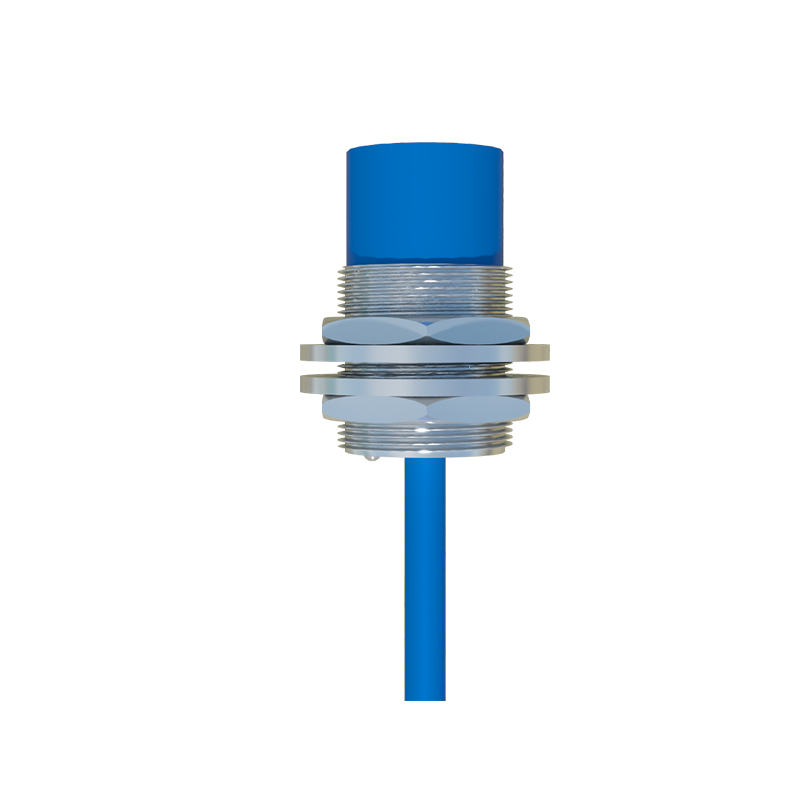
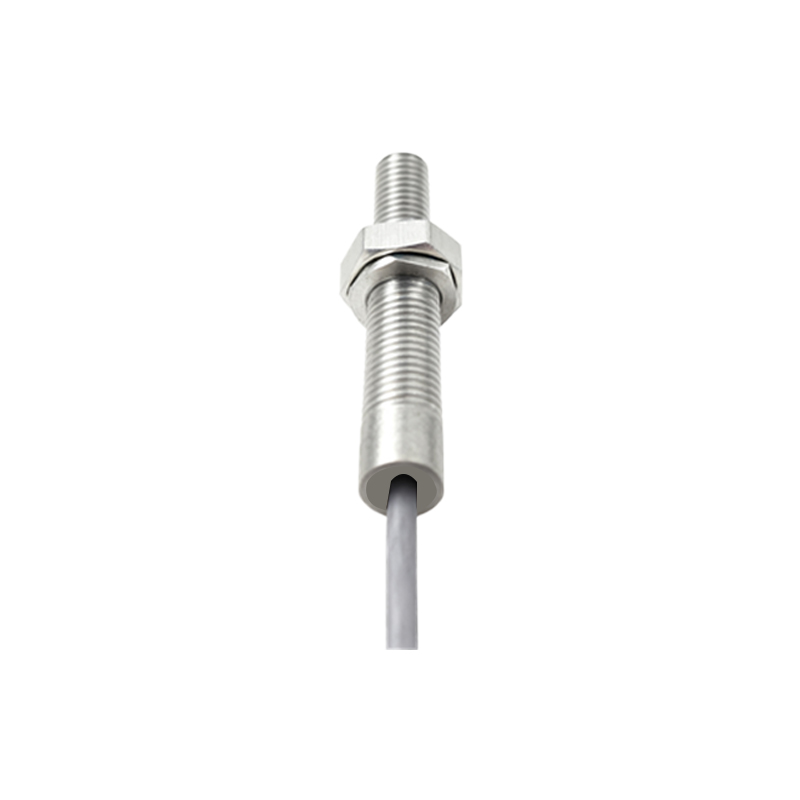
The working principle varies significantly depending on the underlying technology. The most common types include inductive, capacitive, photoelectric, and ultrasonic sensors. Inductive proximity sensors are designed to detect metallic objects. They operate by generating an oscillating electromagnetic field from a coil. When a conductive metal enters this field, it induces eddy currents on the metal's surface, which in turn dampens the oscillation amplitude of the sensor's coil. This change is detected by the sensor's internal circuitry, triggering an output signal. These sensors are robust, reliable for metallic targets, and unaffected by non-conductive materials like dirt or oil.
Capacitive proximity sensors, in contrast, can detect both metallic and non-metallic materials, including liquids, plastics, wood, and granular substances. They function by generating an electrostatic field. Any object that enters this field alters the capacitance of the sensor's system. The sensor monitors this capacitance change; when it exceeds a certain level, the device switches its output state. This makes them ideal for applications like liquid level detection, material handling, and presence detection of non-metallic products.
Photoelectric proximity sensors utilize light, typically infrared, to detect objects. They consist of a light emitter and a receiver. In the most common "diffuse" or "reflective" mode, the sensor emits a light beam, and the receiver detects the light reflected back from the target object. The presence of an object is confirmed when the reflected light intensity surpasses a set threshold. Other configurations, like through-beam and retro-reflective, offer different sensing ranges and environmental tolerances. These sensors are excellent for long-range detection and can sense virtually any material.
Ultrasonic proximity sensors work on a principle similar to sonar. They emit high-frequency sound waves and evaluate the echo received after bouncing off an object. By calculating the time interval between sending the signal and receiving the echo, the sensor can determine the distance to the object. This technology is effective for detecting objects of various materials, shapes, and colors, and is particularly useful in challenging environments with dust, fog, or where optical sensors might fail.
Key specifications define a proximity sensor's performance. The "sensing distance" or "range" is the maximum distance at which the sensor can reliably detect a standard target. "Repeatability" refers to the sensor's ability to consistently detect an object at the same distance. The "response frequency" indicates how quickly the sensor can detect objects in rapid succession, which is critical for high-speed counting or sorting applications. Most industrial sensors feature a built-in output stage, commonly providing a digital ON/OFF signal via a transistor (PNP or NPN) or a relay.
The applications are vast and diverse. In manufacturing, they are indispensable for part positioning, counting, jam detection, and end-of-travel limits on automated machinery. In the automotive industry, they enable parking assistance systems and collision avoidance. In consumer devices, they deactivate touchscreens when a phone is held to the ear and enable touchless faucets or soap dispensers. Their non-contact nature ensures no wear and tear on the sensor or the target, leading to high reliability and long service life.
Selecting the right proximity sensor requires careful consideration of the target material, required sensing distance, environmental conditions (temperature, contaminants), electrical requirements, and the necessary output type. Understanding the precise definition and operational principles of each sensor type is the first critical step in deploying an effective, efficient, and reliable automation or detection solution.