Rectangular proximity sensors have become indispensable components in modern industrial automation, offering reliable non-contact detection capabilities across diverse applications. Unlike their cylindrical counterparts, these sensors feature a distinct rectangular housing that provides unique advantages in specific installation scenarios. The design allows for easier integration into machinery with limited space, particularly in conveyor systems, packaging equipment, and assembly lines where flat surfaces dominate.
The operational principle of rectangular proximity sensors typically relies on electromagnetic, capacitive, or ultrasonic technologies. Inductive rectangular sensors, the most common variant, generate an oscillating electromagnetic field to detect metallic objects without physical contact. When a metal target enters this detection field, it causes changes in oscillation amplitude, triggering the sensor's output switch. This non-contact operation eliminates mechanical wear, ensuring longevity and reducing maintenance needs. Capacitive versions detect both metallic and non-metallic materials by measuring changes in capacitance, making them suitable for liquid level detection or plastic material handling.
One significant advantage of rectangular proximity sensors lies in their mounting flexibility. The flat housing enables surface mounting with standard brackets or direct installation using threaded holes along the sensor body. Many models feature adjustable sensing ranges and built-in LED indicators for operational status, simplifying setup and troubleshooting. The rectangular form factor also facilitates the incorporation of multiple sensing elements or additional functionalities, such as analog outputs or IO-Link communication capabilities for Industry 4.0 applications.
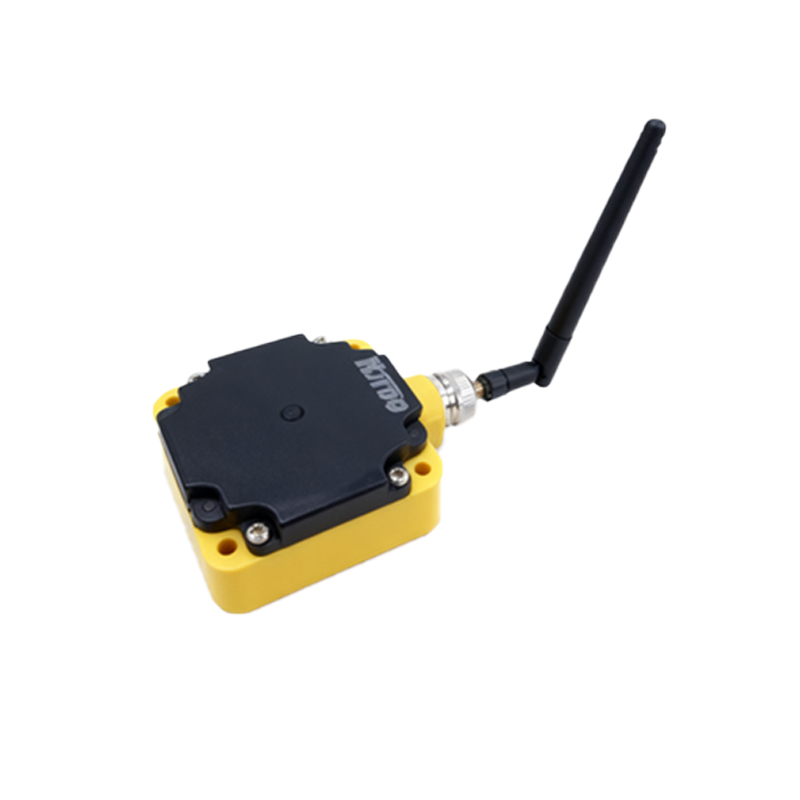
In manufacturing environments, these sensors excel in position verification, object counting, and end-of-travel detection. Their robust construction, often meeting IP67 or higher ingress protection ratings, ensures reliable performance in challenging conditions involving dust, moisture, or temperature variations. The sensing face orientation varies among models—some detect objects approaching from the front, while others offer side-sensing or even top-sensing configurations. This versatility allows engineers to select the optimal orientation for specific detection challenges.
When selecting rectangular proximity sensors, key considerations include sensing distance, output type (PNP/NPN), supply voltage compatibility, and environmental resistance. Sensing distances generally range from 2mm to 40mm for standard inductive models, with specialized versions offering extended ranges. The choice between DC two-wire, DC three-wire, or AC models depends on the control system architecture. Modern sensors increasingly incorporate diagnostic functions and short-circuit protection, enhancing system reliability.
Installation best practices emphasize maintaining adequate clearance between sensors and metal mounting surfaces to prevent performance degradation. Proper alignment relative to target objects ensures consistent detection, while periodic cleaning of sensing faces prevents false triggers from accumulated contaminants. As automation evolves toward smarter factories, rectangular proximity sensors continue to adapt with enhanced precision, faster response times, and advanced connectivity options, solidifying their role as fundamental components in industrial sensing solutions.