In the rapidly evolving landscape of industrial automation and precision measurement, laser sensors have emerged as indispensable tools for applications ranging from distance measurement and object detection to quality control in manufacturing. However, one of the most significant challenges facing their reliable operation in harsh environments is vibration. Mechanical vibrations, whether from machinery, transportation, or environmental factors, can severely impact sensor accuracy, stability, and longevity. This article delves into the critical aspects of laser sensor vibration resistance, exploring the engineering principles, design innovations, and testing methodologies that ensure robust performance under duress.
At its core, a laser sensor operates by emitting a laser beam and analyzing the reflected light to determine parameters such as distance, position, or presence. Vibrations can disrupt this process in multiple ways. They may cause misalignment of optical components, induce noise in signal processing circuits, or lead to physical fatigue and failure of mechanical parts. To counteract these effects, engineers employ a multi-faceted approach integrating mechanical, electronic, and software-based solutions.
Mechanically, the design focuses on isolation and damping. Advanced housing materials, such as aluminum alloys with high stiffness-to-weight ratios, are used to minimize resonant frequencies that amplify vibrations. Internal components are often mounted on shock-absorbing materials like silicone or rubber gaskets, which dissipate kinetic energy. Additionally, strategic placement of mass dampers within the sensor assembly helps to neutralize oscillatory motions, much like tuned mass dampers in skyscrapers. For extreme conditions, hermetically sealed enclosures prevent dust and moisture ingress, which can exacerbate vibration-induced wear.
Electronically, signal integrity is paramount. Vibrations can introduce electrical noise, leading to erroneous readings. To mitigate this, sensors incorporate high-quality analog-to-digital converters (ADCs) with robust filtering capabilities. Adaptive algorithms, such as digital signal processing (DSP) techniques, are implemented to distinguish between true measurement signals and vibration-induced artifacts. Real-time compensation circuits adjust gain and offset dynamically, maintaining accuracy even during transient shocks. Furthermore, redundant sensing elements or array-based designs provide data fusion, averaging out inconsistencies caused by minor vibrations.

Software plays a complementary role through intelligent calibration and diagnostics. Many modern laser sensors feature self-calibration routines that automatically adjust parameters based on environmental feedback. Machine learning algorithms can predict vibration patterns from historical data, enabling preemptive adjustments. Diagnostic tools monitor component health, alerting users to potential failures before they occur, thus reducing downtime in critical applications like automotive assembly lines or aerospace manufacturing.
Testing is a rigorous phase in developing vibration-resistant laser sensors. Standards such as IEC 60068-2-6 (sinusoidal vibration) and IEC 60068-2-64 (broadband random vibration) provide frameworks for evaluating performance. Sensors undergo accelerated life testing on shaker tables, simulating years of operational stress in a condensed timeframe. Parameters like frequency range (typically 10 Hz to 2 kHz), amplitude, and duration are varied to mimic real-world scenarios—from the constant hum of industrial motors to the sudden jolts of mobile robotics. Data from these tests inform iterative design improvements, ensuring that sensors meet or exceed industry benchmarks for durability.
In practice, the benefits of enhanced vibration resistance are profound. In logistics, laser sensors on automated guided vehicles (AGVs) maintain precise navigation despite floor irregularities. In renewable energy, sensors in wind turbine monitoring systems withstand gust-induced oscillations to deliver reliable data. Even in consumer electronics, such as smartphones with LiDAR sensors, vibration damping ensures consistent performance during everyday use.
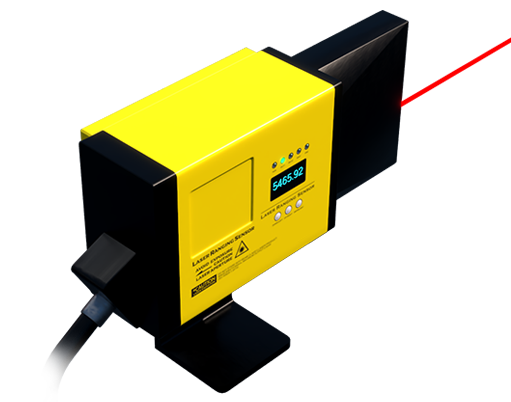
Looking ahead, emerging trends like miniaturization and the Internet of Things (IoT) pose new challenges. Smaller sensors may be more susceptible to vibrational effects, necessitating innovations in nanomaterials and micro-electromechanical systems (MEMS). Wireless sensor networks in smart factories will require low-power, high-resilience designs that operate autonomously. Collaboration across disciplines—from materials science to artificial intelligence—will drive the next generation of laser sensors, making them not only more accurate but also inherently resilient to the dynamic forces of their operating environments.
Ultimately, the pursuit of vibration resistance in laser sensors is a testament to engineering ingenuity. By blending robust hardware with smart software, manufacturers can deliver devices that thrive where others falter, enabling safer, more efficient, and more reliable automation across industries. As technology advances, this focus on durability will continue to be a cornerstone of innovation, ensuring that laser sensors remain at the forefront of precision measurement.