Proximity switch sensors, particularly those designed to detect ferrous metals like iron, are fundamental components in modern industrial automation. Unlike mechanical limit switches, these non-contact sensors offer reliability, longevity, and high-speed operation. The term "proximity switch sensor iron" typically refers to inductive proximity sensors specifically tuned to detect ferrous targets. Their operation hinges on a simple yet elegant electromagnetic principle.
At the heart of an inductive proximity sensor is a coil wound around a ferrite core, which forms part of an oscillator circuit. When an alternating current passes through this coil, it generates a high-frequency oscillating electromagnetic field at the active sensing face. This field is contained within a small, defined area. In the absence of a metallic target, the oscillator circuit operates at its baseline amplitude. The critical moment occurs when a ferrous object, such as an iron component, enters this electromagnetic field. The iron target acts as a conductor. According to Faraday's law of electromagnetic induction, eddy currents are induced on the surface of the target. These eddy currents draw energy from the sensor's oscillating field, causing a measurable loss of energy or a "damping" of the oscillation amplitude.
The sensor's internal detection circuit continuously monitors this amplitude. Once the damping reaches a predetermined threshold—meaning the iron target is within the specified sensing range—the circuit triggers a state change. This change typically involves switching a solid-state output (like an NPN or PNP transistor) from "off" to "on," or vice-versa, sending a clear digital signal to a programmable logic controller (PLC), robot, or other control system. The sensor does not require physical contact with the iron part, eliminating mechanical wear and tear.
The design and calibration for iron detection are crucial. While inductive sensors can detect all metals, they are most sensitive to ferromagnetic materials like iron and steel. The sensing distance for a given sensor is rated for a standard mild iron target. When detecting metals with lower permeability, such as aluminum, brass, or stainless steel, the effective sensing distance is reduced, a factor known as the "reduction factor." This inherent characteristic makes them exceptionally reliable for applications where specifically detecting iron or steel is necessary, such as distinguishing between different material types on a conveyor or ensuring a fixture is made of the correct ferrous material.
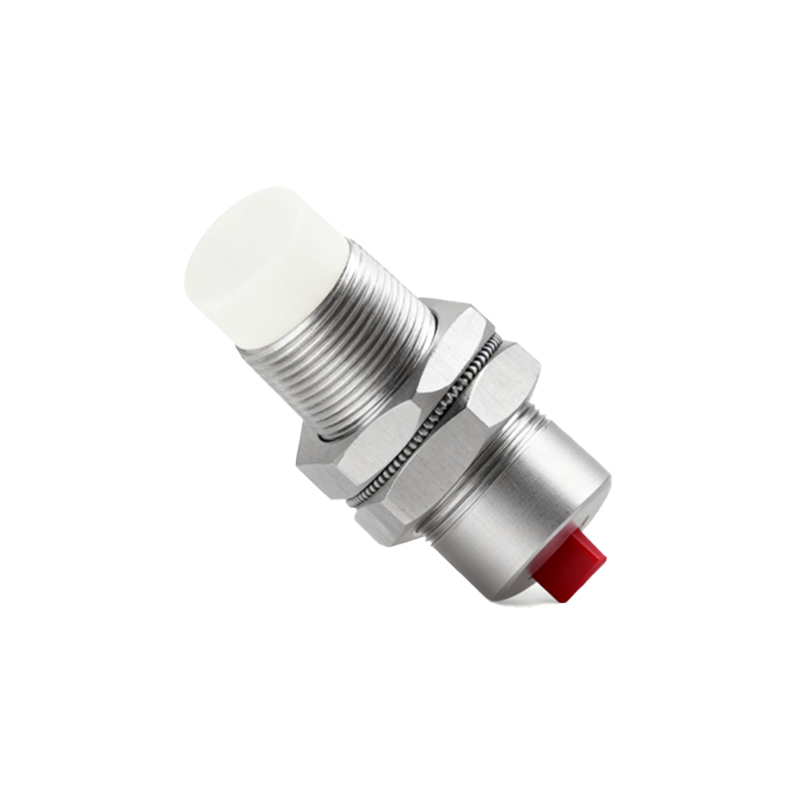
Industrial applications for these sensors are vast and critical. They are ubiquitous in manufacturing for precise position detection: verifying the presence of an iron piston at the end of its stroke in a hydraulic cylinder, counting iron gears on an assembly line, or confirming the closed position of an iron machine guard for safety interlocking. In material handling, they monitor the position of iron pallets, cranes, and lifts. They are also essential in metal machining centers for tool presence verification and workpiece positioning. Their sealed, rugged housings (often in IP67 or IP69K ratings) allow them to perform reliably in harsh environments with dust, coolant, and vibration.
When selecting a proximity sensor for iron detection, key specifications must be considered. The nominal sensing distance (Sn), typically ranging from 1 to 40 mm for standard cylindrical models, is the primary parameter. The housing style (cylindrical, rectangular, ring-shaped) must suit the mounting constraints. Output configuration (NPN sinking, PNP sourcing, normally open/closed) must be compatible with the control system's input card. Operating voltage, switching frequency, and environmental ratings are equally important for seamless integration.
Maintenance is minimal but vital. Regular checks should ensure the sensing face is clean from metal swarf, paint buildup, or other contaminants that could affect performance. Proper mounting is critical; surrounding ferrous metal can influence the magnetic field and must be accounted for using manufacturer-specified mounting clearances. In high-cycle applications, periodic functional testing is recommended to confirm response time and repeat accuracy.
In summary, inductive proximity switch sensors for iron represent a mature, robust, and indispensable technology in automation. Their ability to provide fast, wear-free, and reliable detection of ferrous objects forms the backbone of countless control and safety systems, driving efficiency and precision in industries ranging from automotive to packaging and beyond. Their continued evolution focuses on miniaturization, increased sensing ranges, and enhanced connectivity for Industry 4.0 applications.