In the world of industrial automation and precision engineering, the ability to detect the presence, absence, or position of an object without physical contact is paramount. Among the various technologies enabling this capability, gap proximity sensors stand out for their specific design and reliable performance in challenging environments. Unlike standard proximity sensors, these devices are engineered to operate effectively within a defined, often narrow, air gap between the sensor face and the target object. This article delves into the operational principles, common types, key applications, and critical factors for selecting the right gap proximity sensor for a given task.
At its core, a gap proximity sensor functions by generating an electromagnetic field or a beam of light from its active face. When a target object enters this field or interrupts the beam within the specified operational gap, it causes a detectable change in the sensor's internal circuit. This change triggers a switching signal—typically a change in output voltage or current—that can be read by a programmable logic controller (PLC) or other control system. The defining characteristic is the "gap," which refers to the precise distance range within which the sensor is guaranteed to detect the target reliably. Operating outside this specified gap can lead to false triggers or a complete failure to detect.
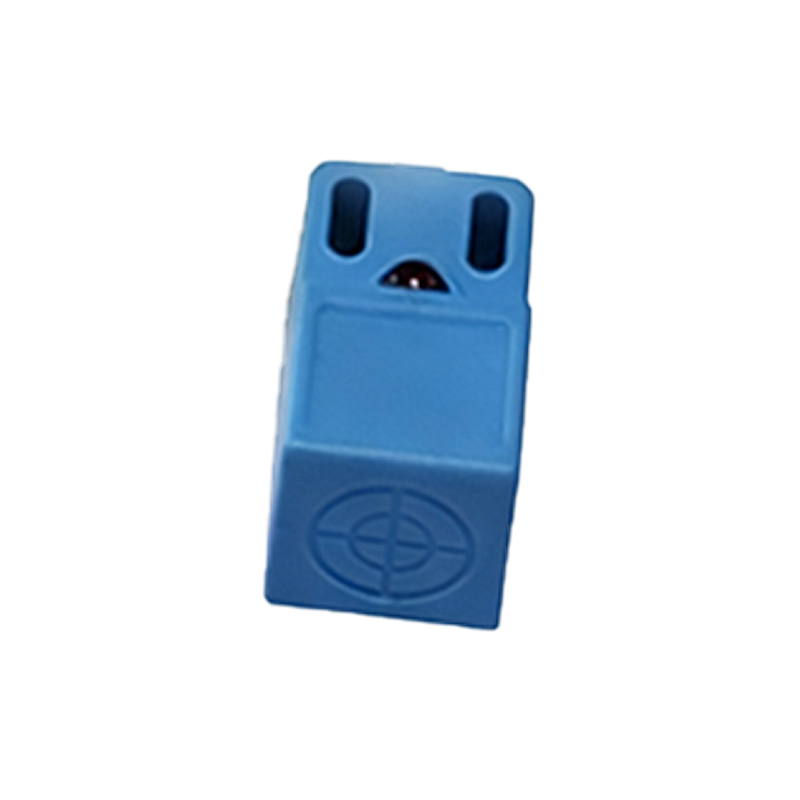
Several sensing technologies are employed in gap-style designs, each with distinct advantages. Inductive gap proximity sensors are among the most common. They generate an oscillating electromagnetic field and are used exclusively for detecting metallic objects, primarily ferrous metals like steel and iron. The presence of the metal within the gap dampens the oscillation, prompting the sensor to switch. These sensors are highly robust, resistant to dust, oil, and coolant splashes, making them ideal for machine tools, robotic arms, and metal stamping presses. Another prevalent type is the capacitive gap sensor. These can detect both metallic and non-metallic materials—such as plastics, glass, liquids, and wood—by sensing changes in capacitance caused by the target's dielectric properties. They are frequently used in level detection, material handling, and packaging applications where diverse materials are present.
Photoelectric gap sensors, often configured in a through-beam or retro-reflective style with a separate emitter and receiver, use a beam of light. The target object breaks this beam within the gap. These offer very long sensing ranges and high precision but can be susceptible to interference from ambient light or dirty lenses. A specialized variant is the magnetic (reed or Hall-effect) gap sensor, designed specifically to detect the presence of a permanent magnet, often used in cylinder position feedback and safety door interlocks.
The applications for gap proximity sensors are vast and critical to modern manufacturing. A primary use is in precision positioning and end-position verification. For instance, in automated assembly lines, they confirm that a robotic gripper has correctly placed a component or that a linear slide has reached its exact endpoint. In rotary applications, such as monitoring the position of a cam or a gear tooth, they ensure synchronization and timing. Vibration monitoring is another crucial area. By mounting a sensor with a precise gap facing a rotating shaft or a vibrating surface, any deviation or excessive runout can be detected as the gap changes, allowing for predictive maintenance before a failure occurs. Furthermore, they are indispensable in safety systems. Guard doors on machinery often employ magnetic gap sensors to ensure the door is fully closed and latched before dangerous operations can commence, protecting personnel from harm.
Selecting the appropriate gap proximity sensor requires careful consideration of several parameters. First, the sensing gap itself must be specified. Engineers must know the nominal operating distance and the allowable tolerance. The target material is equally important; an inductive sensor will not work for plastic, just as a capacitive sensor might be overly sensitive for a dense metal application in a congested environment. Environmental conditions cannot be overlooked. Sensors exposed to extreme temperatures, heavy washdowns, or conductive contaminants like metal chips require specific ingress protection (IP) ratings and housing materials, such as stainless steel or specialized plastics. The output type (PNP/NPN, analog, or IO-Link) must be compatible with the control system's input cards. Finally, physical constraints like the sensor's size, shape, and mounting style (threaded barrel, rectangular block) must fit the available space and mechanical design.
In conclusion, gap proximity sensors are specialized components that deliver reliability and precision where standard sensing solutions may falter. Their design to function within a defined spatial parameter makes them essential for tasks demanding accuracy, repeatability, and durability. From ensuring the precise placement of components in a high-speed pick-and-place machine to guarding the perimeter of a robotic work cell, these sensors provide the critical feedback that keeps automated systems running smoothly and safely. Understanding their principles and carefully matching their specifications to the application's needs is the key to unlocking their full potential in enhancing productivity and operational security.