In the world of industrial automation and smart devices, the ability to detect objects without physical contact is a fundamental requirement. Among the various non-contact sensing technologies available, capacitive proximity sensors stand out for their unique capabilities and versatility. Unlike their more common inductive counterparts, which only detect metals, capacitive sensors can detect a vast array of materials, including liquids, plastics, glass, wood, and even granular substances. This makes them an indispensable tool in countless applications, from complex manufacturing lines to everyday consumer electronics.
The operating principle of a capacitive proximity sensor is elegantly simple, rooted in the concept of capacitance. Every object possesses a certain capacitance, which is its ability to store an electrical charge. The sensor itself contains an oscillator circuit that generates an electrostatic field from its sensing face. When a target object enters this field, it causes a change in the capacitance of the system. The sensor's internal circuitry is finely tuned to detect this minute change. Once the change exceeds a preset threshold, the sensor triggers a switching action, sending an output signal to the connected control system, such as a PLC. This entire process happens without any physical contact, ensuring no wear and tear on the sensor or the target.
A key feature that defines a capacitive sensor's performance is its sensing range, also known as the nominal sensing distance (Sn). This is the rated operating distance for a standard target under specified conditions. It's crucial to understand that the actual sensing distance can be influenced by several factors. The material of the target is the most significant. For instance, a sensor calibrated for water will have a much shorter effective range for a material like plastic foam. The size and shape of the target also matter; a larger surface area facing the sensor will be detected more easily. Environmental conditions such as temperature, humidity, and the presence of contaminants like dust or oil can also affect performance. Therefore, most capacitive sensors are equipped with a sensitivity adjustment potentiometer. This allows technicians to fine-tune the sensor on-site, preventing false triggers from background objects or the mounting surface while ensuring reliable detection of the intended target.
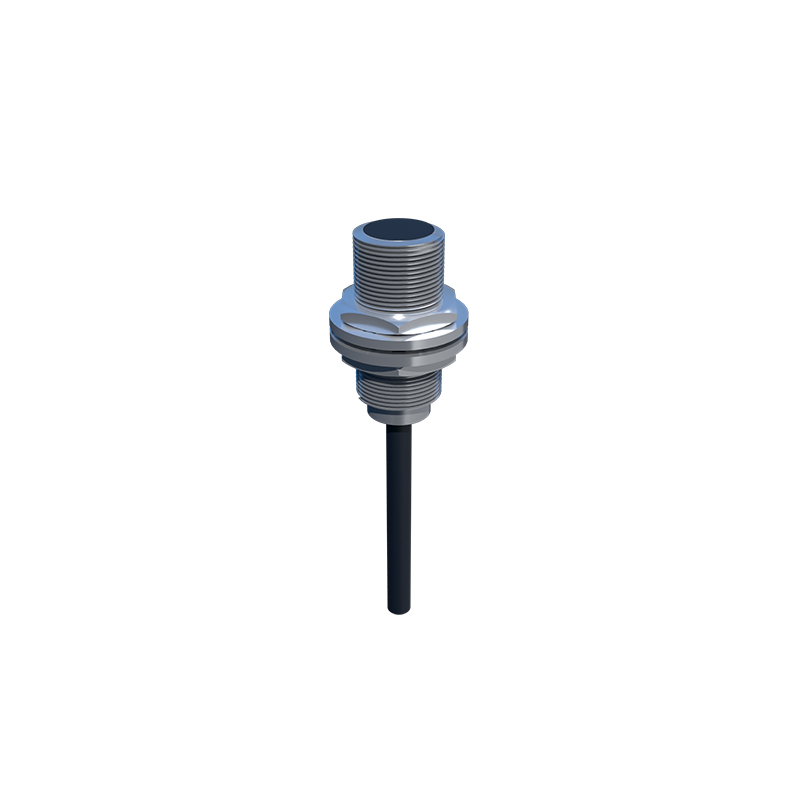
The applications for capacitive proximity sensors are remarkably diverse. In packaging, they reliably detect the presence of plastic or glass bottles on a conveyor belt, regardless of whether they are empty or full. In the food and beverage industry, they are perfect for monitoring liquid levels in non-metallic tanks, providing a hygienic, non-intrusive solution. Woodworking machines use them to sense the presence of boards, while printing presses employ them to detect paper jams or low paper stacks. In consumer electronics, the touch-sensitive buttons on many appliances and the proximity detection that turns off a smartphone's screen during a call are classic examples of miniaturized capacitive sensing technology. They are also widely used for detecting granular materials in hoppers or bins, and for ensuring proper positioning of composite materials in assembly processes.
Selecting the right capacitive sensor for a job requires careful consideration of several parameters. First, define the target material and the required sensing distance. Next, choose the appropriate housing style—cylindrical barrels in various thread sizes (like M8, M12, M18, M30) are common for industrial mounting, while rectangular or flat designs suit space-constrained applications. The output type is critical: PNP (sourcing) or NPN (sinking) transistor outputs are standard for DC sensors, while some models offer analog (4-20mA or 0-10V) or IO-Link digital outputs for precise measurement data. The operating voltage (e.g., 10-30V DC) must match the control system. Environmental ratings are non-negotiable; an IP67 rating ensures protection against dust and temporary immersion, which is vital for washdown areas in food processing. For harsh environments with chemical exposure, sensors with PTFE or PVDF housings are available.
To ensure long-term reliability, proper installation and maintenance are essential. Avoid mounting the sensor flush in a metal bracket, as this can dampen the field; instead, maintain a clearance around the sensing face as specified by the manufacturer. Keep the sensing surface clean from buildup of adhesives, moisture, or other contaminants, as these can alter the capacitance and cause erratic behavior. Always refer to the manufacturer's datasheet for specific mounting, wiring, and adjustment instructions.
In conclusion, capacitive proximity sensors offer a powerful and flexible sensing solution where the detection of non-metallic objects or materials through non-metallic barriers is required. Their principle of operation, based on changes in an electrostatic field, grants them a broad material detection capability unmatched by inductive sensors. By understanding their working principles, key influencing factors, and application best practices, engineers and technicians can effectively integrate these robust devices to enhance automation, improve process control, and enable innovative product designs across a wide spectrum of industries.