In the realm of automation and smart technology, proximity sensors stand as fundamental components that enable machines to perceive and interact with their environment without physical contact. A proximity sensor is a device that detects the presence or absence of an object within a specified range, or measures the distance to that object, and converts this information into an electrical signal. These sensors operate on various principles, making them versatile tools across countless applications, from consumer electronics to heavy industrial machinery.
The core function of a proximity sensor is non-contact detection. Unlike limit switches that require physical touch to activate, proximity sensors use fields or beams to sense targets. This key characteristic offers significant advantages, including reduced mechanical wear, higher reliability, and the ability to detect fragile, small, or fast-moving objects that could be damaged or missed by contact-based methods. The output signal generated can be a simple on/off switch or an analog value proportional to distance, providing flexibility for control systems.
Several primary technologies underpin the operation of proximity sensors, each with distinct characteristics. Inductive proximity sensors are among the most common types. They generate an electromagnetic field and detect the eddy current losses caused when a metallic target enters this field. These sensors are robust, ideal for harsh industrial environments, and exclusively detect metals. Their sensing range is relatively short, typically up to 60 millimeters, depending on the target metal's properties.
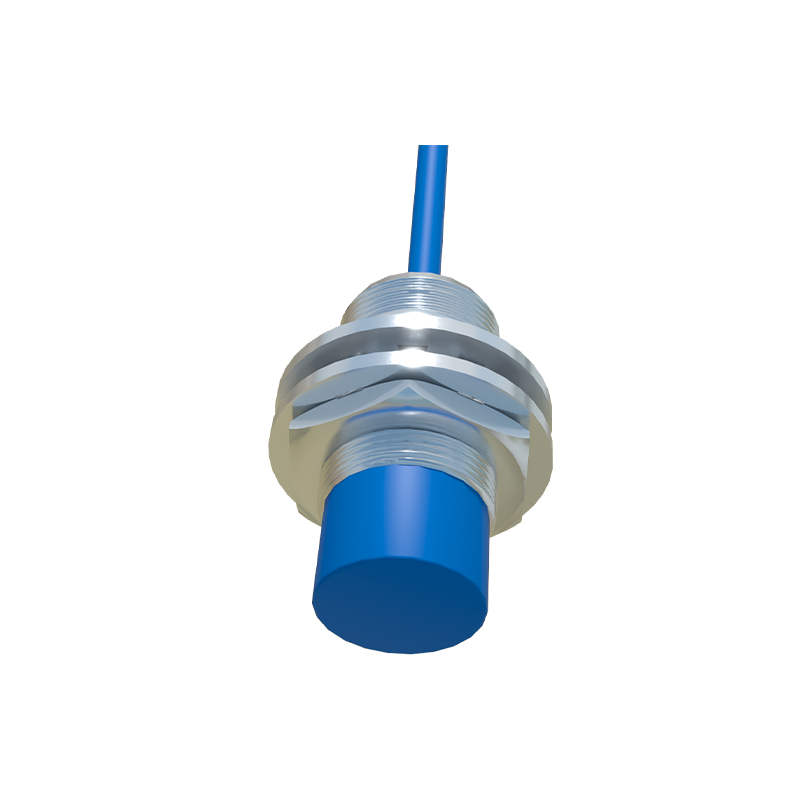
Capacitive proximity sensors, on the other hand, can detect both metallic and non-metallic materials, including liquids, plastics, glass, and wood. They function by measuring changes in capacitance. The sensor forms one plate of a capacitor, with the target object acting as the other plate. As the object approaches, the capacitance increases, and once it reaches a threshold, the sensor triggers. This makes them suitable for applications like level detection in tanks or presence detection of packaged goods.
Ultrasonic proximity sensors emit high-frequency sound waves and evaluate the echo received after bouncing off a target. By calculating the time interval between sending the signal and receiving the echo, the sensor can determine the distance to the object. This technology is effective for detecting objects of virtually any material, shape, or color, and over longer distances compared to inductive or capacitive types. They are widely used in parking assistance systems, collision avoidance, and liquid level monitoring.
Photoelectric sensors, another major category, use a light beam—often infrared, visible, or laser—to detect objects. They consist of an emitter for the light and a receiver. When an object interrupts or reflects the light beam, the receiver detects the change and signals the presence of the object. These sensors offer very long sensing ranges and high precision, finding applications in packaging, material handling, and safety curtains.
Magnetic proximity sensors, often called reed switches or Hall-effect sensors, detect the presence of a magnetic field, typically from a permanent magnet attached to the moving target. They are simple, cost-effective, and used in applications like door/window security sensors or detecting the position of a piston in a pneumatic cylinder.
The selection of a proximity sensor depends heavily on the application's specific requirements. Key factors include the nature of the target material (metal, plastic, liquid), the required sensing distance, environmental conditions (temperature, humidity, presence of contaminants), response speed, output type needed (digital or analog), and installation constraints. For instance, an inductive sensor is perfect for counting metal gears on a production line, while a capacitive sensor is necessary for detecting the fill level of a plastic bottle containing shampoo.
In practice, proximity sensors are ubiquitous. In smartphones, they deactivate the touchscreen when held to the ear during a call. In automotive manufacturing, they ensure robotic arms are precisely positioned. In commercial aviation, they monitor landing gear status. In warehouse automation, they guide autonomous vehicles and manage inventory. Their role in enabling the Internet of Things (IoT) is also growing, as they provide critical data about the physical state of devices and environments.
In summary, a proximity sensor is an essential electronic device designed for non-contact object detection and distance measurement. By leveraging electromagnetic, capacitive, ultrasonic, or photoelectric principles, it provides a crucial interface between the physical and digital worlds. Its ability to deliver reliable, wear-free sensing underpins modern automation, enhances safety, and drives efficiency in an increasingly interconnected technological landscape. Understanding its definition, operational principles, and varieties is key to effectively implementing these silent sentinels of the automated age.