In the rapidly evolving landscape of technology, sensors act as the fundamental bridge between the physical world and digital systems. Among the diverse array of sensor types, proximity sensors and attitude sensors stand out as critical components in countless applications, from consumer electronics to industrial automation and aerospace. While their names might sound similar, they serve distinctly different purposes, each enabling devices to perceive and interact with their environment in unique ways.
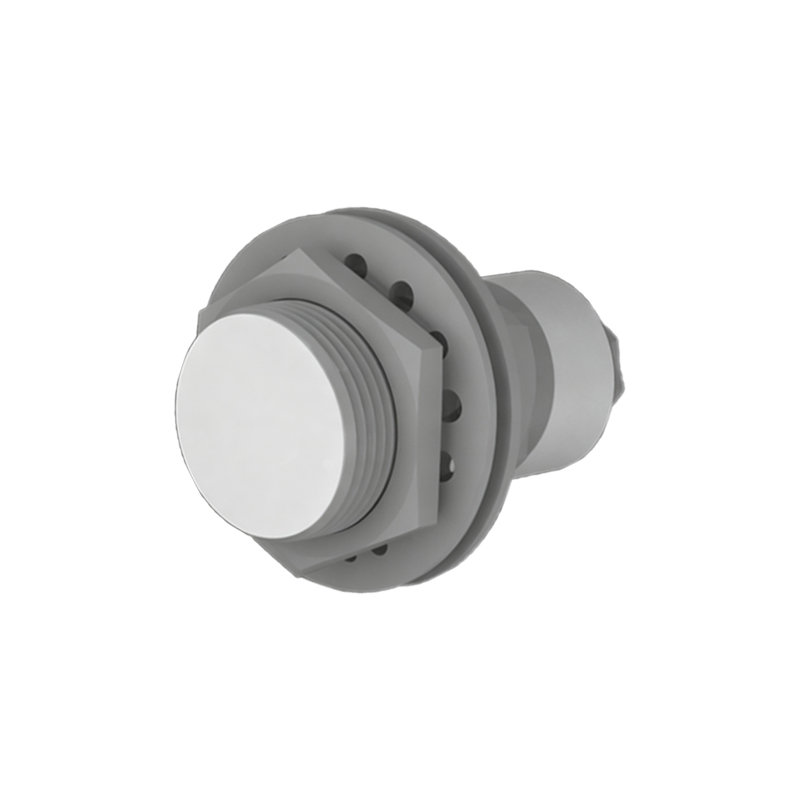
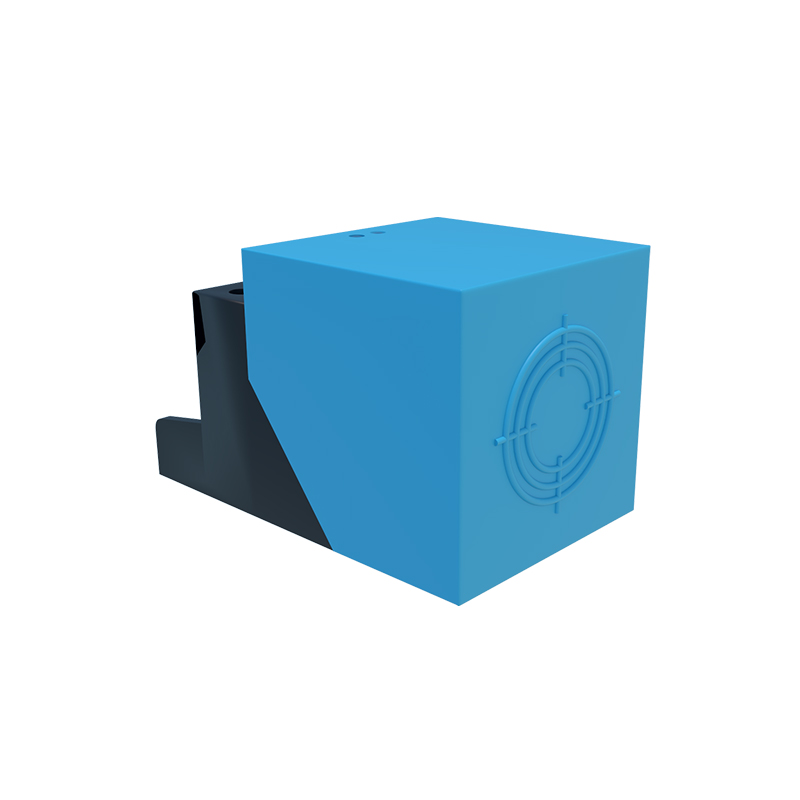
Proximity sensors are designed to detect the presence or absence of an object within a certain range without any physical contact. They work by emitting a field or a beam of electromagnetic radiation, such as infrared light, ultrasonic sound waves, or an electromagnetic field, and then looking for changes in the return signal. The primary function is simple yet powerful: to determine if something is "near." This capability is ubiquitous in daily life. For instance, your smartphone screen automatically turns off when you hold it to your ear during a call, thanks to a small infrared proximity sensor. In industrial settings, these sensors are vital for object detection on assembly lines, preventing collisions in automated guided vehicles (AGVs), and ensuring safety by detecting personnel near hazardous machinery. Common types include inductive sensors (for metals), capacitive sensors (for both metals and non-metals), ultrasonic sensors, and photoelectric sensors, each chosen based on the target material and required detection range.
On the other hand, attitude sensors, more formally known as orientation or inertial sensors, are concerned with measuring the angular position and orientation of an object in space relative to a reference frame. They answer questions about tilt, roll, pitch, and yaw. The core technologies here are the accelerometer, which measures proper acceleration (including gravity), and the gyroscope, which measures angular velocity. By fusing data from these and often a magnetometer (compass), a system can determine its precise attitude in three-dimensional space. This technology is the cornerstone of modern navigation and stabilization. In your smartphone or tablet, attitude sensors enable the screen to rotate from portrait to landscape mode. On a much larger scale, they are indispensable for the flight control systems of drones, aircraft, and spacecraft, ensuring stable flight and correct orientation. They also enable image stabilization in cameras, provide immersive control in virtual reality headsets, and guide autonomous vehicles by understanding the vehicle's precise tilt and heading.
The convergence of these two sensor technologies is where truly intelligent systems emerge. Consider a modern drone: proximity sensors, like ultrasonic or time-of-flight sensors, help it sense the ground for stable hovering or avoid obstacles in its path. Simultaneously, a sophisticated array of attitude sensors (an Inertial Measurement Unit or IMU) constantly monitors its orientation, allowing the flight controller to make instantaneous adjustments to the motors to maintain level flight, even in windy conditions. Similarly, in advanced robotics, proximity sensors provide situational awareness for navigation and manipulation, while attitude sensors ensure the robot's limbs or body are positioned correctly.
The development trends for both sensor types point towards greater miniaturization, lower power consumption, enhanced accuracy, and smarter integration. Micro-Electro-Mechanical Systems (MEMS) technology has been revolutionary, allowing complex gyroscopes and accelerometers to be manufactured on silicon chips at low cost, enabling their proliferation in consumer devices. For proximity sensing, newer technologies like time-of-flight (ToF) sensors offer highly accurate distance measurement, finding use in facial recognition for security and creating depth maps for augmented reality applications.
Choosing between or integrating these sensors depends entirely on the application's requirements. If the need is to detect an object's presence or measure short-range distance, a proximity sensor is the appropriate choice. If the requirement is to monitor or control the tilt, orientation, or rotational movement of a device itself, then an attitude sensor suite is necessary. In complex systems, both are used in harmony to provide a comprehensive understanding of the device's interaction with its environment.
From the phone in your pocket to the Mars rover exploring another planet, proximity and attitude sensors work silently in the background, providing the essential data that makes automation, interaction, and exploration possible. Their continued advancement will remain a key driver in the development of smarter, more responsive, and more autonomous technologies across all sectors of industry and society. Understanding their distinct roles and capabilities is the first step in leveraging their power for innovative solutions.