Proximity switches are indispensable components in modern industrial automation, providing non-contact detection of objects within a specific range. These sensors operate on various physical principles, each suited to distinct applications and environmental conditions. The primary types include inductive, capacitive, ultrasonic, and magnetic proximity sensors, with photoelectric sensors also often categorized under this umbrella due to their similar function in object detection.
Inductive proximity sensors are among the most common in industrial settings. They generate an electromagnetic field and detect the presence of metallic objects, typically ferrous metals like steel and iron, by monitoring changes in the field caused by eddy currents induced in the target. These sensors are highly reliable, resistant to environmental contaminants like dust, oil, and moisture, and offer fast response times. Common applications include position sensing of machine parts, counting metallic objects on conveyor belts, and end-of-travel detection in automated machinery. Their limitation is the inability to detect non-metallic materials, which necessitates alternative technologies.
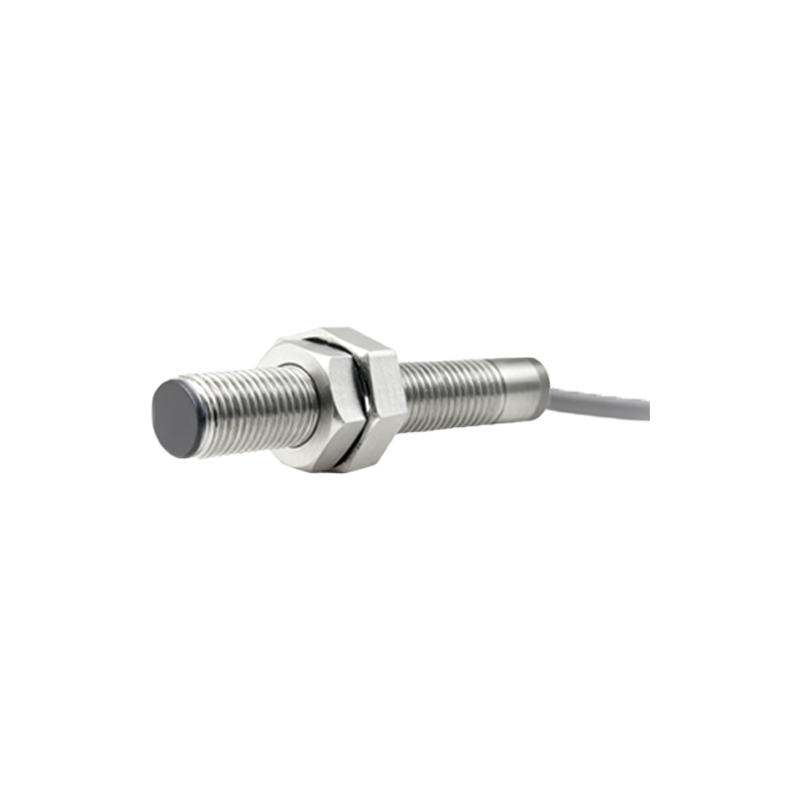
Capacitive proximity sensors overcome this limitation by detecting both metallic and non-metallic materials, including liquids, plastics, glass, and wood. They function by generating an electrostatic field and sensing changes in capacitance when an object enters the field. This makes them versatile for applications such as level detection in tanks containing liquids or granular materials, presence sensing of packaged goods, and material handling where diverse substances are involved. However, they can be sensitive to environmental factors like humidity and require careful calibration to avoid false triggers from non-target materials.
Ultrasonic proximity sensors utilize sound waves beyond the human hearing range, typically between 20 kHz and 200 kHz. They emit ultrasonic pulses and measure the time taken for the echo to return after reflecting off an object. This time-of-flight principle allows for precise distance measurement and detection of objects regardless of material, color, or transparency. These sensors excel in challenging environments with dust, smoke, or varying light conditions, making them ideal for applications like bulk material level monitoring, robotic obstacle avoidance, and height detection in logistics. Drawbacks include potential interference from temperature variations or air turbulence, which can affect accuracy.
Magnetic proximity sensors, often referred to as reed switches or Hall effect sensors, detect the presence of magnetic fields, typically from permanent magnets. Reed switches consist of two ferromagnetic reeds sealed in a glass tube, which close or open in response to a magnetic field, providing a simple switching action. Hall effect sensors, based on semiconductor technology, offer more precise detection and are used in speed sensing, position detection in cylinders, and safety interlocks. Their robustness against harsh conditions and low power consumption make them suitable for automotive and machinery applications, though they require a magnet to be attached to the target object.
Photoelectric proximity sensors, while sometimes classified separately, share the non-contact detection principle. They use a light emitter (usually LED or laser) and a receiver to detect object presence by measuring light beam interruption, reflection, or modulation. Types include through-beam, retro-reflective, and diffuse reflective sensors, each offering different ranges and sensitivities. These sensors are effective for detecting small objects, transparent materials, and high-speed applications, such as packaging, assembly line counting, and door safety systems. Limitations include susceptibility to ambient light interference and contamination on lenses.
Selecting the appropriate proximity sensor type depends on factors like target material, sensing distance, environmental conditions, response speed, and cost. In industrial automation, a combination of these sensors often ensures optimal system performance, enhancing efficiency, safety, and reliability. As technology advances, innovations such as IO-Link connectivity and smart sensors with diagnostic capabilities are further integrating proximity switches into the Industrial Internet of Things (IIoT), enabling predictive maintenance and data-driven operations. Understanding these sensor types is crucial for engineers and technicians to design and maintain automated systems that meet the evolving demands of modern manufacturing and processing industries.