In the realm of industrial automation, proximity sensors are indispensable components for detecting the presence or absence of objects without physical contact. Among these, the PR06 proximity sensor stands out as a reliable and versatile solution, widely adopted across various sectors including manufacturing, packaging, and material handling. This article delves into the technical specifications, operational principles, and practical applications of the PR06, providing engineers and technicians with essential insights for optimal integration.
The PR06 proximity sensor operates primarily on the inductive sensing principle, making it ideal for detecting metallic objects. It generates an electromagnetic field from its sensing face; when a metal target enters this field, eddy currents are induced, causing a change in the oscillation amplitude. This alteration triggers the sensor's output circuit, signaling the object's presence. With a typical sensing range of up to 6 mm, the PR06 offers consistent performance even in challenging environments characterized by dust, oil, or moisture, thanks to its robust housing rated at IP67.
Key technical features of the PR06 include a DC voltage supply range of 10-30 VDC, ensuring compatibility with standard industrial power systems. It provides both normally open (NO) and normally closed (NC) output configurations, allowing flexibility in control logic design. The sensor's response frequency reaches 1 kHz, enabling high-speed detection suitable for fast-moving production lines. Additionally, its built-in short-circuit and reverse polarity protection enhances durability and reduces downtime risks. Engineers often highlight its LED status indicator, which simplifies installation and troubleshooting by visually displaying operational states.
When selecting a PR06 sensor for specific applications, considerations such as target material, size, and environmental conditions are crucial. For instance, ferrous metals like steel yield the maximum sensing distance, while non-ferrous metals may require calibration adjustments. In automotive assembly lines, PR06 sensors are commonly used for part positioning, robotic guidance, and quality checks. In packaging machinery, they ensure precise carton counting and fill-level monitoring. Their resilience to vibration and temperature fluctuations (-25°C to 70°C) makes them suitable for harsh settings like metalworking or outdoor logistics.
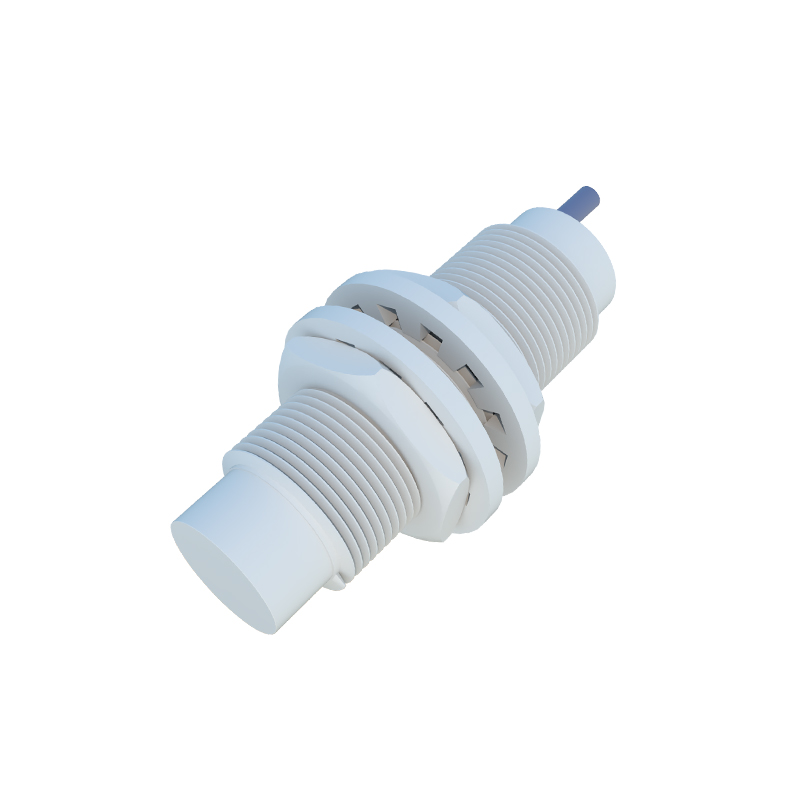
Installation best practices involve mounting the sensor securely to avoid misalignment, maintaining a clean sensing area free from debris, and ensuring adequate clearance from other metallic structures to prevent interference. Regular maintenance, though minimal, includes periodic checks for physical damage and output signal integrity. Compared to capacitive or ultrasonic alternatives, the PR06 excels in cost-effectiveness and reliability for metal detection, though it may not be optimal for non-metallic materials.
In summary, the PR06 proximity sensor embodies a balance of precision, robustness, and ease of use. Its widespread adoption underscores its role in enhancing automation efficiency and safety. As industries evolve toward smarter factories, understanding such foundational components remains key to optimizing operational workflows and minimizing errors. For engineers seeking a proven solution for proximity detection, the PR06 continues to be a top choice, backed by years of field-tested performance and adaptability.