In the realm of industrial automation, precision, reliability, and durability are non-negotiable. The MS-110 proximity sensor stands as a testament to engineering excellence, designed to meet the rigorous demands of modern manufacturing and control systems. This comprehensive guide delves into the technical specifications, operational principles, application scenarios, and key advantages of the MS-110, providing engineers and technicians with essential insights for optimal integration and performance.
The MS-110 is an inductive proximity sensor, a type of non-contact sensor that detects the presence of metallic objects without physical interaction. Its core operating principle is based on electromagnetic induction. The sensor generates a high-frequency oscillating electromagnetic field from its active face. When a conductive metal target enters this field, eddy currents are induced on the target's surface. This causes a change in the oscillation amplitude within the sensor's internal LC tank circuit. A dedicated evaluation circuit monitors this change and triggers a solid-state switching output, typically in the form of a PNP or NPN transistor. This entire process occurs with remarkable speed and consistency, enabling high-speed counting, positioning, and detection tasks on production lines.
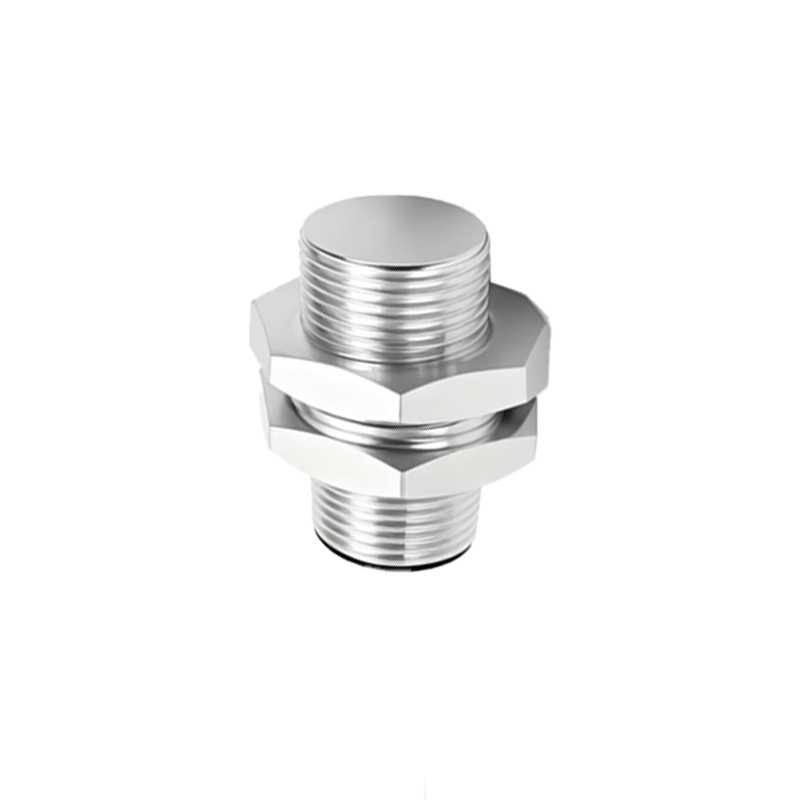
One of the defining features of the MS-110 series is its robust construction. Housed in a cylindrical stainless steel or nickel-plated brass body, it offers exceptional resistance to mechanical stress, oils, coolants, and industrial chemicals. Many models within the series boast an IP67 or IP68 ingress protection rating, making them suitable for harsh environments where dust and temporary immersion are concerns. The sensing distance, or nominal range, is precisely calibrated, with common models offering ranges from 1.5mm to 8mm. It is critical to note that this sensing distance is standardized for a mild steel target of a specific size. Factors such as target material, shape, and size can affect the actual switching point, a parameter detailed in the sensor's technical datasheet.
Electrical characteristics are paramount for system compatibility. The MS-110 typically operates on a wide range of DC voltages (e.g., 10-30V DC) and provides a stable switching output capable of driving relays, PLC inputs, or other control devices. Its short-circuit and reverse polarity protection features safeguard both the sensor and the connected circuitry from common installation errors. The LED status indicator is an invaluable diagnostic tool, providing immediate visual confirmation of power supply and output switching state, which significantly reduces troubleshooting time during commissioning and maintenance.
Application versatility is where the MS-110 truly shines. In automotive assembly, these sensors are deployed for part presence verification, robot end-effector positioning, and monitoring of pallet transfer systems. In packaging machinery, they ensure precise bottle cap placement or carton flap detection. Within metalworking, they serve as limit switches for CNC machine tools or detect the end of a metal coil. Their non-contact nature eliminates mechanical wear, leading to a dramatically longer operational lifespan compared to mechanical limit switches. This translates to reduced downtime and lower total cost of ownership.
When selecting and installing the MS-110, several best practices must be observed. First, ensure the target material is ferrous or non-ferrous metal; standard inductive sensors will not detect plastics, wood, or other non-conductive materials. Second, consider the mounting arrangement. Flush-mounted sensors can be installed embedded in metal, while non-flush models offer a longer sensing range but require a clear lateral area free of surrounding metal to prevent false triggering. Third, pay close attention to wiring according to the manufacturer's diagram, distinguishing between normally open (NO) and normally closed (NC) output configurations. Finally, in environments with strong electromagnetic interference (EMI) or when multiple sensors are mounted in close proximity, maintaining adequate separation distances is crucial to prevent mutual interference.
In conclusion, the MS-110 proximity sensor represents a mature, highly reliable solution for a vast array of industrial sensing challenges. Its blend of rugged construction, precise electronic operation, and ease of integration makes it a cornerstone component in automated systems. By understanding its technical nuances and adhering to proper installation guidelines, engineers can leverage the full potential of the MS-110 to enhance system efficiency, safety, and reliability. As Industry 4.0 continues to evolve, such foundational sensing technology remains indispensable for building the intelligent, data-driven factories of the future.