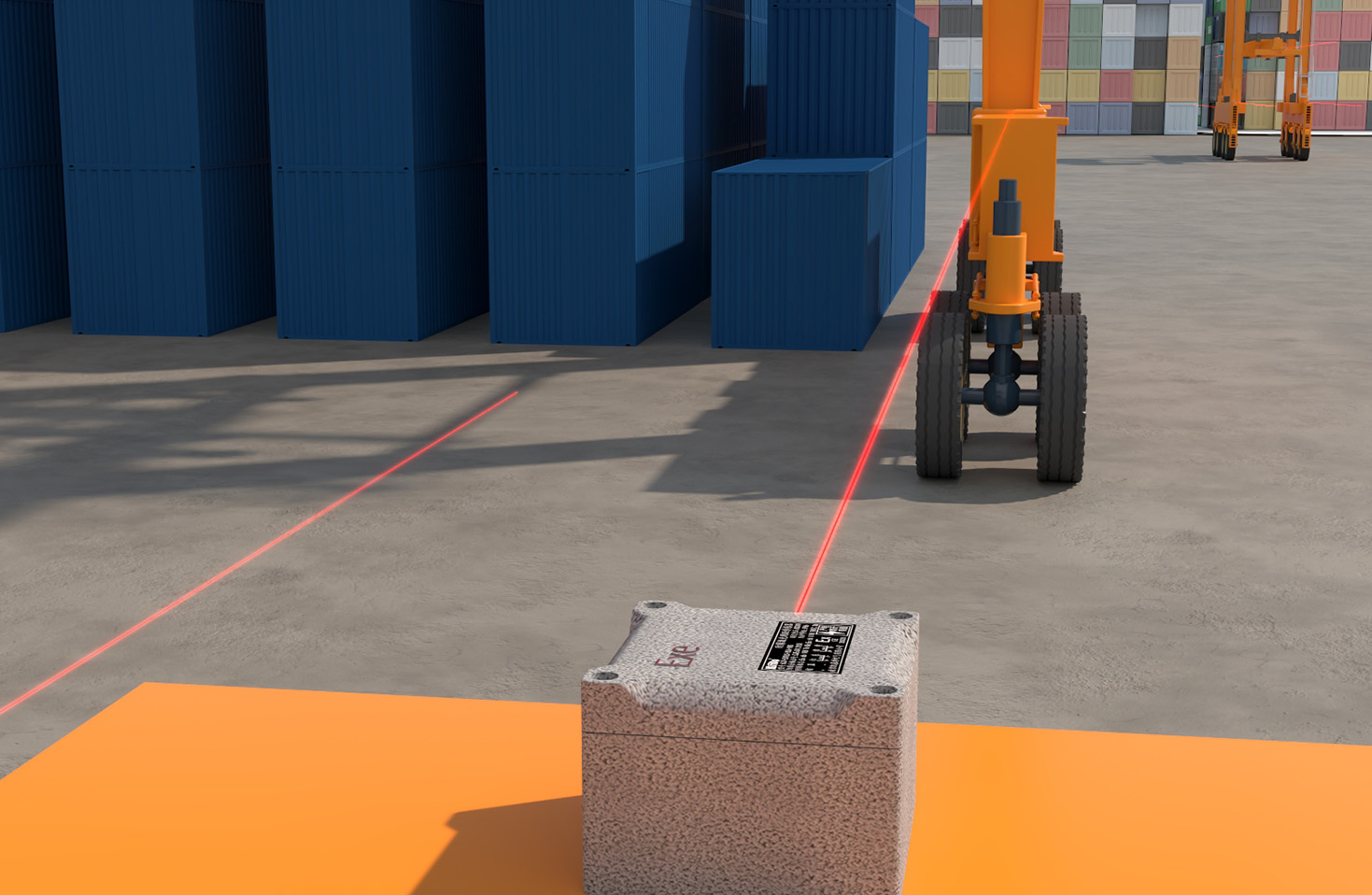
The landscape of research and development is being fundamentally reshaped by advancements in Light Detection and Ranging (LiDAR) technology. At the forefront of this revolution are specialized manufacturers whose high-precision sensors are indispensable tools across diverse scientific and industrial fields. These companies are not merely component suppliers; they are innovation partners, pushing the boundaries of what is possible in autonomous systems, environmental monitoring, robotics, and beyond. Their products are characterized by exceptional resolution, accuracy, and reliability, catering to the rigorous demands of academic laboratories, government research institutions, and cutting-edge R&D departments.
One of the defining characteristics of top-tier research LiDAR manufacturers is their commitment to customization and flexibility. Unlike standardized automotive-grade sensors, research applications often require unique configurations in terms of field-of-view, scanning patterns, wavelength, and data output formats. Leading vendors provide modular platforms that allow researchers to tailor the sensor to their specific experimental needs. This might involve integrating specific laser sources for atmospheric studies, optimizing scan rates for dynamic robotic navigation, or enhancing point cloud density for detailed 3D modeling of archaeological sites. The ability to interface seamlessly with a wide array of data acquisition systems and software platforms, such as ROS (Robot Operating System), is another critical factor, enabling rapid prototyping and integration.
Performance metrics are paramount. Research-grade LiDAR sensors boast superior specifications, including millimeter-level accuracy, long-range detection capabilities exceeding several hundred meters, and high angular resolution. Manufacturers achieve this through sophisticated technologies like advanced time-of-flight measurement, multi-echo detection for penetrating foliage, and solid-state or hybrid scanning mechanisms that improve durability and reduce size. Signal processing algorithms embedded within these sensors play a crucial role in filtering noise and enhancing data quality under challenging conditions, such as in direct sunlight or adverse weather.

The market is driven by several key players, each with distinct strengths. Velodyne Lidar, a pioneer in the field, offers a broad portfolio of mechanical rotating sensors renowned for their robust 360-degree perception, widely used in early autonomous vehicle research. Ouster has made significant strides with its digital solid-state LiDAR, providing high resolution and reliability in a compact form factor, popular in robotics and mapping. Innoviz focuses on high-performance, automotive-grade solid-state LiDAR that is also adopted for demanding R&D applications requiring mass-producible design. Meanwhile, companies like SICK and Hokuyo are stalwarts in the industrial automation space, providing highly reliable and precise sensors for robotics research, logistics, and safety systems. For ultra-long-range and high-accuracy topographic mapping, sensors from RIEGL are considered the gold standard in geosciences and surveying.
Looking ahead, the trajectory for research LiDAR manufacturers points toward greater miniaturization, reduced cost without compromising performance, and enhanced integration of perception stacks. The convergence of LiDAR with other sensing modalities like cameras and radar into sophisticated sensor fusion systems is a key research area. Furthermore, the development of frequency-modulated continuous wave (FMCW) LiDAR technology promises to deliver not only distance but also instantaneous velocity measurement for each point, opening new frontiers in fluid dynamics research and vibration analysis. As artificial intelligence and machine learning continue to evolve, the role of LiDAR as a primary source of rich, quantitative 3D data will only become more central, solidifying the position of these innovative manufacturers as essential enablers of scientific discovery and technological progress.