Proximity sensors are fundamental components in modern industrial automation and electrical systems. As an electrical engineer, introducing these devices effectively requires a clear understanding of their principles, types, applications, and key selection criteria. This guide provides a structured approach to explaining proximity sensors in a professional context.
At its core, a proximity sensor is a non-contact device that detects the presence or absence of an object within its sensing range without physical contact. The fundamental operating principle involves generating an electromagnetic field or beam and detecting changes in that field caused by a target object. This non-contact nature is their primary advantage, leading to high reliability, long operational life, and minimal maintenance, as there is no mechanical wear.
Proximity sensors are primarily categorized by their sensing technology. The most common types include Inductive, Capacitive, Ultrasonic, and Photoelectric sensors. Inductive proximity sensors are the workhorses of metal detection. They generate an oscillating electromagnetic field. When a metallic object enters this field, it induces eddy currents in the target, which dampens the oscillator's amplitude. This change is detected by the sensor's circuitry, triggering an output signal. They are ideal for detecting ferrous and non-ferrous metals in harsh industrial environments like machine tools, automotive assembly, and material handling.
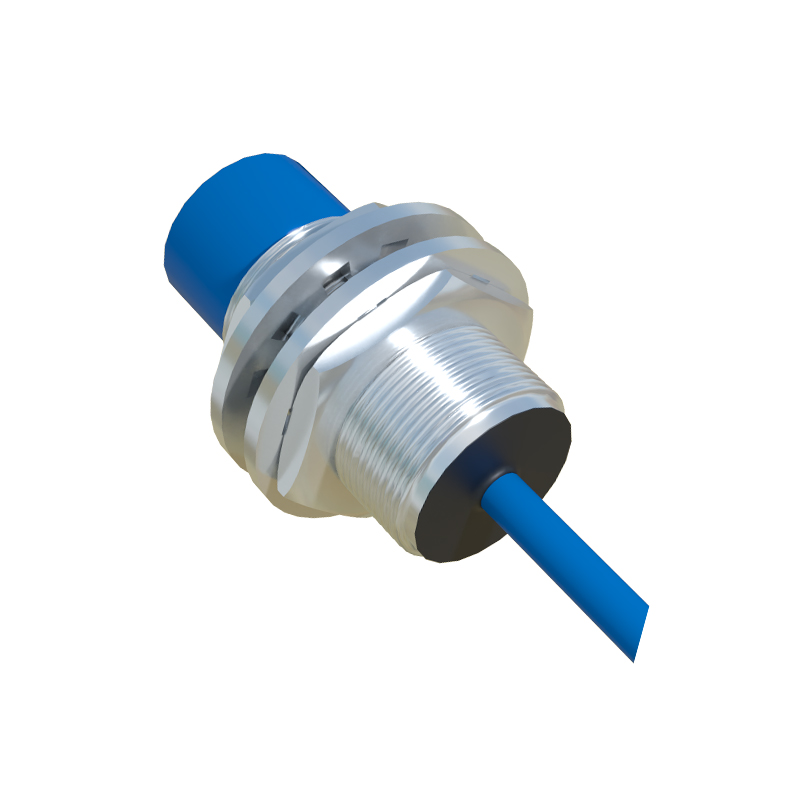
Capacitive proximity sensors, on the other hand, can detect both metallic and non-metallic materials, including liquids, plastics, wood, and granules. They function by generating an electrostatic field. Any object with a dielectric constant different from air will change the capacitance of the sensing circuit, triggering detection. This makes them perfect for applications like level detection in silos, material presence sensing on conveyor belts, or detecting filled liquid containers.
Ultrasonic sensors emit high-frequency sound waves and measure the time it takes for the echo to return. They are excellent for longer-range detection and can sense virtually any material, regardless of color or transparency. Common uses include distance measurement, object profiling, and liquid level control in tanks. Photoelectric sensors use a light beam (usually infrared, laser, or visible LED) and detect interruptions or reflections of that beam. They offer the longest sensing ranges and are highly versatile, used for detecting small objects, color differentiation, and transparent material sensing.
When introducing a specific sensor, key specifications must be highlighted. The sensing range, or the maximum distance at which the sensor can reliably detect a standard target, is paramount. The repeatability, or the sensor's ability to consistently detect an object at the same point, is critical for precision applications. Engineers must also discuss the output type: discrete (PNP/NPN transistor, NO/NC) or analog (4-20mA, 0-10V). The housing material (often nickel-plated brass or stainless steel) and ingress protection (IP) rating define environmental durability against dust, water, and chemicals.
Electrical characteristics are equally important. The operating voltage (commonly 10-30V DC or 90-250V AC), current consumption, and switching frequency (how many on/off cycles per second) determine compatibility with control systems like PLCs. The installation method, whether flush-mounted or non-flush, affects the sensing range and potential interference from surrounding metals.
In application discussions, focus on problem-solving. Explain how an inductive sensor solves metal part counting on a high-speed press. Describe how a capacitive sensor prevents overflows by controlling pump operation based on tank level. Illustrate how a photoelectric sensor ensures correct packaging by verifying label presence. Always emphasize the value: increased machine safety, improved process reliability, reduced downtime, and enhanced quality control.
Finally, guide the selection process. The decision tree starts with the target material, then considers the required sensing distance, environmental conditions (temperature, contaminants), needed response speed, and electrical interface. For instance, detecting a steel gear in an oily environment points directly to a shielded inductive sensor. Detecting a glass bottle on a clean conveyor suggests a diffuse-reflective photoelectric sensor.
A proficient introduction demystifies the technology, connects specifications to real-world performance, and empowers other engineers to make informed integration decisions. By structuring the explanation around principle, type, specification, application, and selection, you provide a complete and authoritative overview essential for system design and troubleshooting.