Selecting the ideal proximity sensor is a critical decision in industrial automation, machinery design, and countless electronic systems. With various technologies available, making the wrong choice can lead to unreliable operation, increased costs, and system downtime. This guide breaks down the key factors to consider, ensuring you select a sensor that delivers optimal performance for your specific needs.
The first and most fundamental step is understanding the different sensing technologies. Inductive proximity sensors are the workhorses for detecting metallic objects, typically ferrous metals like steel and iron. They generate an electromagnetic field and detect changes caused by a metal target entering it. These sensors are robust, resistant to dirt and moisture, and ideal for harsh industrial environments. Capacitive sensors, on the other hand, can detect both metallic and non-metallic materials, including liquids, plastics, glass, and wood. They work by sensing changes in capacitance. If your application involves detecting material levels through a container wall or sorting different types of packaging, a capacitive sensor is often the solution.
For applications requiring longer sensing ranges or detection of any object regardless of material, photoelectric sensors are the go-to choice. They use a light beam (visible red, infrared, or laser) and detect the presence of an object by either the interruption of the beam (through-beam), reflection from the object (diffuse reflective), or reflection from a dedicated reflector (retro-reflective). Ultrasonic sensors use sound waves and measure the time-of-flight of an echo, making them excellent for precise distance measurement and detecting objects with complex surfaces or in dirty conditions where optics might fail.
Once the technology is narrowed down, several critical specifications must be evaluated. The sensing range, or nominal range (Sn), is the distance at which a standard target can be reliably detected. Always choose a sensor with a range 20-30% greater than your maximum required distance to account for variations in target material, temperature, and supply voltage. The target material itself drastically affects performance. An inductive sensor's range is reduced for non-ferrous metals like aluminum or copper. Always consult the sensor's datasheet for correction factors.
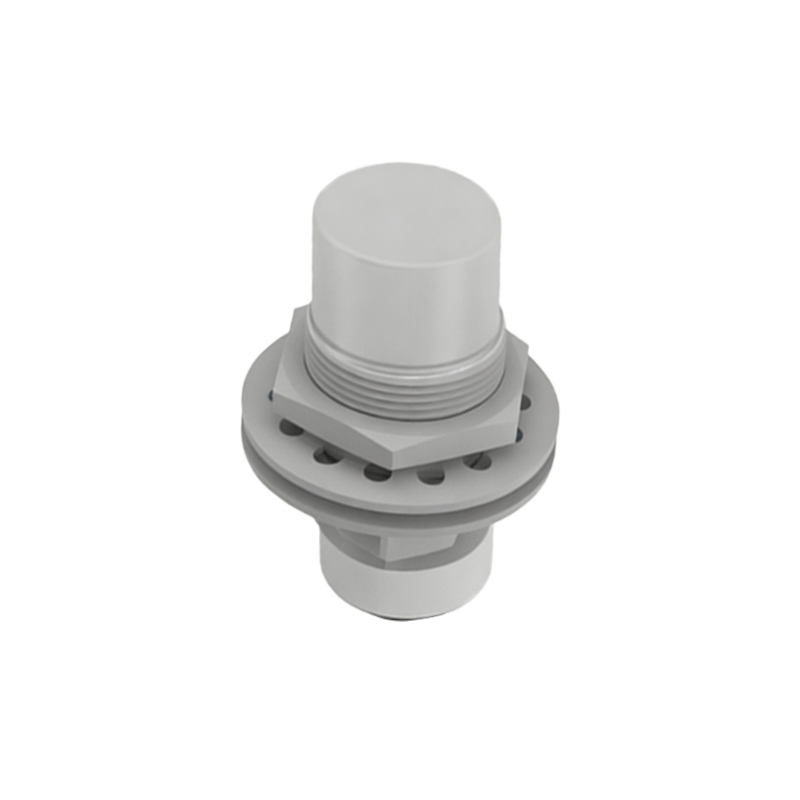
The size and shape of the sensor, particularly its housing, are dictated by your installation space. Cylindrical threaded barrels (e.g., M8, M12, M18, M30) are common, but rectangular and slot-style housings exist for specific mounting needs. The output type is another crucial decision. Two-wire DC sensors are simple to wire but have a small residual current when off. Three-wire DC sensors (NPN sinking or PNP sourcing) are the most common, offering clear on/off signals. Analog outputs (4-20 mA or 0-10 V) are necessary for applications requiring continuous distance or level measurement.
Environmental factors cannot be overlooked. Consider the Ingress Protection (IP) rating, which indicates resistance to dust and liquids. An IP67 rating is standard for washdown environments. Temperature ratings must match the operational ambient range. For welding applications, sensors with weld-field immunity are essential to prevent false triggers from strong magnetic fields. High-vibration environments may require sensors with robust construction and secure connector systems.
Finally, integrate all these considerations with your application's core requirements. What is the primary goal: simple object presence detection, precise positioning, counting, or level control? What is the required switching frequency or response time? For high-speed bottling lines, a fast-responding photoelectric sensor is necessary, while a slow-moving conveyor might work fine with an inductive sensor. Always factor in long-term reliability and the availability of replacement parts from the manufacturer.
By systematically evaluating the target material, required range, environmental conditions, electrical interface, and physical constraints, you can confidently select a proximity sensor that ensures reliability, efficiency, and longevity in your system. Testing a sensor with the actual target material under real operating conditions before finalizing a large purchase is always a recommended best practice.